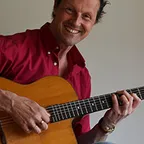
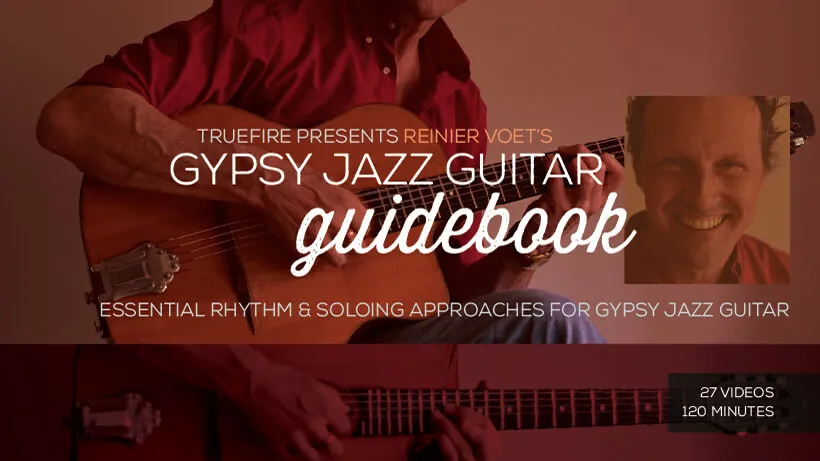
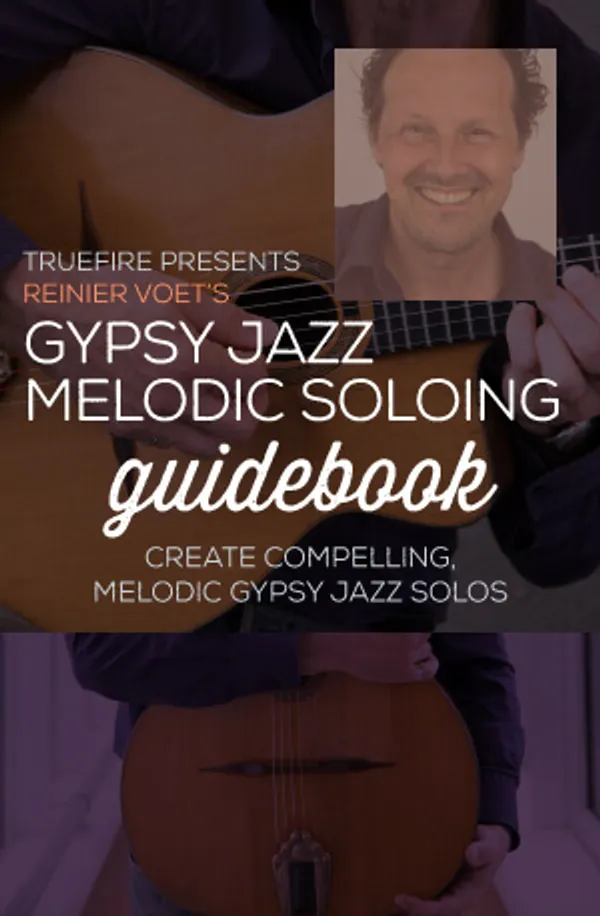
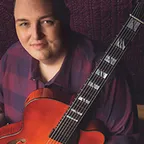
In the traditional gypsy culture, gypsy jazz musicians learned how to play from their elders, usually a family member. The gypsy method relied on intense practice and imitation, with little or no formal education. The master plays and the student emulates what he hears and sees. In similar fashion (but with the aid of interactive video, tab, and notation), master gypsy jazz guitarist Reinier Voet will pass on 10 key concepts and guide you through 7 performance studies in the Gypsy Jazz Guitar Guidebook.
”We'll dig into all of the important ingredients and techniques of this beautiful European based style of jazz guitar, invented by Django Reinhardt almost a century ago and still very popular today. We'll go beyond playing licks and get a solid grip on all the concepts you need to learn this exciting musical language. I'll illustrate these concepts and techniques by playing full length solos on the standard chord progressions used in gypsy jazz.”
The concepts and techniques in this Guidebook are used by all of the master gypsy jazz guitarists including Django Reinhardt, Stochelo Rosenberg, Fapy Lafertin, Bireli Lagrene, and Angelo Debarre.
Reinier organized the Gypsy Jazz Guitar Guidebook into two main sections. In the first section, he passes on 10 key concepts and techniques: Gypsy Rhythms, La Pompe, Bolero, Bossa, Minor 6th Chords, Around Chord Tones , Chromatic Swing, Diminished, Tritones, Licks And Tricks.
”We'll look at the most important gypsy jazz rhythm pattern, called La Pompe, as well as other types of gypsy grooves, like the Bossa and the Bolero. We'll also look at gypsy jazz harmony, the minor 6th chord and its accompanying scales, the use of diminished chords and scales, tritone intervals and its use in solos, and how to use chromatics to jump from one chord tone to another. I’ll also show a variety of very versatile gypsy jazz licks and tricks.”
In the second section, Reinier guides you through 7 performance studies putting the key concepts from Section 1 to work in a musical context. Reinier demonstrates all of the performance studies over jam tracks and then breaks them down emphasizing the techniques you’ll need to play them.”
All of the performance studies are tabbed and notated for your practice, reference and study purposes. You’ll also get Guitar Pro files so that you can play, loop and/or slow down the tab and notation as you work through the lessons. Plus, Reinier generously includes all of the jam tracks for you to work with on your own.
Grab your guitar and let’s light up some gypsy fire with Reinier Voet!
What you'll learn
Apply advanced chord substitution techniques
Create jazz improvisation lines over standard chord progressions
Hi, I'm Reinier Voet, and welcome to the Gypsy Jazz Guitar Guidebook. In this course, we'll dig into all the important ingredients and techniques of this beautiful European based style of jazz guitar, invented by Django Reinhardt almost a century ago and still very popular today. We'll go beyond playing licks and get a solid grip on all the concepts you'll need to get through this exciting musical language. I'll illustrate these concepts and techniques by playing full length solos on standard chord progressions used in gypsy jazz.
We'll look at the most important gypsy jazz rhythm pattern, called "La Pompe", as well as other types of grooves, like the Bossa and the Bolero. We'll also look at gypsy jazz harmony, being strongly influenced by the sound of the minor 6th chord and its accompanying scales. By adding in the use of diminished chords and scales, you'll be able to get that typical gypsy jazz sound. It's a very versatile tool to move around the fretboard with great speed and with ear-grabbing licks.
Other concepts we'll study include the tritone interval and its use in solos, which will surely get the audience's attention, and we'll be using chromatics to jump from chord tone to another.
The concepts and techniques in this guidebook are used by all the famous gypsy jazz guitar players like Django Reinhardt, Stochelo Rosenberg, Fapy Lafertin, Bireli Lagrene, and Angelo Debarre. As usual, this guidebook comes with tabs, backing tracks, and extra information to help you practice. Well, enough talk, grab your guitar and let's get busy!
In gypsy jazz, apart from being a good solo guitarist, you need to be a good rhythm guitar player. The rhythm guitarist makes the band swing and functions as the drummer in this style of jazz. You must stay in rhythm AND in the harmony, as you'll be playing the chords too. Your role is to be the backbone of the band.
La Pompe is the most recognizable way of comping in Gypsy Jazz. It's in fact just playing swing jazz rhythm, but in the unique style of Django and his fellow Hot Club musicians.
The second rhythm that should be practiced is the Bolero. There's actually only one tune with this rhythm that's regularly played by gypsy jazz groups or during jam sessions, which is "Troublant Bolero". The Bolero rhythm is originally from Spain, and aside from it, the piece also has Spanish melodic influences.
The Bossa is another rhythm that's part of the gypsy jazz repertoire. It had an obvious start with Dorado Schmitt’s successful tune "Bossa Dorado", made famous by The Rosenberg Trio. It's important to realize is that this "gypsy Bossa" is NOT a real bossa as we know it in the Brazilian bossa nova. The gypsy Bossa is more like a rumba gitane.
Adding the major sixth note to a minor chord is a defining element of gypsy jazz guitar. It brings a different color to a normal minor chord, and it immediately gives you that typical gypsy jazz guitar sound.
What's easier to do than play the chord tones over the chord you want to improvise on? And why not play the notes around them?