RhythmCraft

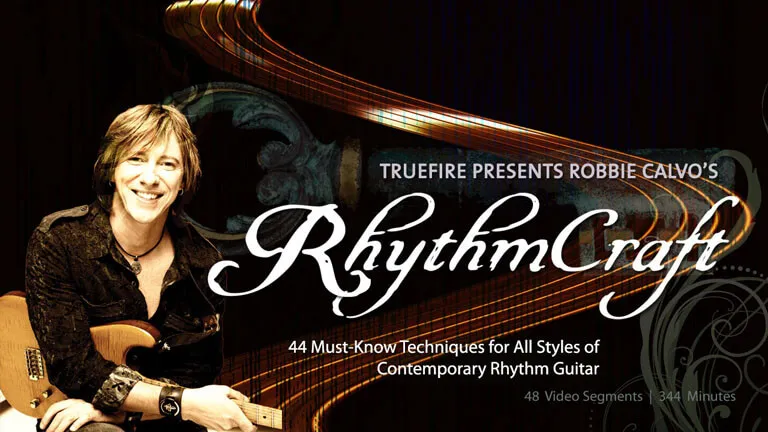
44 must-know techniques for all styles of contemporary rhythm guitar

Marty FriedmanTommy EmmanuelSteve VaiEric GalesEric Johnson

Get this course and 1,000+ more with All Access

Try 14 days free. Cancel any time.

Purchase Individual Course for $19.99
RhythmCraft

About this course

Great rhythm guitar playing is the unsung hero of ALL popular music. We can all call out dozens of our favorite solos BUT it's the rhythm groove that gets our blood boiling and our feet moving. Can you imagine any AC/DC or Stones tune without Malcolm's or Keith's rhythm guitar part? From Rock to Blues to Pop, Country, Funk and everything in between; rhythm guitar is the lifeblood of all popular styles of music.

Why do we guitarists spend more time working on our soloing than our rhythm skills? Naturally, we need to have our soloing and improvisation together so that we can shine when we're in the spotlight BUT the truth is we'd be far more likely to get and keep the gigs if we played monster rhythm guitar.

Ask any instructor and they'll tell you that students struggle more with their rhythm work than any other aspect of their playing. Ask any pro and they'll tell you that getting gigs and studio work is all about their rhythm chops. Ask any band looking to fill a guitar slot and they'll tell you it's the solid rhythm player they're more interested in, not the "lead guitar" pyrotechnician. Strong rhythm guitar skills "pay the bills" and clearly distinguishes the great players from the mediocre.

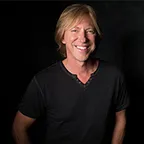
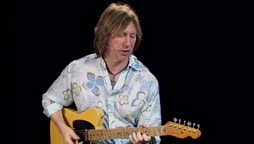
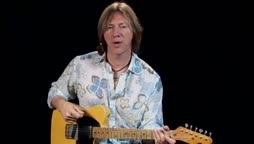
Nashville session player, singer-songwriter, educator and all around six-string maestro, Robbie Calvo is the musician's musician whose work is described as "flawless and inspired." Robbie has earned the respect of his peers as a "consummate guitarist" and his clinics and workshops are jammed with equal numbers of pros and students of guitar. Sweet Notes and SoloCraft, Calvo's first two TrueFire courses seem to be anchored at the top of TrueFire's charts as testimony to his popularity amongst intermediate, advanced and pro guitar players.

Robbie Calvo draws on his years of studio sessions in London and Nashville to bring you cool voicings, stylistic approaches and great overdub guitar parts for each of the musical styles in RhythmCraft. As Calvo examines each genre , he'll reveal its key progressions, must-know rhythms for the style, essential chord vocabulary and a tasty selection of stylized tricks of the trade.

RhythmCraft drills down deep on 45 rhythm guitar techniques across a wide variety of blues, rock, pop, funk and country stylings. You'll learn how to make simple chords sound more interesting by adding additional voices; how to take simple chords and invert them to add variety and movement; how slash chords work and why you should use them; how easy and powerful it can be to change bass notes under your chords; how to create great overdub and second guitarist parts for your band or song arrangements -- it's all here and more. Much more.

What you'll learn

  • Combine rhythm chord playing with single-note melodic flourishes
  • Apply thumb muting technique for controlled string attack
  • Understand how to derive double stops from chord shapes
  • Develop aggressive right-hand attack for funk rhythm
  • Develop musical awareness of space and arrangement
Release date: 06/20/2011 • 5h 44m runtime
Start Course
Sample lessons
Blues: Technique 10
Blues: Technique 10
Blues Stomp
Minor Blues: Technique 3
Voice Leading & Chord Melody
Classic Rock: Technique 2
Hendrix Licks
Stadium Rock: Technique 2
U2 Pedal Tone

What's included

48 lessons • 45 charts • 44 Jam Tracks

RhythmCraft
The fact is, that when we play guitar on a song, 95% of that playing is GOING TO BE rhythm guitar playing and then, if we're lucky 5% will be spent playing lead fills and a solo. So, typically why do we spend more time improving our skill sets in the realm of lead guitar playing? Of course, we need to be very adept at hitting those "Sweet Notes" and improving our "SoloCraft" but the truth is that you are more likely to get the gig or at least be more useful as a guitarist if you can nail the rhythms and play some cool parts that fit in with the other musicians and the arrangement. How many times have you been at a jam session and when it's your turn to solo the guy who was ripping it up with his leads can't give you a solid groove to play over? It happens to me all the time! I become the designated rhythm guitar player!

I started out playing rhythm guitar years before I learned my first lead licks and that has given me a great appreciation for the art of the groove and playing orchestrated useful guitar parts with my chord vocabulary. My experience, is your experience here on TrueFire and I am going to share those years of studio and live work experiences with you in a practical and powerful way.

In this new course we are going to learn the art of great rhythm guitar playing in a variety of popular styles. For each genre we'll be looking at standard progressions, typical rhythms for that style, chord vocabulary and some stylized tricks of the trade. We'll look at making simple chords sound more interesting by adding additional voices. We'll take simple chords and invert them to add variety and movement. What is a slash chord and why should you care? Well, when you see and hear how easy and powerful changing a bass note is under your chords you are going to beg me for more! I'll give you a multitude of ideas on how to create great overdub or second guitarist parts for your band or song arrangements. Think about the layers and textures created in the studio by bands like Def Leppard, Boston, or even Eric Clapton. The studio session cats all know the secret to how smaller guitar parts layered together create amazing arrangements in pop and rock music and I'll show you how. Rhythm Craft is an easy and concise musical approach to making you the rhythm guitarist you should and will want to be. I'll even throw in some great applied harmony and theory as we go along which will open doors and windows for you in such an enlightening way. Let's get cracking on this course so that you can take your Rhythm Craft to a groovy new level.

Blues: Technique 1
Strumming the acoustic guitar is a great way to start playing a 12 bar blues in E. The chords we'll be playing are E7, A7, B7. This is a I7 IV7 V7 chord progression in the key of E. We will also be adding some chromatic chord moves to this progression to create harmonic flavor and to show you some typical blues turnaround moves. A turnaround could best be described as a harmonic phrase that takes you back to the beginning of the 12 bar progression.

Check out your chord charts and fingering diagrams to see where the chord changes take place. In our musical example I am playing a quick change 12 bar blues. This means I am changing to the A7 in bar 2 rather than in bar 5.

The rhythmic structure of this 12 bar blues is pretty straight forward as we'll be playing a very steady blues shuffle feel by strumming with the right hand. This is also known as a 12/8 feel, all this means is that you are subdividing the four main pulses per bar into three equal parts per beat. In other words each beat is occupied by an 8th note triplet. The shuffle feel however is created when you play the first two eighth notes as if they were tied (quarter note) and then attack the 3rd eighth note separately. This gives you two main pulses within the beat. The first one longer(quarter) and the 2nd shorter (eighth). Watch my right hand strumming technique to achieve a smooth and consistent shuffle rhythm and you will hear exactly what I am talking about regarding note durations and feel.

This guitar part would be an excellent approach to accompany vocals because the harmonic structure is pretty simple yet the shuffle rhythm drives the music along at a nice steady pace. You can try this approach on the electric guitar too.
Blues: Technique 2
Finger picking the strings with the right hand will give you an approach closer to that of traditional blues and also lends itself well to the acoustic guitar. I do advocate that any techniques within this course can be utilized on both electric and acoustic guitar however.

The chord voicings we are using in this example are pretty much the same as in the previous strumming section but we are pulling out specific tones with the right hand fingers now. I am also adding some melodic notes on the upper strings to add movement and simple melody ideas. Please remember that I am showing you some ideas that you can either copy or approximate and develop into your own style, be adventurous and find some cool moves of your own.

The turnaround moves in this example utilize double-stop minor 3rds and it is a sound most of you will have heard on blues recordings throughout history as a standard move. These minor thirds are derived from diminished triads located on the top 3 strings. Try and visualize the whole chord and where each of these ideas come from so that you can transpose them into other keys when you need to.

If you have friends you jam with try having them play the strumming rhythm part in example 1 while you finger pick the chords from this example. Then trade out and swap parts. Try playing this yourself over the last video performance.
Blues: Technique 3
Stevie Ray Vaughan was an incredible lead guitarist as you well know but he was equally incredible at holding down and driving the groove. He is without a doubt my favorite blues guitarist of all time.

This example could be considered a Texas Shuffle feel and won't present too many problems in the realm of the chord voicings for most of you working through this course. However, some of you may have to work harder and do a lot of self evaluation when it comes to playing this rhythm guitar part in time and with a good feel. This example is perfect for that as you will need to change chords and hold down a consistent rhythm part with the emphasis on the last 8th note of each triplet in our shuffle rhythm. We are playing the downstroke with more of a percussive sound by muting the strings with both the left and right hands. The accented attack comes on the up beat to emphasize the upper voicings of each of the chords. Choosing interesting chord shapes and voicings will help you develop subtle melodic changes too, so be aware of the notes on the upper strings when playing with this approach.

I strongly recommend that you record yourself playing as much as possible so that you can evaluate your timing. It's amazing what we hear on the playback and the tape never lies! Give it a try and be honest with yourself!
Blues: Technique 4
The boogie rhythm I am playing in this video sounds great in open position and is the easiest way of approaching this technique. You will still need to employ your little finger for these boogie rhythm moves so start warming up! As we move our voicings up the neck into barre chords the stretches become larger too so you may want to warm up first in the higher register of your guitar before trying to play the A7 and B7 barre chords at the 5th and 7th frets. Notice that the melodic movement in this example is found on the lower strings this time and is less dominant than if the movement were on the upper strings.

The right hand technique for this approach is pretty simple, just be aware that you are playing predominantly on the lower 3 strings and palm muting lightly with the right hand. You can change the dynamics of this approach dramatically by digging in harder with the picking hand and releasing the muting.
Blues: Technique 5
The 12 bar blues progression in this example is exactly the same as in the previous lessons, we've just approached it using dominant chords with 9th and 13th extensions to give us a jazzier sound. Of course, I've changed the rhythmic approach as well to leave more space in the track for the complexities in the harmony. Leaving space in this part also allows for a second guitarist or any other harmonic instrument to add other flavors to, try and remember that when working with other musicians and create complementary guitar parts that work well with the other instrumentation.

Check out the chord diagrams provided to learn the chord voicings I'm playing if they are new to you. Visualize the shapes and name the notes and this will help you remember them and find other shapes for those chords in other areas of the fretboard.

There are also some really nice chromatic chord moves in this lesson plan which you'll be able to utilize as turnarounds and connections to the other chord changes. Remember, these moves apply to other genres as well and you'll see me utilize this chromatic move in the country guitar lesson too. Recycle!
Blues: Technique 6
The chord voicing I've chosen for this technique lesson is perfect for arpeggiating through the entire 12 bar blues progression as it allows you to apply finger vibrato to the top note with your first finger. The top note just happens to be the root of the chord which helps us define the changes nicely. The chord, is quite simply a dominant 7th chord without a 5th degree and is voiced root, major 3rd, b7, root.

Check out my right hand picking approach to this and also feel free to expand upon the theme with your own ideas. Try finger picking the notes too.

Added some tremolo effects to this which gave it a swampier sound reminiscent of Creedence Clearwater Revival. Cool.

+ 41 more lessons

Start Course

Reviews

18 results

texprofes1

Verified buyer

12/18/25

Excellent rhythm training

Fantastic teacher. He has the best methods for mastering your rhythm playing. It's easier than you think.

farmerjam

Verified buyer

03/08/25

Great Instructor

Robbie is a great instructor. I haven't finished the course yet due to my own schedule, but the mixing of different guitar parts has been enlightening.

ShadowBoxer86

Verified buyer

01/18/21

RhythmCraft It's for You! Get It

As an intermediate player I am learning a lot from these sessons. Really good teaching style. Some of these lessons will take more than just a one and done. You will have to practice these techniques slowly and keep coming back and reviewing them to really get them down. Highly recommended. Thanks

dougbrown

Verified buyer

01/06/21

A rhythm work collection ,Robbie is an excellent teacher, shows you his nuggets, that he used.I am very pleased with the rhythm insights, helped me a lot,as I hate to say but rhythm is very important as they tells us .Now I understand more why.

olddoublechin

Verified buyer

12/23/20

This course delivers the profound basic techniques and fills quite a few gaps that some might have when it comes to a versatile vocabulary of rhythm guitar approaches, Robbie Calvo is an excellent teacher who leaves no stone unturned, when he takes you through chord progressions from lots of angles in different genres. Lessons include topics like dynamics, tone, multiple layers and typical examples of all those styles.

Stop searching. Start improving with All Access.

Try 14 days free. Cancel any time.