The Bridge to Jazz is a collection of TrueFire lessons curated by Guitar World Senior Music Editor Jimmy Brown. Jimmy’s selection of lessons from top TrueFire educators is designed for blues and rock players who want to explore and integrate elements of jazz into their playing.
”Ever since my early days as a self-taught rock guitarist who went on to study jazz and music theory in college, I’ve always been excited by the sound of harmonically and rhythmically sophisticated music and guitar playing that also embraces the energy and swagger of rock, blues and r&b/funk.
This collection of TrueFire video lessons from various teachers, some of whom are also world-renowned recording artists, offer a nice variety of well-presented instruction in the realm of playing straight-ahead jazz and jazz-influenced rock and blues guitar, featuring approaches that are both inspiring and effective.
Probably the best reference point for getting into jazz is to approach it from its most closely related style — blues — and the first step is to learn some cool ways to “jazz up” the basic 12-bar blues progression’s I-IV-V chord changes with colorful chord substitutions and melodic lines that go beyond the all-too-familiar pentatonic approach that most blues and rock players take, for lack of deeper harmonic understanding.
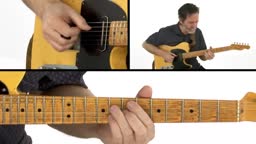
In the lessons from master guitarist and teacher Tim Lerch, he tastefully demonstrates how to both solo and play rhythm, or “comp,” over a jazzy blues progression in the key of C with a medium-tempo shuffle groove and clearly breaks down the various technical and theoretical devices he employs in his well-crafted and tasteful licks.
Topics presented include such useful devices as “uptown”-style, horn-section-like chord voicings, substituting ii-V-I changes for the basic V-IV move in bars 9 and 10, targeting chord tones in a melody using arpeggios, adding decorative melodic ornaments and chromatic approach tones.
When it comes to learning the art of jazz improvisation, the old saying “you have to crawl before you can walk and run” certainly applies! In the batch of progressively structured lessons I’ve chosen from the great jazz guitarist and master educator Frank Vignola, he offers a sure-fire method for making sure your melodic lines relate to the underlying chords in a pleasing way and does so in a refreshingly clear and straightforward presentation, without overwhelming you with non-essential music theory.
The approach involves targeting chord tones, such as the 3rd, 5th or 7th, whenever there’s the chord change, and using related scale tones and chromatics to smoothly transition from each of these cornerstone notes to the next. Using the chord progression from the first section of the evergreen jazz standard “Autumn Leaves,” the guitarist shows you how to musically “connect the dots,” so to speak.
By learning this effective and useful methodical approach to melody making, you can then apply it to countless other chord progressions and standard tunes and learn how to improvise a solo with confidence in knowing that you’ll be hitting the right notes.
The group of four interrelated lessons from Robben Ford feature the legendary fusion guitarist offering an exciting and insightful breakdown of his rhythm and lead playing approaches and techniques on the soulful, funky jazz-rock tune “Hebb Tide.”
Playing along to a well-produced rhythm-section backing track, Robben first demonstrates then discusses how he approaches playing over the tune’s repeating four-chord progression and how to make the most out of it by using numerous voicings and rhythmic phrasing variations.
Emphasizing chord knowledge as the foundation for crafting well-informed melodies, Robben presents solid approaches to things like comping, voice-leading and building a solo that’s more harmonically connected to the underlying progression and colorful than what most blues and rock guitarists would conceive of doing using the typical pentatonic-only approach of merely “playing the key” and not actively acknowledging the chord changes in their lines.
And coming from an electric blues background and being right at home playing a solid-body guitar with an overdriven lead tone, Ford demonstrates how to do this while also applying elements like string bending, vibrato and decorative finger slides to add flair and dynamic expression to melodic lines while hitting the sweet notes.
Using his funky blues tune “In the Middle” as a highly appealing teaching vehicle, world-renowned jazz-fusion guitarist Oz Noy shares his brilliantly eclectic signature approach to “inside-outside” melodic line construction in these related videos.
Featuring four full 12-bar choruses of soloing with a bold, overdriven Strat tone over the tune’s medium-tempo groove, Oz tastefully demonstrates how to combine sexy blues-rock-style lead phrasing with a variety of inventive harmonic and melodic phrasing twists, using such creative musical tactics and devices as inserting chromatic tones into the Mixolydian mode, adding upper and lower neighbor tones, employing arpeggio substitutions, and developing and varying rhythmic motifs. The result is a highly entertaining and informative rock solo with some decidedly jazzy twists.”
Who better than the top editors of our cherished guitar magazines to lend their eyes, ears and guitar acumen to help guide how we put our precious practice time to optimal use? Thanks Jimmy! You’ll get standard notation and tabs for all of the performance studies. Plus, you’ll be able to use TrueFire’s learning tools to sync the tab and notation to the video lesson.
You can also loop or slow down the videos so that you can work with the lessons at your own pace. All of the backing tracks are also included to work with on your own.
Grab your guitar and let's dig in with Guitar World Senior Music Editor Jimmy Brown's curated collection of TrueFire lessons!
What you'll learn
Navigate diminished scale patterns across the fretboard
Combine multiple approaches (arpeggios, scales, bends) while maintaining chord tone focus
Apply blues vocabulary while landing on appropriate chord tones
Connect chord tones using neighboring tones and scales
Develop the ability to think ahead to upcoming chord changes
The Bridge to Jazz is a collection of TrueFire lessons curated by Guitar World Senior Music Editor Jimmy Brown. Jimmy’s selection of lessons from top TrueFire educators is designed for blues and rock players who want to explore and integrate elements of jazz into their playing.
”Ever since my early days as a self-taught rock guitarist who went on to study jazz and music theory in college, I’ve always been excited by the sound of harmonically and rhythmically sophisticated music and guitar playing that also embraces the energy and swagger of rock, blues and r&b/funk.
This collection of TrueFire video lessons from various teachers, some of whom are also world-renowned recording artists, offer a nice variety of well-presented instruction in the realm of playing straight-ahead jazz and jazz-influenced rock and blues guitar, featuring approaches that are both inspiring and effective.
Probably the best reference point for getting into jazz is to approach it from its most closely related style — blues — and the first step is to learn some cool ways to “jazz up” the basic 12-bar blues progression’s I-IV-V chord changes with colorful chord substitutions and melodic lines that go beyond the all-too-familiar pentatonic approach that most blues and rock players take, for lack of deeper harmonic understanding.
In the lessons from master guitarist and teacher Tim Lerch, he tastefully demonstrates how to both solo and play rhythm, or “comp,” over a jazzy blues progression in the key of C with a medium-tempo shuffle groove and clearly breaks down the various technical and theoretical devices he employs in his well-crafted and tasteful licks.
Topics presented include such useful devices as “uptown”-style, horn-section-like chord voicings, substituting ii-V-I changes for the basic V-IV move in bars 9 and 10, targeting chord tones in a melody using arpeggios, adding decorative melodic ornaments and chromatic approach tones.
When it comes to learning the art of jazz improvisation, the old saying “you have to crawl before you can walk and run” certainly applies! In the batch of progressively structured lessons I’ve chosen from the great jazz guitarist and master educator Frank Vignola, he offers a sure-fire method for making sure your melodic lines relate to the underlying chords in a pleasing way and does so in a refreshingly clear and straightforward presentation, without overwhelming you with non-essential music theory.
The approach involves targeting chord tones, such as the 3rd, 5th or 7th, whenever there’s the chord change, and using related scale tones and chromatics to smoothly transition from each of these cornerstone notes to the next. Using the chord progression from the first section of the evergreen jazz standard “Autumn Leaves,” the guitarist shows you how to musically “connect the dots,” so to speak.
By learning this effective and useful methodical approach to melody making, you can then apply it to countless other chord progressions and standard tunes and learn how to improvise a solo with confidence in knowing that you’ll be hitting the right notes.
The group of four interrelated lessons from Robben Ford feature the legendary fusion guitarist offering an exciting and insightful breakdown of his rhythm and lead playing approaches and techniques on the soulful, funky jazz-rock tune “Hebb Tide.”
Playing along to a well-produced rhythm-section backing track, Robben first demonstrates then discusses how he approaches playing over the tune’s repeating four-chord progression and how to make the most out of it by using numerous voicings and rhythmic phrasing variations.
Emphasizing chord knowledge as the foundation for crafting well-informed melodies, Robben presents solid approaches to things like comping, voice-leading and building a solo that’s more harmonically connected to the underlying progression and colorful than what most blues and rock guitarists would conceive of doing using the typical pentatonic-only approach of merely “playing the key” and not actively acknowledging the chord changes in their lines.
And coming from an electric blues background and being right at home playing a solid-body guitar with an overdriven lead tone, Ford demonstrates how to do this while also applying elements like string bending, vibrato and decorative finger slides to add flair and dynamic expression to melodic lines while hitting the sweet notes.
Using his funky blues tune “In the Middle” as a highly appealing teaching vehicle, world-renowned jazz-fusion guitarist Oz Noy shares his brilliantly eclectic signature approach to “inside-outside” melodic line construction in these related videos.
Featuring four full 12-bar choruses of soloing with a bold, overdriven Strat tone over the tune’s medium-tempo groove, Oz tastefully demonstrates how to combine sexy blues-rock-style lead phrasing with a variety of inventive harmonic and melodic phrasing twists, using such creative musical tactics and devices as inserting chromatic tones into the Mixolydian mode, adding upper and lower neighbor tones, employing arpeggio substitutions, and developing and varying rhythmic motifs. The result is a highly entertaining and informative rock solo with some decidedly jazzy twists.”
Who better than the top editors of our cherished guitar magazines to lend their eyes, ears and guitar acumen to help guide how we put our precious practice time to optimal use? Thanks Jimmy!
You’ll get standard notation and tabs for all of the performance studies. Plus, you’ll be able to use TrueFire’s learning tools to sync the tab and notation to the video lesson.
You can also loop or slow down the videos so that you can work with the lessons at your own pace. All of the backing tracks are also included to work with on your own.
Grab your guitar and lets dig in with Guitar World Senior Music Editor Jimmy Brown's curated collection of TrueFire lessons!
Starting things off with a pretty straight forward upbeat shuffle in C. I keep it pretty simple on the first chorus then have a bit more fun especially on the ii V turnaround in the 2nd and 3rd chourses. Try to lay back a bit on your 8th notes and especially any triplets so your time feel isn't too bouncy.
My approach to soloing always includes lots of reference to chord tones. Learn your arpeggios for the changes and it will be a big help. You don't have to learn every 2+ octave arpeggio fingering right at first. Just learn a few that are in the area that you are going to use the most. Notice how an arp doesn't sound very bluesy, it helps to decorate the arps with slurs between flat 3 and 3 and flat 5 and 5.
My approach to soloing always includes lots of reference to chord tones. Learn your arpeggios for the changes and it will be a big help. You don't have to learn every 2+ octave arpeggio fingering right at first. Just learn a few that are in the area that you are going to use the most. Notice how an arp doesn't sound very bluesy, it helps to decorate the arps with slurs between flat 3 and 3 and flat 5 and 5.
My primary concern when comping is to create a supportive environment for the soloist, so repeating rhythmic motifs is something I pay attention to. The other thing that makes for good comping is to listen for the soloists note choices. If there are lots of 6ths and 9ths in the solo line I'll use those in my voicings too.
The first two choruses I keep the voicings pretty conventional and they work just fine. Rhythmic continuity and melodic cohesiveness are the theme of the day.In the 3rd chorus I use lots of rootless voicings with either the 3rd or the flat 7th in the bass. These voicings are quite magical and work particularly well on a blues.
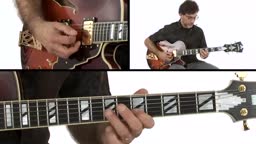
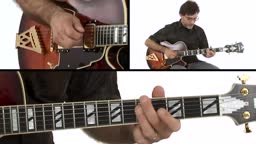
In our Level 1 study, we're going to take a 2-5-1 in the key of G and play the root note of each of the chords in the 2-5-1 progression. Then we connect the roots by using neighboring tones and scalar patterns. Since the 2-5-1 progression is in just about every jazz standard you can name, I thought it would be a good idea to start targeting tones from this all important progression.
The course is very interesting because it gives you a great picture of what the early approach to the Jazz is, thanks also to the different points of view findable in the masters lessons.
A
arpeggio5
Verified buyer
08/19/24
Very good course it lays out good information very explanatory also, it’s not born I like the way different artists have their input on different categories
B
breso6846
Verified buyer
08/10/24
The Bridge To Jazz
Good course with lots of ideas I can use.
C
Cocoadel
Verified buyer
08/09/24
Great !!!
Very complete course. With 27 videos, you can approach the jazz language with good educators. I highly recommend !