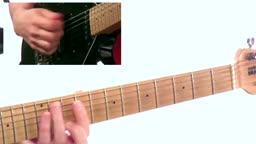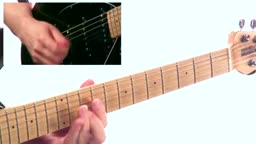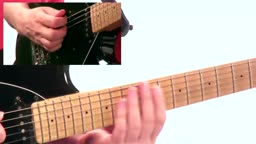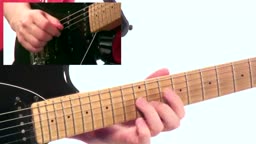

50 Sweep Picking Guitar Licks You Must Know

Essential sweep picking licks you must know.

Marty FriedmanTommy EmmanuelSteve VaiEric GalesEric Johnson

Get this course and 1,000+ more with All Access

Try 14 days free. Cancel any time.

Purchase Individual Course for $9.99
50 Sweep Picking Guitar Licks You Must Know

About this course

Sweep picking. Wayne and Tal Farlow invented it back in the 40s. Frank Gambale perfected it in the 80s. Today, pretty much any player worth their salt can do it in their sleep, and those that can't wish they could. While speed is certainly one of the qualities that draws players to the technique, its the sonic quality of sweep picking that is far more compelling. Emulating blazing piano and sax lines is likely what inspired Wayne, Tal and Frank's pioneering of the technique. Whatever inspires you to master sweep picking will be well served in this collection of 50 Sweep Picking Licks You MUST Know from Bruce Arnold.

Bruce kicks off the course with an illuminating tutorial on best practices for pulling off the technique itself. He then demonstrates 13 of the most common chord forms used in sweeps in four different positions: Root, 1st inversion, 2nd inversion and 3rd inversion. That adds up to a staggering 52 different sweep patterns covering Major 7th, Minor 7th, Dominant 7th, Dominant 7th sus4, Minor 7th b5, Diminished, Minor Major 7th, Dominant 7th #5, Major 7th #5, Major 7th #11, Dominant 7th b5, Major 6th and Minor 6th.

All 52 of the sweeps are demonstrated over a rhythm track at both fast and slow tempos in the key of C. Multiply these moveable patterns by all 12 keys and you'll have countless of options. You'll learn how to practice the sweeps using the circle of 5ths (or "cycle 5" as Bruce calls them) so that you can play them all over the fretboard, in any key.

Once you learn the basic sweeps, Bruce will demonstrate how you can start or stop on any note to lead into different phrases, or repeat the sweep to lead into different melody notes of the same phrase. You'll learn how to add speed to a slow-moving melody or embellish a simple one; how to change the top note to create a new melody, or play the sweep slower to create a backing for a composition; or start on different strings and using different picking patterns to produce fresh melodic ideas.

Bruce also shows you how to extend your vocabulary even more with super-imposition: playing one tonality over another so their sounds combine into a third, more complex harmony. Because most chords are built on 3rds, any such chord can function as the upper members of another chord.

All of the sweeps are notated and tabbed on PDF and as Power Tab and Power Book files. All of the rhythm tracks that Bruce uses to demonstrate the sweeps over are included for your own practice purposes, along with an additional 108 rhythm tracks covering nine tonalities in all 12 keys. Bruce also includes other relevant charts and information to support the curriculum.

If you want to play faster, enrich your harmonic vocabulary, discover new ideas for soloing, or just understand what your favorite players are doing and how they're doing it, dig in to this collection of 50 Sweep Picking Licks You MUST Know.

What you'll learn

  • Apply the symmetrical property of diminished chords by moving the pattern up in minor thirds (3 frets)
  • Execute a root position diminished sweep pattern
  • Use diminished sweeps in musical contexts, particularly over dominant chords
  • Apply Mixolydian with flat 6 alteration over the chord
  • Combine scalar and arpeggiated approaches in improvisation
Release date: 12/17/2012 • 3h 09m runtime
Start Course
Sample lessons
C Major 7th (Root)
C Major 7th (Root)
Lick 1
C Dom. 7th (Root)
C Dom. 7th (Root)
Lick 3
C Major 7th (1st Inv.)
Lick 14
C Dom. 7th (1st Inv.)
Lick 16

What's included

60 lessons • 56 charts • 55 Jam Tracks

50 Sweep Licks
If we generalize melodic movement on the guitar, it is either by "step" or "skip." Step playing is done with scales, and skip playing is done with arpeggios and sweeps. That’s why the ability to sweep pick fluidly is an important part of your technical development, as it enables you to play cleanly at very high tempos. Playing by skip places specific demands on your picking hand. We will concentrate on 6 string sweeps in this course and the techniques you learn from this will set your skip playing on the right path. There are some hurdles to get over at first, but once you develop some basic sweep picking skills you will be well on your way. I will go into greater depth about each of the sweeps we cover and there is a PDF for each sweep in each segment of this course. I've also included a PDF that gives you the fingering for all the sweeps in one document so that you can see them all at a glance.
Sweep Applications
One of the main reasons guitarists have problems with sweep picking is because they don't understand the proper technique needed. Usually, the picking hand is the issue. Sweep picking is actually more like strumming the strings of the guitar rather than consciously picking each string with a different stroke. This may seem like a small distinction but it’s crucial to your success when learning to sweep pick. On the other hand (literally) the fingerboard technique is fairly straight ahead, although you should make sure you are not overly stretching your hand. This will allow you to play longer passages with sweeps without cramping or developing stress related problems.
Course Material
Although not completely necessary, if you know a bit of music theory you’ll understand how I've built these sweeps and how you can build your own. All sweeps that we will look at in this course will contain a combination of chord tones and available tensions. hord tones are the notes that define a chord. All chords in this course will be four note chords. For example the chord tones for a C major 7th would be C, E, G, and B. We can also add tensions to these chords. A tension in contemporary music is a non-chord tone that doesn't have to resolve. Each chord type will have a different set of tensions. For a C major 7th chord the available tensions would be 2, #4, and 6. Therefore, you could add any of these notes in a sweep. Please see the PDF for complete information on chord tones and sweeps for all chord types covered in this course.
How to Play Sweeps
Playing each sweep pattern cycle 5 will greatly increase your ability to play the sweep in any key. It’s also an excellent way to learn the names of all the notes on the guitar and where they occur. In this course, we are going to play sweeps starting on various strings and frequently we will change the pattern and direction of the sweep. If you start now on the task of memorizing the note names at each fret it will help you to apply the sweeps in this course to a multitude of musical situations. That’s why I've included a jam track with each sweep. This way you can split your practice time between learning the notes in the sweeps, and then working with everything you’ve been doing in the exercises by playing along with the tracks and having some fun. Make sure to practice the sweeps in multiple keys, too. See the PDF for more info on fingering of the sweeps and cycle 5.
C Major 7th (Root)
Our first sweep is for a major 7 chord. If you take a look at the attached PDF you will find the chord tones and available tensions for this type of chord and how to practice the sweep cycle 5. Each sweep in this course will involve all 6 strings but may not always contain six different notes; sometimes notes are doubled on various strings. Later on we will see how this can help us to use the sweeps in multiple situations. See PDF for fingering and more information.
C Minor 7th (Root)
The good news is that the economy of picking motion involved with sweep playing allows you to play extremely fast melodies. But when playing at high speed you have to think differently from when you are playing at slower tempos. By this I mean you have to think rhythmically in larger chunks of time. So rather than setting a metronome to one click for one note, or even two, three or four notes equaling one click, you are better off to start thinking in much larger groups of notes played for each click you hear. I call this method "Long Line Rhythm" and it's one of the secrets of speed playing on the guitar whether you are using sweep picking or any other type of playing. See the PDF for fingering and more information.
C Dom. 7th (Root)
Here is a simple exercise from my book "Right Hand Technique" to help you develop your right hand picking and to improve control of your picking arm. (Remember, it’s not just your hand that does the picking!). I would recommend working with this exercise each day for a few weeks until the picking hand feels more fluid. See the PDF for fingering and more information.

+ 53 more lessons

Start Course

Reviews

16 results

aye269

Verified buyer

04/23/25

Understandable and Easy to Digest Course

Very concise and easy to understand. The format is very good for going at my own pace and it is never boring.


Mikeboije

Verified buyer

12/20/24

Good stuff!

raytcampbell

Verified buyer

05/14/23

I have several courses by Bruce Arnold that are Jazz, so I was surprised to see him teaching this one. It does make sense that the fusion players really were the originators of the technique. In any case, Arnold does a wonderful job. He is heavy on appreggio's teaching 13 different chord types. He also explains how to use these sweeps and emphasizes movable shapes. This is an excellent set with many great jam tracks in every key. I like Bruce Arnold as an instructor. He is very chill and takes time to explain exactly what is happening with multiple examples. A great teacher. If you master sweep picking as a result of this course, that's great. I've already learned a ton about arpeggios and how to use them. I have to mention, sweeping requires a shift of thinking and many hours of shedding to perfect, I might get there, but I got lots from the course regardless.

ArtemIV

Verified buyer

04/02/21

Very useful

A useful course. I would like more different examples for each pattern. But in general, the fall course is useful for different guitarists.

Mauricio S.

04/01/21

It is really awesome.

I made this course and it´s really awsome. I never mind that are so many arpeggio paths on guitar scale. I highly recom!

Stop searching. Start improving with All Access.

Try 14 days free. Cancel any time.