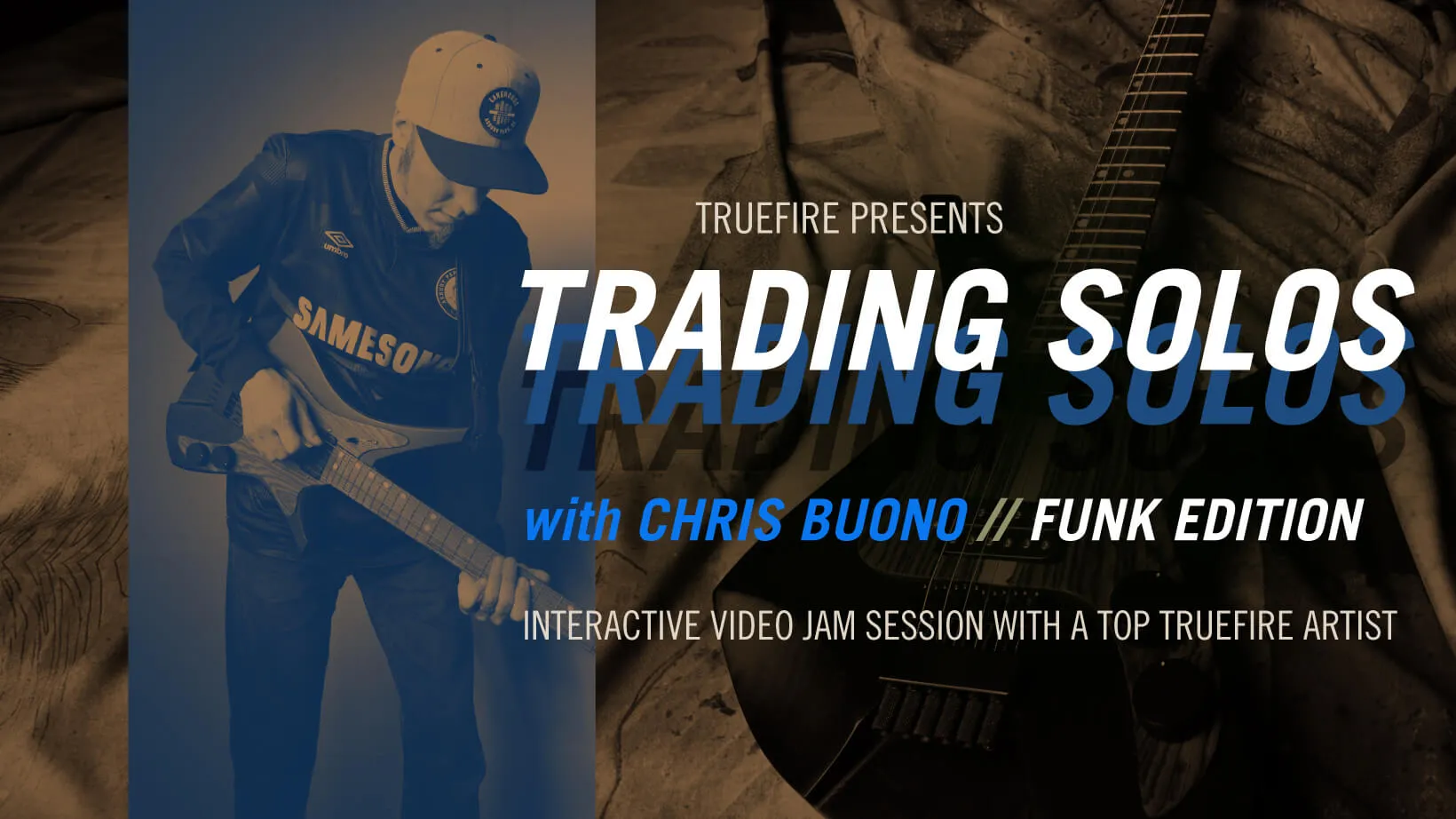
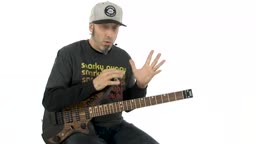
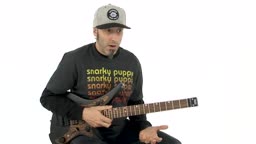
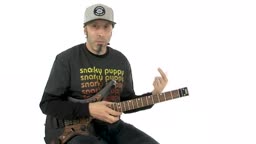
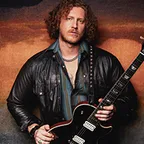
Trading Solos: Funk

Interactive Video Jam Session with a Top TrueFire Artist

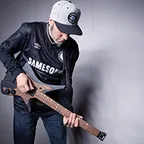
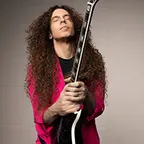
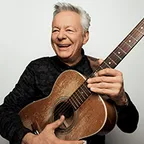
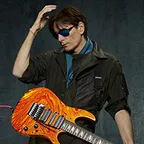
Marty FriedmanTommy EmmanuelSteve VaiEric GalesEric Johnson

Get this course and 1,000+ more with All Access

Try 14 days free. Cancel any time.

Purchase Individual Course for $9.99
Trading Solos: Funk

About this course

In this Funk edition of Trading Solos with Chris Buono, you’ll jam together over five frequently encountered funk grooves, in a variety of keys and feels including a 12-bar blues, a James Brown-style jam, a slow jam in 6/8, a hip-hop vibe, and a cool fusion groove. Along the way, Chris will share some of his go-to moves, comping techniques, and other key approaches to help you develop a versatile funk vocabulary.

"Rhythm playing is the forefront of funk guitar, but soloing is just as vital. Funk music is not just what comes out of your hands. It’s a deeply groovin’ style of music and it takes soul to make it sound real."

Jamming and trading solos with other players is one of the best ways to expand your vocabulary of soloing ideas and rhythm playing techniques. When you're comping for another soloist, you're picking up on their lines and ideas. When you're soloing, you get to try out your own ideas while being inspired by their comping.

For each of the five grooves, Chris will show you a handful of licks and comping approaches that you can use. Then, you'll take turns applying those ideas, trading solos and comping.

Chris will explain and demonstrate all of the key concepts and approaches along the way.  You’ll get standard notation and tabs. Plus, Chris includes all of the rhythm tracks for you to work with on your own. In addition, you’ll be able to loop or slow down any of the videos so that you can work with the lessons at your own pace.

Grab your guitar and let’s trade some solos with Chris Buono!

What you'll learn

  • Create staccato phrasing effects using fretting pressure and pick muting
  • Apply funk licks and comping approaches in context
  • Comp effectively in 6/8 time with space and arrangement awareness
  • Understand how to leave space for other players when comping
  • Build solos using thematic development over static harmony
Release date: 03/04/2019 • 1h 36m runtime
Start Course
Sample lessons
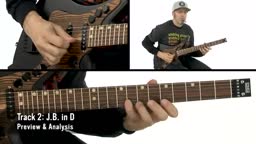
Track 2: J.B. in D
Track 2: J.B. in D
Track Overview
Track 2: J.B. in D
Track 2: J.B. in D
Three Lick Ideas: Demo
Track 2: J.B. in D
Track 2: J.B. in D
Comping Approach: Demo
Let's Trade Solos
Let's Trade Solos
Track 2: Playalong

What's included

23 lessons • 20 charts • 5 Jam Tracks

Trading Solos: Funk
Greeting funkateers and welcome to Trading Solos: Funk. It's a well-known fact here in TrueFire land and beyond the funk is a style near & dear to these fingers. Now dig: Funk music is not just what comes out of your hands. It's a deeply groovin' style of music and it takes soul to make it sound real. You're going to need that and more as you work through this course and jam with me. That's right - we're going to rock together back-and-forth!

While the approaches to rhythm playing are at the forefront of the how-to-play-funk conversation, the approaches to soloing are just as vital. In this edition of Trading Solos, we'll jam together over five different funk grooves including a 12-bar blues, a James Brown style jam, a slow jam in 6/8, a hip hop vibe and a cool fusion groove.

I'll start off with sharing some tips about my approaches to shaping funk rhythm as soloing tones as well as comping and lick construction. Before each jam I will demonstrate and explain three rhythm and soloing ideas and then, along with you, I will play them over the tracks.

This course will serve as a great tool for you to not only learn about both sides of the jam, but also one you can come back to over and over again. What's more, bassist Steve Jenkins and I went the distance on these tracks to make sure you are inspired to play. I don't know about you, but I can't wait!

Ready? Let's do it to it!
Funk Style Tips
When beginning to explore what it takes to make great funk tones and the gear used to do it, we'll first look at the go-to components in the guitar, amp and effects categories.

Starting with the guitars, look towards single coil-equipped guitars such as a Fender Strat and/or Tele with a focus on the former. Of course, Strat and Tele style guitars made by other builders could be considered. Unless you have super bright hands, a maple neck would serve you well as they help produce a snappier attack and overall tone. It's a good idea to go with .010 gauge strings as opposed to the thinner .009 gauge, as you'll be putting them through some formidable punishment when playing funk rhythms, as well as playing with lighter gain levels and thus benefit from a thicker gauge.

When it comes to amps, it starts with Fender or Fender-style amps once again, with a focus on the Deluxe Reverb and Twin Reverb models for respective 1X12 and 2X12 options. These amps stay basically clean but will deliver their versions of light clipping when pushed. Depending on your tastes, how much gain you want to incorporate will serve as part of the criteria for what speaker configuration as well as power rating you look towards.

As for effects, your first one should be the ubiquitous wah pedal. Close seconds are a phat-sounding phaser and an even phatter-sounding envelope filter! If you plan to take a solo or start delving into heavier funk rock riff playing, then a light OD pedal much like a Tube Screamer and/or a bit heavier distortion pedal will be on your shopping list as well.

As you pursue the funk, you'll learn about a universal truth any funk player worth his salt is hip to: You can get down with just about any rig if you have a good sense of rhythm and pure intentions. At the same time, funk music invites absurdly cool sounds and provides a completely inspiring platform to get your sonic freak on. Be it liberal use of compression, massive fuzz tones á la Eddie Hazel or the whacked out ring modulated tones from Wayne Krantz and deft whammy pedal antics from Tom Morello, funk music almost begs for you to go for it. Go digging and you'll discover all sorts of approaches from the masters such as Prince's penchant for Boss pedals or John Frusciante's devotion to Marshall amps, and particularly the Jubilee and vintage Boss CE-1 chorus pedals. And, don't stop there - look to keyboard/synth players as well like Bernie Worrell, Herbie Hancock and Stevie Wonder. If not for those guys, we guitarists may never have known what a Mu-Tron III is!

Once you've put some time into your funk rig, consider some of my tried-and-true funk gear tricks I've learned over the years through other players and just some good ol' trial and error:
  • If you can handle it, use .011 gauge strings.
  • Try to avoid 10" speakers as they make your sound some across as, well, small. Plus, they break up too quickly robbing you of precious headroom.
  • If your budget allows, go for a tunable wah pedal such as a Teese RMC3FL. You'll love having options.
  • A Gibson ES-175 goes a long way with its inherent archtop snap. Think I'm crazy? Look into what Jimmy Nolen, Tony Maiden and Neo Nocentelli used on more than a handful of classics recordings.
  • Other Gibsons that have made an impact on classic funk records are ES-335's, the ES-5 Switchmaster and - ready for this - Les Pauls!
  • Go for low output pickups, especially if you use humbuckers or think about P-90's for guitars that have a cavity for humbuckers.
  • Speaking of pickups, try the middle position (#3) on a Strat or the middle position on a three-way toggle for two humbuckers on the aforementioned Les Paul. Totally funky!
  • Other go-to tube amps to consider are the Fender Pro Reverb and Vox AC-30(!). Yes, the amp that defined various eras of The Beatles, Queen and U2 is a beautiful sounding amp in a funk context.
  • Don't raise your nose to non-boutique amps such as a quirky old Kustom or beat up Peavey Classic 50. They both will do your funk tone tweaking big time justice.
  • Love 'em or hate 'em, a Roland JC-120 in the right hands is a solid state force to be reckoned with.
  • Try avoid using chorus unless it's an analog chorus and you set the rate very low and the depth in the middle range. When it comes to wetting up your tone with modulation effects, make phasing the first choice and flanger the second with chorus being last.
  • Be conservative about reverb. Too much clouds your sound and the syncopation funk music demands. Bottom line: Reverb should be used sparingly and with respect.
  • Be patient with envelope filters. I've found the better the filters, the harder I had to work at them to get them going. Once I did - OH MAN. It's amazing. Perfect example: a Lovetone Meatball.
  • Keep an octave pedal in the back of your mind. It's a great first pedal to start copping raunchy synth tones and can sound great when correctly placed.
I would gladly go on and on with these tips, but this is a great start. Have fun!

Track 1: E Blues
The track we're going to solo over is a funkified 12 bar blues in E. The overall vibe rests in the drums and Steve's repetitive line that grooves hard. As for guitar parts, you and I are soloing over what I call a bedrock track underneath. I'm playing simple tritones made up of the 3rds and b7ths of the I (E7), IV (A7) and V (B7) chords. This is a cool comping trick I picked up from the late Danny Gatton's Hot Licks video course called Strictly Rhythm Guitar.

All throughout the course, you should be listening to what you're soloing over and who you're playing with. What's contained in all that action should inform what you play. Let the music guide you.
Track 1: E Blues
The first lick is reminiscent of David Gilmour's playing in "Young Lust" from The Wall. It's based out of Em pentatonic in that 5th position sweet spot that makes ample use of the open low E string. I know Gilmour is not the first guitarist you think of when you're playing funk, but man, his licks – super awesome. And, hey, Dave can get plenty funky.

The second lick idea is all about the biting sound of double stops within a Dorian environment. I love how they sound like you're tearing something to shreds. You can do SO much with double stops. You'll see plenty from me throughout this course.

The final lick idea is a high register Em lick that just screams. The onset slide into the big bend is totally Yngwie and the rest is looking at Eddie – wait, what? Yup, Yngwie J. and EVH. You heard me. One of the best parts about playing funk is the freedom. Plenty more examples lie ahead.
Track 1: E Blues
I have three comping ideas that all include approaches as if you were playing with another guitarist, which you will likely find yourself doing playing a funky blues in E. I use top four string inverted dom9 & 7(13) chords as well as top string diad ideas played with various rhythmic approaches. The final time I play behind you I lay back and let the mix breath with snappy syncopated single note ideas. These ideas are coming from the work of Jimmy Nolen, John Frusciante and Prince. While my soloing ideas can come from all sorts influences, of which many are unrelated to funk, my rhythm ideas usually come from players who are the funkiest of the funky.

Overall, the idea to is keep things tight and to listen to who you're playing with. Remember, the music will tell you what to play.
Let's Trade Solos
Now let's get down and jam! As we play together over this funky 12 bar blues in E, I'll throw in both the comping and soloing ideas I demonstrated for you plus a whole lot more. Don't worry – the solo has been expertly transcribed by Andrew Pevny and loaded up above in Soundslice as well as engraved in Guitar Pro and rendered as a PDF. We got you!One more thing: While we jam, don't leave me hangin'. Be sure to play rhythm for me when I solo.Ready? Let's trade some solos!
Track 2: J.B. in D
This track is all about James Brown's main man: Jimmy Nolen. While James is regarded as the Godfather of Soul, Jimmy is hands down the King of Funk Guitar. The bedrock track is classic Jimmy Nolen vibe that plays of the three-over-four funky hemiola I talk about throughout my TrueFire funk courses including Focus On: Funk and 30 Funk Rhythms You MUST Know. The tightness is the main ingredient.

Steve Jenkins delivers his signature groove with grace and space on this one. Thanks to his signature Brubaker and Aguilar Tone Hammer DI Steve's tone plays a big part in the effectiveness and takes this jam track to another level.

+ 16 more lessons

Start Course

Reviews

15 results

dwa79

Verified buyer

12/08/23

Refreshing

I like learning some funk approaches after studying blues for so long

tomac

Verified buyer

09/13/21

Me first steps with funk

PaulJT

Verified buyer

06/09/21

Fun w/ Funk soloing.

This is not my first Chris Buono and probably will not be my last. I am astounded by Chris's versatileness of exhibiting different genres of styles and his knowledge of funk proves that. The thing I like about Trading Solos is that it makes soloing and improving on the approach fun since it's concise and sweet. The journey in Chris's Funk lessons starts off mid-way so beginners take note.

tremelo68

Verified buyer

02/16/21

Funk it up with Chris Buono

Chris has a great teaching style and amazing musical knowledge. Enjoy all of his classes.

LuigiD

Verified buyer

11/18/20

FUN!

Very good course, Chris conveys a love of funk, it's evident that he is having fun while playing his music! GOOD PURCHASE!

Stop searching. Start improving with All Access.

Try 14 days free. Cancel any time.