Slapback, Billy & Twang Guidebook

Styles, Tones, & Techniques of Late-50's Guitar Instrumentals

Marty FriedmanTommy EmmanuelSteve VaiEric GalesEric Johnson

Get this course and 1,000+ more with All Access

Try 14 days free. Cancel any time.

Purchase Individual Course for $9.99
Slapback, Billy & Twang Guidebook

About this course

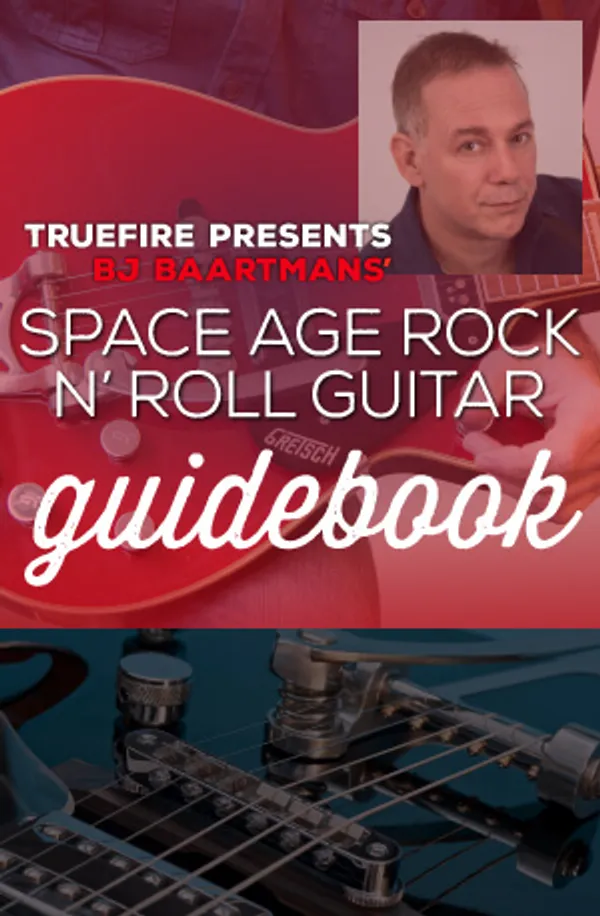
The second half of the '50's was a very special time for music. Chicago Blues was at its peak, Rock & Roll was in its infancy, and Rockabilly and Surf music were right around the bend. Of course, all of these new and exciting styles of music were powered by the electric guitar.BJ Baartmans’ Slapback, Billy & Twang Guitar Guidebook will take you on a learning journey back to the heydays of Rock and Roll, Rockabilly, and Surf instrumentals.

"I discovered a lot of the material that we'll explore together by reading what other legendary guitar players had to say about their own influences. Jeff Beck credited Cliff Gallup and Hank B. Marvin, George Harrison talked about Carl Perkins, and Keith Richards was heavily influenced by Chuck Berry.”

You’ll start the course by digging into several key concepts and techniques. BJ will be using the guitars, amps, and effects that were used to create the distinctive sound of these instrumentals.
BJ will then guide you through 10 Performance Studies, all of the original songs composed and performed in the late 50’s guitar style.

You’ll play your way through the 10 studies using hybrid picking, twangy double-stops, jazzy chord voicings, whammy bar techniques and Big Band breaks. For each of the 10 Performance Studies, BJ will first solo over the track and then provide a detailed breakdown emphasizing the concepts and techniques in play.

BJ will explain and demonstrate all of the key concepts and approaches along the way. You’ll get standard notation and tabs for the key examples and performance studies. Plus, BJ includes all of the jam tracks for you to work with on your own. In addition, you’ll be able to loop or slow down any of the videos so that you can work with the lessons at your own pace.

Grab your guitar and let's trip back to the 50’s with BJ Baartmans!

What you'll learn

  • Execute a jazzy turnaround with 6-9 chord voicing
  • Play arpeggios with pull-off embellishments over chord changes
  • Use double stops for rhythmic chord voicings
  • Master 10 original songs in typical late-50s guitar styles
  • Learn authentic vintage guitar techniques used by classic players
Release date: 06/04/2018 • 1h 33m runtime
Start Course
Sample lessons
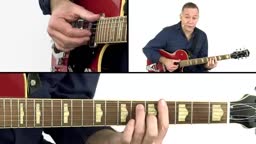
Whammy Bar & Vibrato
Concept 7
Chromatic Runs
Chromatic Runs
Concept 9
House Cats
House Cats
Performance
House Cats
House Cats
Breakdown

What's included

32 lessons • 10 charts • 10 Jam Tracks

Slapback, Billy & Twang Guitar Guidebook
Hey everybody, I'm BJ Baartmans, and welcome to the Slapback, Billy & Twang Guitar Guidebook. In this course, we'll jump into the heyday of rock and roll, rockabilly, and surf instrumentals. We'll explore the sound of vintage guitars, slapback delay, tremolo, and tank reverb.

I discovered a lot of the stuff we'll talk about in this course by reading what guitar players that I love had to say about their influences - like Jeff Beck talking about Cliff Gallup and Hank B Marvin, George Harrison about Carl Perkins, and Keith Richards about Chuck Berry. And then there were the Stray Cats in the early '80s, when I'd just started gigging with a typical new wave band. Hearing their stuff was a breeze, the guitar work was magical.

We'll start the course by digging into important concepts like typical rockabilly changes and scales. We'll be using the guitars these players used, plus their amps and effects. All these elements are put to work in 10 original songs, each one in a typical late 50's guitar style. We'll be dealing with: hybrid picking, twangy doublestops, jazzy chord voicings, whammy bar magic, and big band breaks. All these songs come with tabs and backing tracks. Are you ready to rumble?
Tools: Amps & Effects
In the late 50's and early 60's, most guitar players worked with a very basic approach to amplifying their instruments. The main reason for this is that there were hardly any effect pedals around. No fuzz boxes, overdrives, modulation, or wah wah devices in store.

Some effects were available though, and they were certainly put to good use, like tape delay, tank reverb, and amp tremolo. Players like Bo Diddley, Scotty Moore, or Dick Dale are certainly associated with an electronically tweaked sound.
Tools: Guitars
Most often big hollowbody electric guitars are associated with the sound of 50's rockabilly and rock & roll. Funny enough, I think it's mainly because Brian Setzer used a 6120 Gretsch in the early 80's with the Stray Cats to start a huge rockabilly revival. His hero Eddie Cochran used a similar guitar. But if you look at the most defining players of the era, you get a different picture: James Burton and Paul Burlison used a Fender Telecaster, Carl Perkins used a Les Paul, and Chuck Berry a Gibson 345. Buddy Holly used a Strat and Cliff Gallup used a small solidbody Gretsch 6131 on all the Gene Vincent recordings. Scotty Moore used a Gibson 295 on the Elvis Sun recordings.
Melting Pot
So what I think really created an overall rockabilly feel or sound was the energy and the mixture of all the styles that these players grew up with: country, jazz, blues, Western swing, black or white music, folk, or pop songs. It was a big fat melting pot, way beyond formats or tradition, but deeply rooted.
Scales & Chords
A lot of rockabilly and rock & roll seems to be rooted in blues when it comes to scales and chord voicings. But many players had a background in country or jazz, so they would incorporate that into their playing too. Basic 1-4-5 progressions were spiced up with colourful voicings like 6/9 or diminished, altered, and chromatic scales, big band harmony, or even gypsy swing riffs. Minor licks against major chords, flat fives and nines, and doublestops all found their way into the hits of the day. Cats like Charlie Christian, T-Bone Walker, Django Rheinhardt, Wes Montgomery, and Les Paul left a big mark.
Picking Techniques
Just like all the famous players using different guitars, they all had their own way of picking too. Some used a thumb pick like Chet Atkins or Cliff Gallup. Some used a straight picking technique like Chuck Berry, and some used a hybrid style with pick and fingers combined like James Burton. Brian Setzer used either his fingers or a pick and would hide his pick under his first finger when needed. This is a bit like how I do it, though I'm quite often using my mouth as a pick holder...

All these styles make for different tonal effects and quite a different feel when it comes to phrasing and timing. So they also make for the personal touch that is so welcome! Best thing is, there are no rules. If it works it works.
String Bending
One thing you don't hear so often in late 50's guitar is the kind of string bending that blues and rock players developed. One reason for that may be the heavier string gauges that where common at the time; usually flatwounds. James Burton and some other players starting using lighter banjo strings to facilitate easier bending. But that was more than likely the exception to the rule.

The fast tempos that a lot of the rock and roll era songs had may have also been a factor. But, most players did use some string bending to create a bit of a blues feel, utilizing half-step bends or even smaller pitch changes.

+ 25 more lessons

Start Course

Reviews

15 results

Pumpingnylon

Verified buyer

12/18/25

Clear instructions and fun too
tristanetienne

Verified buyer

12/15/24

Slapback, Billy & Twang Guidebook

Good quality playing

Jordu

Verified buyer

12/11/24

Me sorprendió grayamente.

alfgibson8

Verified buyer

04/14/23

A different course

Highly reccomend course, well presented, and with tons of riffs to explore for a variety of styles, not only rockabilly times. Well explained and easy to follow.

Abner45

Verified buyer

02/01/23

Great Course!!!

This course is exactly what it says it is. The instructor does a good job of teaching the course. He performances the lessons and then breaks them down. He makes it all look easy. If you like old tunes from the early days. He shows you the tricks needed to play that style.

Stop searching. Start improving with All Access.

Try 14 days free. Cancel any time.