Lick Logic

Creative Approaches for Crafting Original Licks

Marty FriedmanTommy EmmanuelSteve VaiEric GalesEric Johnson

Get this course and 1,000+ more with All Access

Try 14 days free. Cancel any time.

Purchase Individual Course for $9.99
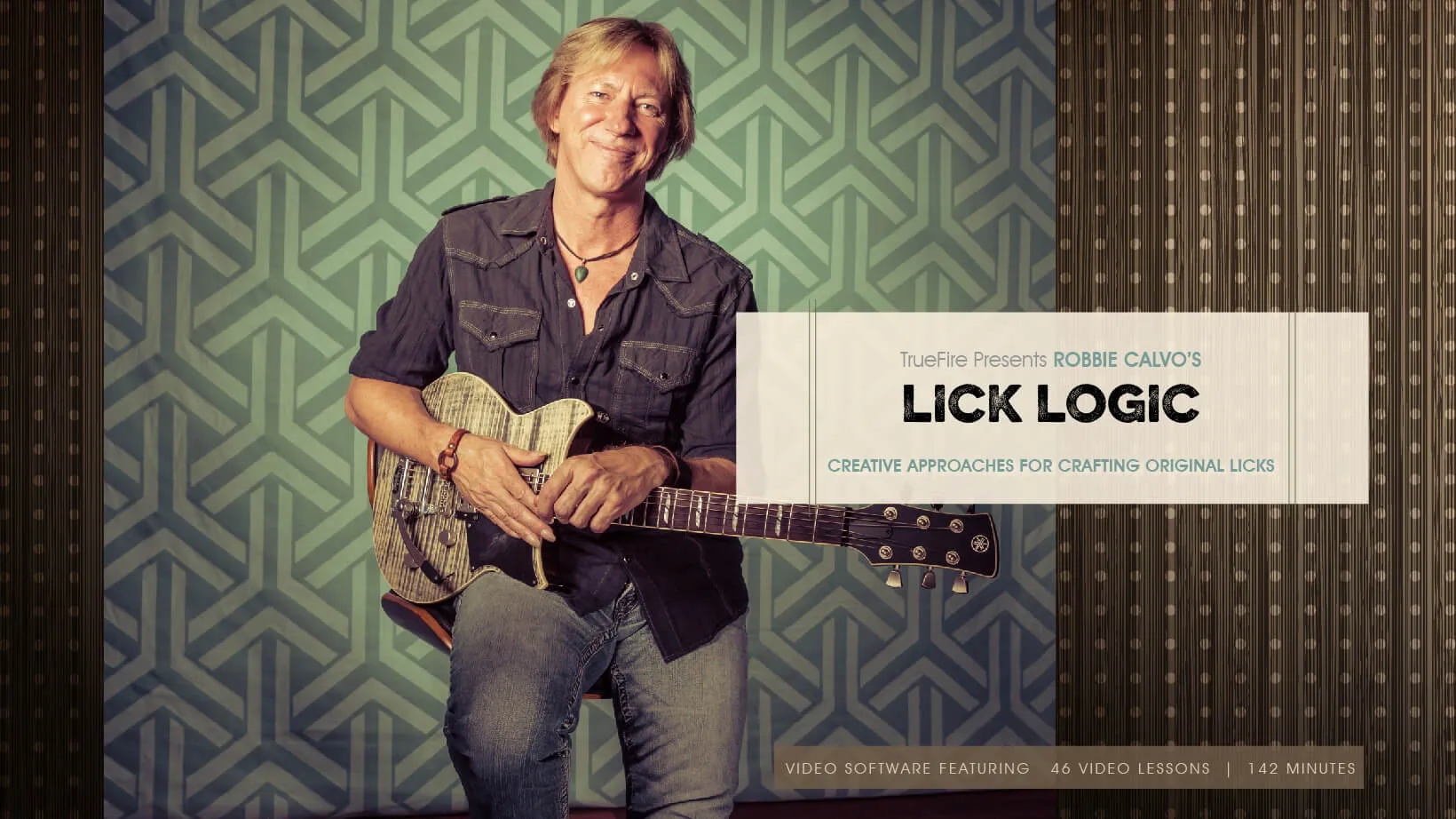
Lick Logic

About this course

Every style of music has its own vocabulary of licks and phrases that players learn and use to some degree in their own soloing and improvisation. If you play the blues, for example, you’ll inevitably learn and play some of those timeless BB Box licks. Play rock, jazz or country and you’ll likewise learn the musical jargon for those styles. But how do you go about crafting your own original licks and phrases?

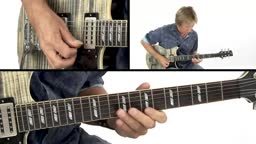
Robbie Calvo’s Lick Logic will equip you with a series of simple, yet powerful concepts for crafting your own melodic licks and phrases, using the chords and scales that you already know. Robbie will show you how to develop original ideas, internalize them, and then build your own library of licks.

”Lick Logic will guide students through a series of creative approaches for sparking ideas, building a library of original licks, and developing a musical personality that they can call their own. Working through Lick Logic will impart the knowledge necessary to take a simple idea and develop it into an original phrase that you can use at any time over any situation.”

Robbie organized the course into five sections. In the first section, Robbie illustrates the Key Ingredients of Licks: Rhythm, Phrasing, Pitch, and Note Choice. In the second section, you will work through a series of lessons covering Expressions: Slurs & Glissandi, Hammer-Ons, Pull-Offs, Bends, Let Downs, Rakes, Palm Muting, and Combining All Expressions.

Using Chord Fragments, arpeggios, and “Sweet Notes” to create licks is the focus of the third section: One Note, Diads, Triads, and 7th Arpeggios.

In the fourth section, Robbie guides you through a series of lessons where he demonstrates how too use Scale Fragments to craft original ideas and licks: Working Within Borders, Lick Border: Strings 1-3, Lick Border: Strings 2-4, Working Within Borders, Lick Border: Strings 3-6, Working Within Borders, Lick Border: Strings 1-3, and Sequencing the Whole Scale.

Robbie illustrates how to get More Mileage From Your Licks with an ear-opening series of lessons in the fifth and final section: Moving Phrases Across Beats, Start Solos with the Melody, Improvise Around the Melody, Let the Chords do the Work, and Move Licks Around the Neck.

All of the key examples and demonstrations are tabbed and notated for your practice, reference and study purposes. You’ll also get Guitar Pro files so that you can play, loop and/or slow down the tab and notation as you work through the lessons. Plus, Robbie includes all of the backing tracks for you to work with on your own.

Grab your guitar and let’s cook up some original licks with Robbie Calvo!

What you'll learn

  • Learn to structure solos by alternating melody with improvised licks
  • Learn to use melody as a safety net and reference point
  • Develop a framework for confident solo construction
  • Develop phrasing that sounds intentional rather than meandering
  • Gain confidence when called upon to solo unexpectedly
Release date: 11/10/2017 • 2h 20m runtime
Start Course
Sample lessons
Slurs & Glissandi
Slurs & Glissandi
Demonstration
Palm Muting
Palm Muting
Demonstration
Triads
Triads
Demonstration
Lick Border: Strings 1-3
Demonstration

What's included

46 lessons • 22 charts • 6 Jam Tracks

Lick Logic
Hi, I'm Robbie Calvo, and welcome to Lick Logic. In a world where we can find a plethora of information and content on how to learn composed licks and phrases, how do we go about compiling a catalog of our own lick compositions? How do you develop the ideas, internalize them, and begin to create your own library and unique personality when you improvise or compose a solo?

As with all of my teaching approaches, I look for simple but powerful concepts that will make a difference to your sound and playing quickly with minimum effort. My advice after working through this course is to make a check-list of concepts that really resonate with you: Every time you solo, apply one or more concepts until you make this whole approach a seamless interpretation of your inner voice. I don't just teach these concepts...it's actually a study of how I play my melodic lines and solos, and it's proven to work for me in the studio and live applications. My playing may not be flashy, but it is packed with melodically rich melody lines that have a feel good factor about them. 

In this course, you will be guided in real time through a series of approaches to developing your ideas into a style that you can call your own. The end result will be the knowledge necessary to take a simple idea to a finished phrase that you can use at any time over any situation. Sound good?! Grab your guitar, and let's get started!
Working with the Course
I'm often asked by my students the best way to work through one of my current courses. My advice has always been to leave your guitar on it's stand and literally watch the whole course like a movie. Take notes of the video sections you think are relevant to you and your goals and only work on those sections. If you've watched a course fully, you'll have a complete understanding of what the content offers, an understanding of the concepts presented and you can then cherry pick the items that are of most interest and relevance to focus your full attention on.

Taking this approach will help you to not feel intimidated by the magnitude of the information, get you started at the correct point of information you were looking for, and lift any pressure to complete a whole course!
Finding Your Musical Identity
I feel very fortunate to have developed a musical style that is tonally and musically discernible from a lot of other players. I mean that in the most humble way, but it's a comment I get from a lot of guys: "I could tell your playing anywhere...", "I could pick you out of 100 guitarists...", and believe me, it has been a conscious effort to do so.

Since an early age, I embraced my individuality and never wanted to be anyone else. I truly admire others, but I have no desire to be or sound like them. I have never learnt someone else licks or studied their style. Has my style and music been influenced by other guitarists and music? Of course; we are inspired by others and then we can create our own music from that inspiration.

My choice not to learn other people's licks and riffs boiled down to the fact that I truly believe that if we are given the same clay and hand tools as another artist, surely our personality can shape the clay into it's own original work of art! The more we work the clay, the more refined and defined our talents and style become. It takes some time, but the payoff is huge and you will start to understand that composing phrases and licks comes from the internal library of ideas you've already created. You just have to develop the skills to represent them in a new way given the situation at hand. This is what style and personality is all about: We say the same things using different phrasing and re-order the notes from ideas we have played before. This is why you can discern Clapton from Beck and Lukather from Cray. They are unique but they are also repackaging their own ideas, so we get to identify with their voice until we know it's them every time.

I can understand that many guys have a hard time knowing where to start this development process, and therefore this course was born to inspire you to embrace your own ideas and to know that it's also OK to borrow an idea from someone else and then re-shape it to become your own (Providing you are not copying a melody note for note - consequences may occur if you do that and release it for sale, and then you'll need an attorney!).
Where Licks Come From
Licks and phrases can be derived and created from any combination of elements. Remember a lick is just a series of notes played in a rhythmic fashion. We can create lick ideas from simple diad, triad, 7th arpeggios, 5 note, 6 note, and 7 note scales, or a combination of all of those tonal elements. Each cluster of notes can consist of one note, two notes, three notes, etc. and we will explore all of those things.

As an example, you've probably heard guitar players discuss David Gilmour: "Man, he can hit just one note and it's just magic." I agree, and sometimes (most times), less is more! We'll discuss that. You may also hear guitar players discuss certain adept players as playing too many notes, or "wanking off", "bumble bee in a jam jar" approach, etc. Each to their own, but saying something musical to capture the attention and move your listener should be the key element to strive for, and sometimes that fire and flourish is able to do just that!

If we consider for a moment the potential impact our playing has on an audience and make that our prime motive, then, I think we are onto something very special!
Key Ingredients of Licks
Licks, lines, and solos contain a few key ingredients...the most important in my mind are the note choices (pitch), rhythm (phrasing), dynamics, and then the techniques such as slurs, bends, hammers and pulls, legato/staccato phrasing, etc.

How we package all of those elements into a series of notes can be considered a lick or melody line. When we string together a series of lines and licks, we create solos. I often think of my solos as a series of memorable licks that ultimately crescendo to mark the end of my solo section.

I've discussed in previous courses the "3 plus 1" idea, which we'll take a look at again in this course. Let's take a quick look at all of those elements discussed here just to familiarize ourselves with some options and remind ourselves of the many techniques, rhythms, and notes that we can use to create our phrases.
Rhythm & Phrasing
Licks and lines will have a rhythmic structure to them. I call this "phrasing". Your phrases may be simple rhythmically and only involve the use of, say, 8th notes, and other lines may combine various note values and rests in order to phrase your melodic line: For example, 2 quarter notes and eighth notes and 6 sixteenth notes; the combinations are almost infinite. So, as you work through this course, I want you to remember you have rhythmic choices to employ and they will be just as important as the note choices from the scales that you choose.
Pitch & Note Choice
In Western music, we have organized the pitches we use for improvisation into scales. The chords that we play over have been instructed by those scales. We then have to decide how to target, outline, or color those chords and progressions using the pitches we are given. The note choices you make in conjunction with the rhythms will become your personal voice. Remember that and start to discern the sounds you like and favor over other notes. Some guitarists enjoy the dissonance of outside playing, while others like myself stay within the context of consonance and rich melodic motif based ideas. Start to make really conscious decisions about the note choices you make. Just because there are 7 notes doesn't mean you have to use them all, and also having a clear understanding of chord tones and tonal centers is going to help you target the right choices quickly. Don't be afraid to be yourself!

+ 39 more lessons

Start Course

Reviews

14 results

JayMishra

Verified buyer

01/05/25

vv nice
Addahia

Verified buyer

11/20/24

Creative ideas

I’ve been doing several courses with Robbie. He is an awsome teacher. Also, i really resonate with his type of sound and phrasing. That’s why i also picked up this course. I use it as a warm up before doing other kinds of courses. Grate ideas easily explained.

Ben

12/17/22

Lick Logic Review

I'm at a point in my playing where I've learned major, minor, and dominant 7th arpeggio scales. And I've learned hundreds of lick and dozens of riffs. I want to create music, but my noodling sometimes lacks musicality (particularly through changes). Oh, and I'm more of a rhythm guy than a lead guitar guy. This course is helping me a lot by focusing on a set number of smaller chord shapes and a focus on developing a personalized sound.

jwcar

Verified buyer

04/23/21

Great Course

I don’t know of too many guitarists who have Robbie Calvo’s melodic touch. I have purchased several of his courses and both enjoyed and benefited from each of them. I am sure I will engage others as well.

Stop searching. Start improving with All Access.

Try 14 days free. Cancel any time.