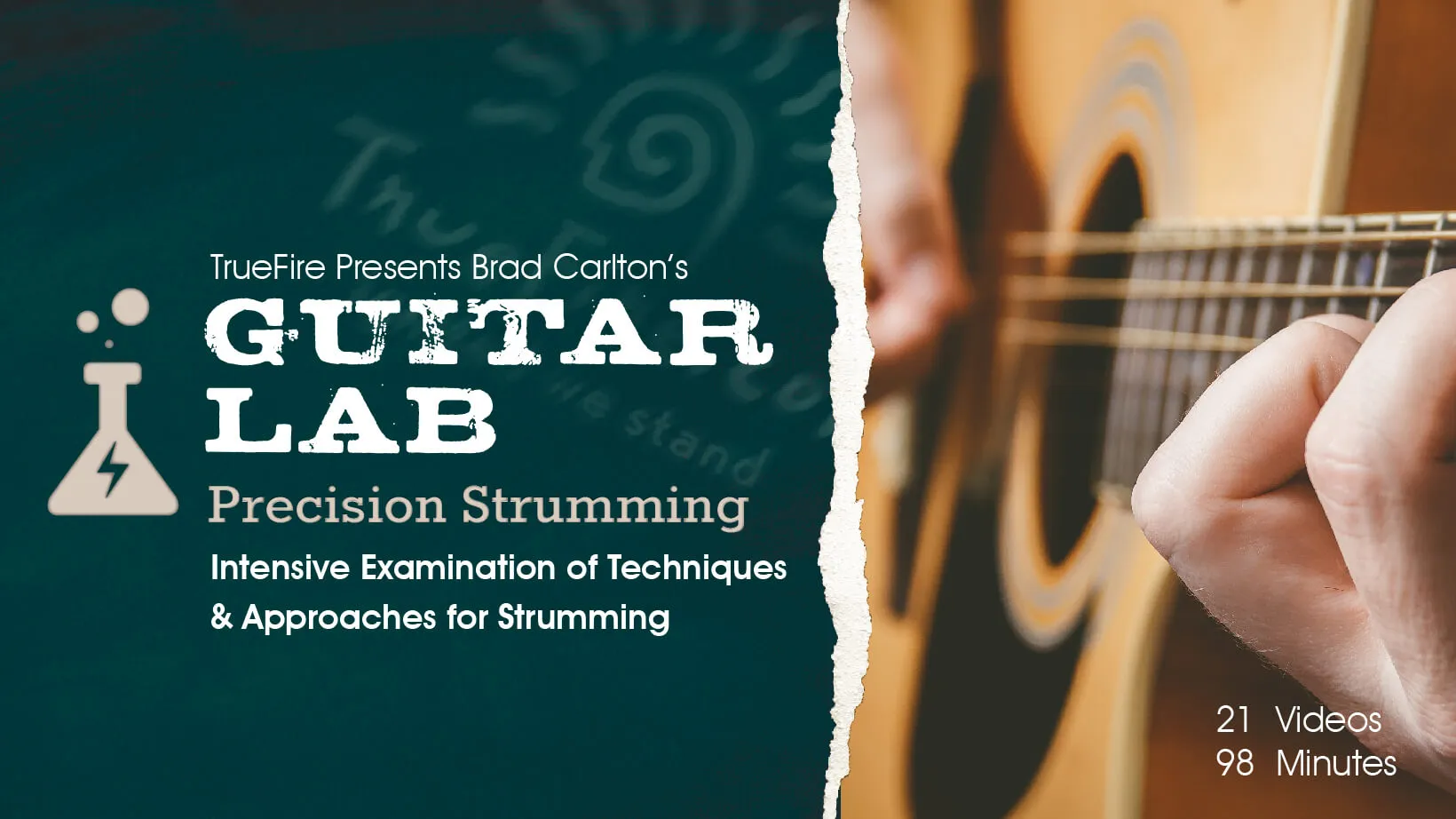
Guitar Lab: Precision Strumming

Intensive Examination of Techniques & Approaches for Strumming

Marty FriedmanTommy EmmanuelSteve VaiEric GalesEric Johnson

Get this course and 1,000+ more with All Access

Try 14 days free. Cancel any time.

Purchase Individual Course for $5.00
Guitar Lab: Precision Strumming

About this course

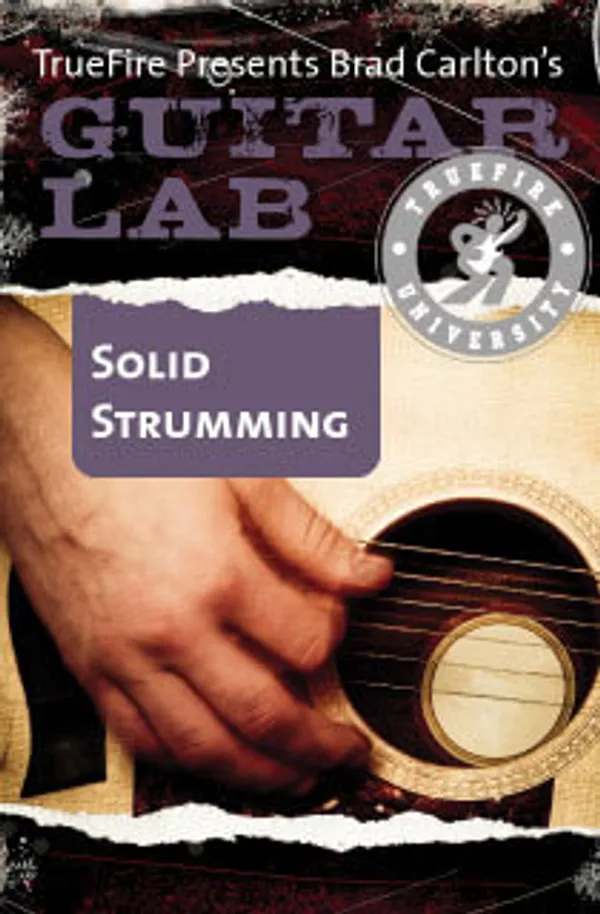
Welcome to Guitar Lab: Precision Strumming. This course will examine the nuances of picking and strumming with an emphasis on rhythmic confidence and control of voices and dynamics. You'll learn how to scrutinize your technique and develop exercises which will increase your inventory of picking and strumming patterns.

Some of the topics covered are: free strokes, rest strokes, picking options, bass and treble targets, "hill or valley" picking, ghost strokes, the "choke", palm slap, ring vs. dead, sustaining open strings, and eliminating squeaks. The information in this course will benefit both the beginner as well as the seasoned guitarist.Here's something for your consideration while going through this course. Accuracy: How close you can get to the correct result. Precision: How consistent you can get that result.

Accuracy refers to the closeness of a measured value to a standard or known value. For example, if in a lab you obtain a weight measurement of 3.2 kg for a given substance, but the actual or known weight is 10 kg, then your measurement is not accurate. In this case, your measurement is not close to the known value.

Precision refers to the closeness of two or more measurements to each other. Using the example above, if you weigh a given substance five times, and get 3.2 kg each time, then your measurement is very precise. Precision is independent of accuracy. You can be very precise but inaccurate, and you can also be accurate but imprecise. For example, if on average, your measurements for something is close to the known value, but the measurements are far from each other, then you have accuracy without precision.


What you'll learn

  • Play controlled strums on pairs of adjacent strings
  • Create varied textures beyond full chord strums
  • Use muting to develop precision in string targeting
  • Incorporate right-hand choking/muting into strumming patterns
  • Understand how to vary chord density for musical interest
Release date: 10/02/2017 • 1h 42m runtime
Start Course
Sample lessons
Single String Studies Pt. 1
Free Strokes
Single String Studies Pt. 2
Rest Strokes
Downstrokes vs. Upstrokes
Sonic Differences

What's included

21 lessons • 1 charts • 4 Jam Tracks

Guitar Lab: Precision Strumming
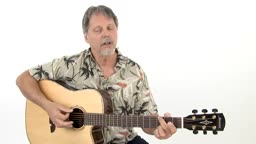
Hi, Brad Carlton here, and welcome to Guitar Lab: Precision Strumming. This course will examine the nuances of picking and strumming with an emphasis on rhythmic confidence and control of voices and dynamics. You'll learn how to scrutinize your technique and develop exercises which will increase your inventory of picking and strumming patterns.

Some of the topics covered are: free strokes, rest strokes, picking options, bass and treble targets, "hill or valley" picking, ghost strokes, the "choke", palm slap, ring vs. dead, sustaining open strings, and eliminating squeaks. The information in this course will benefit both the beginner as well as the seasoned guitarist.
Here's something for your consideration while going through this course. Accuracy: How close you can get to the correct result. Precision: How consistent you can get that result.

Accuracy refers to the closeness of a measured value to a standard or known value. For example, if in a lab you obtain a weight measurement of 3.2 kg for a given substance, but the actual or known weight is 10 kg, then your measurement is not accurate. In this case, your measurement is not close to the known value.

Precision refers to the closeness of two or more measurements to each other. Using the example above, if you weigh a given substance five times, and get 3.2 kg each time, then your measurement is very precise. Precision is independent of accuracy. You can be very precise but inaccurate, and you can also be accurate but imprecise. For example, if on average, your measurements for something are close to the known value, but the measurements are far from each other, then you have accuracy without precision.

Single String Studies Pt. 1
Free strokes are defined as a pick or finger stroke which only contacts the string being played.
Single String Studies Pt. 2
Rest strokes are defined as a pick or finger stroke which contacts not only the string being played, but also comes to rest against the next highest pitch sting when using a downstroke with the thumb or the pick, and in the case of an upstroke with a finger or the pick, you come to rest against the next lowest pitched string. Rest strokes should be viewed as a follow-through of the pick or finger stroke.
Downstrokes vs. Upstrokes
This lesson will examine the differences of a downstroke versus an upstroke in terms of dynamics and tone.
Straight Eighths
Straight eighths are an equal subdivision of the beat into two equal parts.
Shuffle Eighths
Shuffle eighths are a figure derived from eighth note triplets in which the first two eighth notes are tied together.
Bluegrass Style Alternate Bass Pt. 1
This lesson will present a basic bluegrass style bass-chord-bass-chord approach in which the chords will simply be a quarter note.

+ 14 more lessons

Start Course

Reviews

5 results

designzilla

07/25/25

Brad is a great teacher

My rhythm playing had gotten sloppy and I felt the need to go back to basics and tighten everything up. This course is just what I needed. Brad offers a very practical and concise plan for getting back in the groove. Just what I needed.

mccambda

Verified buyer

05/14/21

Guitar lab Precision strumning.

This course by Brad Carlton is for guitarists wishing to improve technique. Everyone will find something of benefit. If your groove when playing is loose and sloppy then applying Brads exercises will improve your style. Lots of details on using picks here and how to different sounds from picks. If you like going into detail of technique you will like this course.

red52

10/22/20

Strum with Precision

Brad Carlton is obviously a qualified educator. You can tell by the way he organizes his courses and Precision Strumming falls in line with a proper lesson plan. I want to improve my rhythm guitar playing so I got this course. Brad makes the learner aware of the beat and count when playing rhythm guitar. He also brings awareness to subtle nuances like rest and free strokes. He does the entire course on acoustic guitar so all are accommodated. Buy it!

Elvira

11/12/19

Rut breaker, by chance

Anything but five stars would be impertinent, since I bought this course by chance in a five dollar sale and it is much worth than that. Brad Carlton explains things very systematically and guides you through every rhythmic, technical and string option to develop a confident right hand. He always encourages you to trust on your own acoustic and tactile judgements and pays great attention to rhythmic accuracy. What distinguishes this course from most of the Truefire catalogue is that you propably end up watching this with a pen and paper in your hands instead of a guitar, in order to design your own practice schedule according to your personal needs or stylistic interests. By the way, even though this is not a style course, you’ll get some useful insights into Bluegrass/Carter-style or Funk. Although Brad rambles around a bit more than in his other courses, for me, who never methodically learned how to flat pick and strum, this has been just the rut breaker, I didn’t even know I was looking for.

mattstutts2

10/05/18

Bang the beat

There are not a lot of TF courses dedicated solely to the topic of acoustic percussive playing. Yes, there are courses that include those kind of ideas in individual lessons but this is one of the few that tries to paint a broad stroke on the topic by providing you with a lot of different examples. A lot of the focus is actually how to sort of choke and attack the strings more than banging on the body of the guitar (though that's in there too.) If you play rhythm acoustic, take an hour and go through these lessons.

Stop searching. Start improving with All Access.

Try 14 days free. Cancel any time.