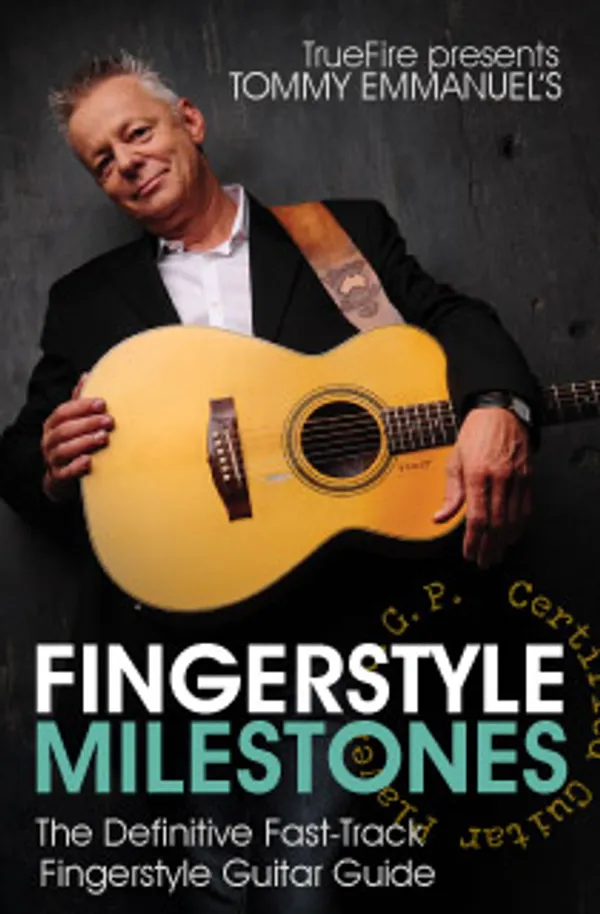
Few would argue that Tommy Emmanuel is the most charismatic, soulful, and technically brilliant fingerstyle guitar player walking the planet today. Learning to play any of Tommy’s songs, as Tommy himself would perform it, is no easy task for we mere mortal guitar players, but the learning adventure is rich with rewards.
Tommy’s Certified Gems 2 includes over 7 hours of multi-angle video guitar lessons presenting full performances and detailed breakdowns of Dixie McGuire, Waltzing Matilda, Stevie’s Blues, Amazing Grace, and Hope Street.
”In this second edition of Certified Gems we've picked 5 songs for you - some of them I've been performing at my concerts for quite a while, some of which people have written to me and asked to do an instructional video about. We'll learn Hope Street, Waltzing Matilda - Australia's unofficial national anthem - and Amazing Grace, a beautiful and spiritual song. We'll also work through Stevie's Blues, dedicated to the great Stevie Ray Vaughn, and Dixie McGuire, which I recorded with Chet Atkins. First I'll tell you a little about the song - where it comes from, why I wrote it - and then I'll perform the song for you, after which I’ll break it down and teach you how to play it.”
For each of the 5 tunes, Tommy first shares a little background on his inspiration for the composition and then performs the tune in its entirety. Tommy then steps you through a detailed note-by-note breakdown covering every section of the arrangement and every technique he employs during the performance; intros, verses, choruses, outros and even the improvisational sections - you get it all straight from Tommy.
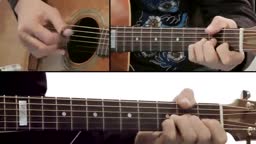
Tommy is extraordinarily inventive on the fretboard, which makes learning his songs, and playing them correctly, challenging because it's difficult to discern exactly what Tommy is doing with both his right and left hands. That’s why we include a variety of angles and close-up views of both hands, plus a wide and a composite view for each of the 5 songs in the course. You won’t miss a thing!
Ready to start your Tommy Emmanuel learning adventure? Grab your guitar, pick your favorite Tommy tune and lets dig in with the master himself!
Hi, I'm Tommy Emmanuel, and welcome to Certified Gems Vol. 2. This time we've picked songs for you - some of them I've been performing at my concerts for quite a while, some of which people have written to me and asked to do an instructional video about. We'll look at songs like "Hope Street", "Waltzing Matilda" - Australia's "unofficial" national anthem - and "Amazing Grace", a beautiful and spiritual song. We'll also look at "Stevie's Blues", dedicated to the great Stevie Ray Vaughn, and "Dixie McGuire", which I recorded with Chet Atkins.
First I'll tell you a little about the song - where it comes from, why I wrote it - and then I'll perform the song for you and break it down and teach you how to play it. Check it out, grab your guitar, and let's get going!
"Dixie McGuire" is a song that I wrote back in the mid-70's, named after Dixie, a little girl that was the daughter of a very good friend of mine, Duncan McGuire. She looked just like Shirley Temple, with curly hair. Whenever I went to work in the studio with her dad, Dixie was there too and we'd always play games together.
I wrote the tune and recorded it on a very early album of mine called From Out of Nowhere in 1979, played on a nylon stringed guitar. It's one of those songs that I wasn't sure if it was any good, so I played it for a friend of mine who was a songwriter. I asked him if it was any good, and he said, "Oh, it's good alright." And then he said something profound: "A good song will find a good home." I've always remembered that, and he was right. When Chet Atkins called me to record our album The Day Finger Pickers Took Over the World together, one of the first things I did was playing Dixie McGuire to him over the phone. He liked it and immediately wanted to do it, so, my song found a good home.
Speaking of that, I'm going to play the song in its entirety now, but I want to tell you, when I recorded it with Chet, he wanted to do a key change where we could take some solos. So, the song is in D, but where we do the solos, we go up a step to E, and then it drops back into D for the bridge. Here I'm just going to play it as the "composer" intended, and then I'll show you the key change as a separate thing that you can use or leave out. So, here it is, "Dixie McGuire."
"Dixie McGuire" is a song that I wrote back in the mid-70's, named after Dixie, a little girl that was the daughter of a very good friend of mine, Duncan McGuire. She looked just like Shirley Temple, with curly hair. Whenever I went to work in the studio with her dad, Dixie was there too and we'd always play games together.
I wrote the tune and recorded it on a very early album of mine called From Out of Nowhere in 1979, played on a nylon stringed guitar. It's one of those songs that I wasn't sure if it was any good, so I played it for a friend of mine who was a songwriter. I asked him if it was any good, and he said, "Oh, it's good alright." And then he said something profound: "A good song will find a good home." I've always remembered that, and he was right. When Chet Atkins called me to record our album The Day Finger Pickers Took Over the World together, one of the first things I did was playing Dixie McGuire to him over the phone. He liked it and immediately wanted to do it, so, my song found a good home.
Speaking of that, I'm going to play the song in its entirety now, but I want to tell you, when I recorded it with Chet, he wanted to do a key change where we could take some solos. So, the song is in D, but where we do the solos, we go up a step to E, and then it drops back into D for the bridge. Here I'm just going to play it as the "composer" intended, and then I'll show you the key change as a separate thing that you can use or leave out. So, here it is, "Dixie McGuire."
"Dixie McGuire" is a song that I wrote back in the mid-70's, named after Dixie, a little girl that was the daughter of a very good friend of mine, Duncan McGuire. She looked just like Shirley Temple, with curly hair. Whenever I went to work in the studio with her dad, Dixie was there too and we'd always play games together.
I wrote the tune and recorded it on a very early album of mine called From Out of Nowhere in 1979, played on a nylon stringed guitar. It's one of those songs that I wasn't sure if it was any good, so I played it for a friend of mine who was a songwriter. I asked him if it was any good, and he said, "Oh, it's good alright." And then he said something profound: "A good song will find a good home." I've always remembered that, and he was right. When Chet Atkins called me to record our album The Day Finger Pickers Took Over the World together, one of the first things I did was playing Dixie McGuire to him over the phone. He liked it and immediately wanted to do it, so, my song found a good home.
Speaking of that, I'm going to play the song in its entirety now, but I want to tell you, when I recorded it with Chet, he wanted to do a key change where we could take some solos. So, the song is in D, but where we do the solos, we go up a step to E, and then it drops back into D for the bridge. Here I'm just going to play it as the "composer" intended, and then I'll show you the key change as a separate thing that you can use or leave out. So, here it is, "Dixie McGuire."
"Dixie McGuire" is a song that I wrote back in the mid-70's, named after Dixie, a little girl that was the daughter of a very good friend of mine, Duncan McGuire. She looked just like Shirley Temple, with curly hair. Whenever I went to work in the studio with her dad, Dixie was there too and we'd always play games together.
I wrote the tune and recorded it on a very early album of mine called From Out of Nowhere in 1979, played on a nylon stringed guitar. It's one of those songs that I wasn't sure if it was any good, so I played it for a friend of mine who was a songwriter. I asked him if it was any good, and he said, "Oh, it's good alright." And then he said something profound: "A good song will find a good home." I've always remembered that, and he was right. When Chet Atkins called me to record our album The Day Finger Pickers Took Over the World together, one of the first things I did was playing Dixie McGuire to him over the phone. He liked it and immediately wanted to do it, so, my song found a good home.
Speaking of that, I'm going to play the song in its entirety now, but I want to tell you, when I recorded it with Chet, he wanted to do a key change where we could take some solos. So, the song is in D, but where we do the solos, we go up a step to E, and then it drops back into D for the bridge. Here I'm just going to play it as the "composer" intended, and then I'll show you the key change as a separate thing that you can use or leave out. So, here it is, "Dixie McGuire."
"Dixie McGuire" is a song that I wrote back in the mid-70's, named after Dixie, a little girl that was the daughter of a very good friend of mine, Duncan McGuire. She looked just like Shirley Temple, with curly hair. Whenever I went to work in the studio with her dad, Dixie was there too and we'd always play games together.
I wrote the tune and recorded it on a very early album of mine called From Out of Nowhere in 1979, played on a nylon stringed guitar. It's one of those songs that I wasn't sure if it was any good, so I played it for a friend of mine who was a songwriter. I asked him if it was any good, and he said, "Oh, it's good alright." And then he said something profound: "A good song will find a good home." I've always remembered that, and he was right. When Chet Atkins called me to record our album The Day Finger Pickers Took Over the World together, one of the first things I did was playing Dixie McGuire to him over the phone. He liked it and immediately wanted to do it, so, my song found a good home.
Speaking of that, I'm going to play the song in its entirety now, but I want to tell you, when I recorded it with Chet, he wanted to do a key change where we could take some solos. So, the song is in D, but where we do the solos, we go up a step to E, and then it drops back into D for the bridge. Here I'm just going to play it as the "composer" intended, and then I'll show you the key change as a separate thing that you can use or leave out. So, here it is, "Dixie McGuire."
"Dixie McGuire" is a song that I wrote back in the mid-70's, named after Dixie, a little girl that was the daughter of a very good friend of mine, Duncan McGuire. She looked just like Shirley Temple, with curly hair. Whenever I went to work in the studio with her dad, Dixie was there too and we'd always play games together.
I wrote the tune and recorded it on a very early album of mine called From Out of Nowhere in 1979, played on a nylon stringed guitar. It's one of those songs that I wasn't sure if it was any good, so I played it for a friend of mine who was a songwriter. I asked him if it was any good, and he said, "Oh, it's good alright." And then he said something profound: "A good song will find a good home." I've always remembered that, and he was right. When Chet Atkins called me to record our album The Day Finger Pickers Took Over the World together, one of the first things I did was playing Dixie McGuire to him over the phone. He liked it and immediately wanted to do it, so, my song found a good home.
Speaking of that, I'm going to play the song in its entirety now, but I want to tell you, when I recorded it with Chet, he wanted to do a key change where we could take some solos. So, the song is in D, but where we do the solos, we go up a step to E, and then it drops back into D for the bridge. Here I'm just going to play it as the "composer" intended, and then I'll show you the key change as a separate thing that you can use or leave out. So, here it is, "Dixie McGuire."
I have bought this course to learn how to play Amazing Grace the way Tommy plays it. The arrangement and chords that he uses is just amazing. But more than that, you kind of get a feeling of what I takes to be a top artist. I’m going to actually take a long time to learn the song, but I’m glad I purchased this course.
D
djcarey1960
Verified buyer
10/29/21
Tommy Emmanuel is amazing
Spend an hour watching Tommy teach you a song and you will come away with techniques you never knew you could do. While you won't play the song the way Tommy does, he will inspire you to at least try to emulate how he plays. Tommy's presentation style is laid back, very detailed and is like learning from a friend.
A
audiOlymp
Verified buyer
10/20/21
Great course!
G
gretsch1
Verified buyer
10/10/21
I’ve really n enjoyed this course and can see me dipping in to it over the coming months
V
vmjmurphy
Verified buyer
09/16/21
It's Tommy, isn't it?
Tommy Emmanuel takes you bar by bar through some of his performance arrangements, showing you exactly how he plays them. This is tricky stuff, but well worth the money just to watch Tommy. Brilliant!