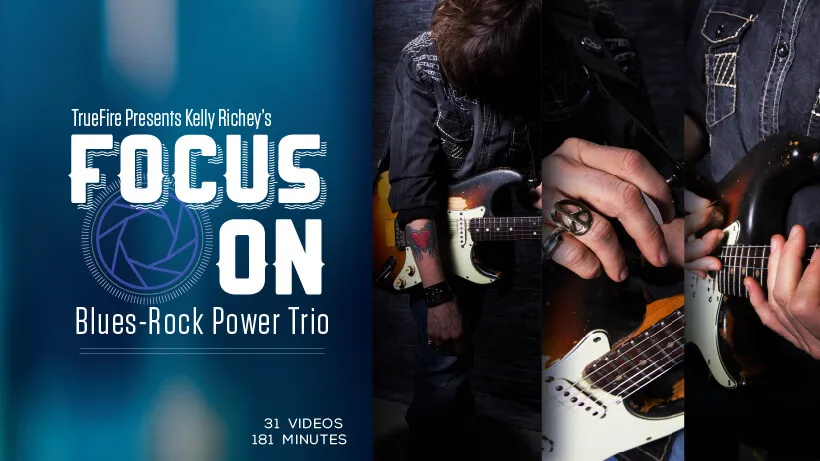
Focus On: Blues-Rock Power Trio

An examination of blues-rock guitar in a trio setting

Marty FriedmanTommy EmmanuelSteve VaiEric GalesEric Johnson

Get this course and 1,000+ more with All Access

Try 14 days free. Cancel any time.

Purchase Individual Course for $9.99
Focus On: Blues-Rock Power Trio

About this course

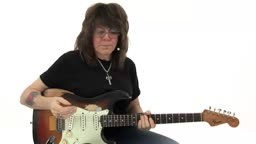
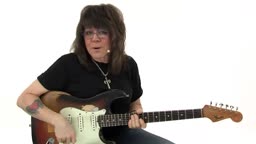
There’s nothing more exhilarating for a guitarist than taking center stage and fronting a power trio. Witness the likes of Stevie Ray Vaughan, Hendrix, Jimmy Page, Clapton and so many other masters of this genre. It’s also a lot more challenging than it looks and that’s the premise for Kelly Richey’s Power Trio course, which focuses on the key elements, creative approaches and techniques that define the genre.

”We're going to focus on the essential techniques and specific elements that are used when playing guitar in a blues-rock power trio. We'll look at rhythm and lead guitar techniques and how they overlap, working together seamlessly to create a powerful wall of sound. I'll also focus on the importance of creating musical ‘holes’, the power of creating space and how to work with a drummer and bass player to create a unique sound that best supports your guitar style.”

Kelly organized this course into four sections. In the first section, Kelly overviews the history of Blues-Rock Power Trios and some of the key players of the genre. Kelly also runs down the most common gear and tone considerations you’ll need to dial in to get that signature power trio blues-rock sound.

”We'll look at how to design the right guitar rig to support your unique style. You'll learn about guitar tone, effects, amplifiers and speaker configuration - all the things critical for you to have sustain, texture and articulation to support your signature power trio sound.”

In the second section, Kelly guides you through a series of essential rhythm techniques. She'll show you the go-to chord voicings, a variety of ways to embellish your chords and some riff based approaches that weave rhythm and lead playing together.

In the third section, you'll focus on soloing techniques. Kelly shares tips and tricks for animating your pentatonic scales with punctuation, articulation and dynamics. Kelly also demonstrates how to incorporate bends and vibrato to bring each note to life.

”We'll work on approaches for playing lead guitar in a power trio setting. You'll learn essential soloing techniques that reveal how to build a bridge between lead and rhythm guitar, leverage dynamics and create the musical ‘holes’ necessary to fully connect with a rhythm section.”

In the final section, you’ll apply everything that you learned in the previous sections as you play your way through four Performance Studies in a variety of keys and feels: Love, Whole Lotta Love, You Wanna Rock and Blues Rock Haze.

Kelly demonstrates all of the Performance Studies over rhythm tracks and then breaks them down by stepping you through the key concepts and techniques employed in the performance.

All of the key examples and Performance Studies are tabbed and notated for your practice, reference and study purposes. You’ll also get Guitar Pro files so that you can loop and/or slow any section down as you work through the lessons. Plus, Kelly generously includes all of the rhythm tracks for you to work with on your own.

So grab your guitar and let’s power up with Kelly Richey!

What you'll learn

  • Understand pentatonic scale mapping
  • Advanced solo embellishment techniques
  • Controlling musical noise
  • Understand how guitar choice impacts tone
  • Develop consistent finger movement patterns
Release date: 03/04/2016 • 3h 01m runtime
Start Course
Sample lessons
Embellishing Chord Progressions
Rhythm Concept 2
Bridge Between Rhythm & Lead
Rhythm Concept 4
Punctuation & Dynamics
Soloing Concept 1
Flat Tire For Lead
Flat Tire For Lead
Soloing Concept 6

What's included

31 lessons • 15 charts • 4 Jam Tracks

Focus On: Blues-Rock Power Trio
Hi, I'm Kelly Richey and welcome to Focus On: Blues-Rock Power Trio. Many of today's most popular guitar players like Jimi Hendrix, Jimmy Page, Eric Clapton, and Stevie Ray Vaughan played in what’s called a “power trio”. In this course, we're going to focus on the essential techniques and specific elements that are used when playing guitar in a blues-rock power trio. We'll look at rhythm and lead guitar techniques and how they overlap, working together seamlessly to create a powerful wall of sound. I'll also focus on the importance of creating musical “holes”, the power of creating space, and how to work with a drummer and bass player to create a unique sound that best supports your guitar style.

I've separated this course into four sections:

The first section will give you an overview of the history of three-piece blues and blues-rock players that have influenced my style and my overall sound. I'll also talk about their individual rhythm sections and how particular artists’ rhythm sections played a key role in their sound. We'll also look at how to design the right guitar rig to support your unique style. You'll learn about guitar tone, effects, amplifiers, and speaker configuration - all the things critical for you to have sustain, texture, and articulation to support your signature sound.

In the second section, we'll look at how to approach playing rhythm guitar in a power trio, focusing on essential rhythm guitar techniques like chords and chord voicings, riffs, and riff-based rhythm guitar.

In the third section, we'll look at how to approach playing lead guitar in a power trio. You'll learn essential soloing techniques that'll teach you how to build a bridge between lead and rhythm guitar, leverage dynamics, and create musical “holes” necessary to fully connect with a rhythm section.

Lastly, in the fourth section, I'll put all of these these essential techniques and concepts together into a series of performance studies. Let’s get started!
SECTION 1: Background
As a guitarist, I think it’s important to find one’s own voice, style, and unique signature way of playing. In contrast, as a teacher I think one of the most important roles that I play is not just dishing out information, but supporting students in finding their own voices and unique sound.

I’d like to start off by giving you an overview of my musical influences in the order that I discovered them so you can see how my style developed during my critical learning years. I want to point out what I took from each player and how I've morphed each guitarists’ influence into my own personal style: players like Jimi Hendrix, Jimmy Page, Eric Clapton, Eddie Van Halen, Billy Gibbons, Joe Walsh, Stevie Ray Vaughan, Roy Buchanan, Jeff Beck, and Alex Lifeson were all huge influences. I'll talk a little bit about their guitar style, their individual rhythm sections, and how their rhythm sections influenced and supported the way they played. I'll also talk about their guitar selection, overall tone, and the gear they used to create some of the most amazing guitar sounds we have to learn from. There are so many amazing guitarists that have influenced me throughout the years, but for the purpose of this series I've chosen Jimi Hendrix, Jimmy Page, Eric Clapton, and Stevie Ray Vaughan; narrowing my focus as I delve more in depth into this series.
History & Players
Jimi Hendrix was my very first influence. The very first song I ever heard by Hendrix was “And The Gods Made Love” and the first time I ever heard feedback! From Hendrix I learned the connection between distortion and sustain, what could be done with delays and a wah wah pedal. It was through Hendrix that I began my journey into the world of tube amps and speaker configuration, live performance and the world of recording.

While Jimi Hendrix guitar parts soared over top of his rhythm section, Jimmy Page was an intricate part of the power trio sound of Led Zeppelin. Page opened the door to power chords, riff driven grooves, rhythm and leads that were interdependent with John Bonham and John Paul Jones as well as Robert Plant’s vocals. My journey continued to evolve as I saw the difference between Zeppelin's studio versions of songs and their live performance recordings, mainly the soundtrack and movie footage from The Song Remains the Same, a movie I went to see a dozen times as a teenager. It was through Page that my love for recording grew, and I was inspired to want to record and produce my own records. Jimmy Page showed me the importance of creating musical space, articulation, speed (and also some chaos), with a form of syncopation with his bandmates that I'd never experienced.

NOTE: Creedence Clearwater Revival helped me see the brilliance of three chord songs before I ever even discovered the blues.

Eddie Van Halen took everything I'd learned about simplicity and added a layer of technical ability that no one had ever seen. I was heavily influenced by Eddie’s guitar tone and loved how Eddie Kramer mixed his guitar panned hard to one side in the mix while adding reverb panned hard to the opposite side, so a single guitar track sounded like you were in a stadium. This was a drastic departure from the psychedelic guitar sound of the 1960's and early 1970's. I never did a lot of tapping like Eddie, but I did begin to pull in pinch harmonics as they were being used by Billy Gibbons (who introduced me to that "Texas" sound).

I first discovered Eric Clapton through the record Cream Live. This is where I learned to jam with others and interact in a more tightly woven connection with a band, allowing a more complicated drumming approach to be my foundation rather than something I had to play to (or with). Through Cream Live I grew comfortable with musical chaos and learned to see patterns in music that I could begin to recreate in my own playing. I would later revisit Eric Clapton when I put The Kelly Richey Band together and began to play blues in the early 1990’s.

Another big influence was Joe Walsh and the James Gang, especially “Funk #49”, a powerful riff-driven song with a groove that pulled from blues, rock, and funk. I played in a number of acoustic folk-rock duos during the first half of my career, and Joe Walsh’s work with the James Gang highly influenced me; but his work with the Eagles and his production of Dan Fogelberg’s Sounioneres record that drove my interest for production and recording.

Then came SRV, and I found myself getting back to the basics of guitar tone and eventually learned that tone started in your hands and on the neck of your guitar; from there the sound is amplified, not the inverse. By the time SRV hit the scene, I had developed all the speed I was going to develop and his right hand technique helped me take my playing to a whole new level by adding a left and right hand muting technique for either a funky sound or a "flat tire" approach when playing with a shuffle. SRV’s ability to bend strings and command righteous tone out of each and every note of his guitar was something that sent me on a quest for the perfect tone, maximum amount of sustain, and overall groove that would rock people to the edge of their chairs. His ability to emote drew me in.

And then there as Roy Buchanan, quite possibly my most favorite guitar player. I saw Roy play live three times and all three times he played as a three-piece. Roy played with such emotion and precision, raising the bar even higher in my search of taking a “journey” with my guitar and creating a conversation with music alone.

NOTE: David Gilmour was not in a “power trio”, but his guitar playing was one of my biggest influences and helped me to distill what I learned from Jimi Hendrix's and Roy Buchanan's playing techniques.

Jeff Beck Wired and Blow by Blow were woven in along the way, giving me an example of a player that used his fingers instead of a pick. Jeff also used his whammy bar differently than any other guitarist I'd seen.

Frank Marino and Mahogany Rush sprinkled in influence, as well as Alex Lifeson of RUSH. Listening to Alex Lifeson helped me to develop much of my core strength as a guitarist in a power trio, as he completed the circle between a rather complex, yet straightforward rock n’ roll sound with more groove orientated sounds of blues-based power trios like Cream, Zeppelin, and Jimi Hendrix.
Tones & Gear
Here we'll discuss the importance of your hand technique and how your tone starts there. I'll discuss the main differences between Fender and Gibson guitars, single coil and humbucker pickups, and what impact your selection of guitars has on the development of your effect and amplifier choices. We'll talk about guitar tone, how to select and properly use effects, different amplifiers and speaker configuration - all things that affect your ability to create sustain, texture, and articulation to support the development of your own unique style. I'll talk about how the elements of sound creation impact your playing and ability to perform with the power and confidence you need to find your own voice.

Be sure to visit my “Gear” section on my YouTube page where I have dozens of videos that show the evolution of my pedal board, guitar selection, signal chain, and informative lists of specific gear for you to have as a reference.

Kelly Richey's YouTube Channel

SECTION 2: Essential Rhythm Concepts
In this section, we'll cover essential rhythm guitar techniques such as chords and chord voicings, grooves, and riff based rhythm patterns.
Chords, Bar Chords & Power Chords
This lesson looks at a few different chord options:

Open Chords vs. Barre Chords
Barre Chords vs. Power Chords
Barre Chord w/ Embellishments and Substitutions - Major, Minor, 7th, 7#9 Chords
Embellishing Chord Progressions
In this lesson, I'll show you a number of common chord voicings that I use when playing in a power trio, focusing on ways to embellish bar chords and add articulation to individual chords as well as chord progressions. We'll look at ways to begin weaving rhythm and lead together for an effective wall of sonic texture that’s characteristic of a "power trio" sound.

I'll show you left and right hand muting as well as strumming and rhythm techniques that you can quickly and effectively add to your guitar toolbox. We'll cover concepts like using open strings as a drone, chord suspension, adding hammer-ons, pull-offs, rakes, and mutes, also talking about executing bar chords, power chords, and other chord forms.

I'll use songs like "Hey Joe", "All Along The Watchtower", and "Crossroads" as examples to show how these concepts can be used.

+ 24 more lessons

Start Course

Reviews

10 results

dwa79

Verified buyer

10/12/23

10 Star

I would give more stars if possible. Kelly not only shares the what but also shares the how. This course isn’t just for those wanting to be in a trio. I found it to be one of the best blues/rock courses available. I look forward to Kelly’s other course(s)

LStreet5

Verified buyer

04/03/22

blues rock power trio

I like how Kelly really breaks down each concept and explains what she's doing . Best of all I like how she explains what both hands are doing . Great course!

Jorge

10/20/21

Blues-Rock Power Trio

Kelly Richey is a wonderful guitarist who has skills and experience that are worthy of recognition, she has an energy and dynamics in her playing that I really like. The licks and rhythms she is able to create are very fun to learn and play because the expression she has with the guitar is amazing. The content you can learn is of very good quality, the concepts are understandable so you can improve your technique.

Gonzarelli

Verified buyer

01/27/21

Blues-Rock Power Trio

This course is great. Kellie is really down to earth and easy to understand and follow. I love the blues-rock genre and I am learning a lot about how to really fill space with the guitar. Especially how to combine rhythm and lead which is essential in a trio arrangement. Gonzarelli

odalovic

Verified buyer

01/09/21

Zoro

Blues rock essentials, big experience

Stop searching. Start improving with All Access.

Try 14 days free. Cancel any time.