

Custom72
Verified buyer
01/11/26
Great course for slide Blues lovers !!

Get this course and 1,000+ more with All Access
Try 7 days free. Cancel any time.
About this course
What you'll learn
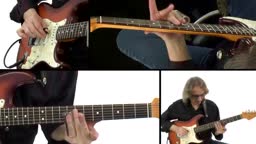
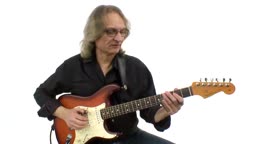
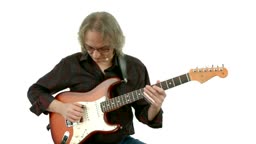
32 lessons • 10 charts • 9 Jam Tracks
In this course we're going to keep it basic and simple. We're going to focus in on the blues and stick to two tunings, G and D. I've also set it up so that most of the melodies are played on the top three strings in two zones on the neck. In all cases we'll utilize what I like to call "finger guarding," which is a kind of muting with the right hand. I'll also show you how to fret behind the slide by only using the first finger on the left hand, which can really open up your slide playing once you get the hang of it.
One of my favorite things about slide guitar is the vocal quality it can add to your playing and phrasing, so we'll talk a lot about how to achieve this. I want to give you a sense of how resourceful a slide with chordal tunings can be while using less real estate on the neck to create more music.
This tune is based on the classic "Walking Blues," a solid, four-on-the-floor rock groove ala Paul Butterfield version. For this 12 bar blues I'm in open G tuning, which is from low to high, DGDGBD.
We'll do some fretting behind the slide at the 12th fret with the index finger only and get some nice vibrato going on in the verse. Then we'll shift down to the open strings for the solo. Let's check it out.
This tune is based on the classic "Walking Blues," a solid, four-on-the-floor rock groove ala Paul Butterfield version. For this 12 bar blues I'm in open G tuning, which is from low to high, DGDGBD.
We'll do some fretting behind the slide at the 12th fret with the index finger only and get some nice vibrato going on in the verse. Then we'll shift down to the open strings for the solo. Let's check it out.
This tune is based on the classic "Walking Blues," a solid, four-on-the-floor rock groove ala Paul Butterfield version. For this 12 bar blues I'm in open G tuning, which is from low to high, DGDGBD.
We'll do some fretting behind the slide at the 12th fret with the index finger only and get some nice vibrato going on in the verse. Then we'll shift down to the open strings for the solo. Let's check it out.
For this one I'm working with one of the greatest slide riffs of all time in D tuning, which from low to high is DADF#AD. We'll put a different twist on this classic by muting at the 12th fret to give it a different attitude. The progression is a basic 12 bar form, but instead of a straight ahead traditional groove, we'll be playing over a funky double shuffle rhythm to give it a sense of syncopation.
I'll be fretting behind the slide with my first finger on two strings at a time to give it a more modern sound. For the solo on the second time through we'll use single notes around the 12th fret in what I like to call the "anchor zone."
For this one I'm working with one of the greatest slide riffs of all time in D tuning, which from low to high is DADF#AD. We'll put a different twist on this classic by muting at the 12th fret to give it a different attitude. The progression is a basic 12 bar form, but instead of a straight ahead traditional groove, we'll be playing over a funky double shuffle rhythm to give it a sense of syncopation.
I'll be fretting behind the slide with my first finger on two strings at a time to give it a more modern sound. For the solo on the second time through we'll use single notes around the 12th fret in what I like to call the "anchor zone."
For this one I'm working with one of the greatest slide riffs of all time in D tuning, which from low to high is DADF#AD. We'll put a different twist on this classic by muting at the 12th fret to give it a different attitude. The progression is a basic 12 bar form, but instead of a straight ahead traditional groove, we'll be playing over a funky double shuffle rhythm to give it a sense of syncopation.
I'll be fretting behind the slide with my first finger on two strings at a time to give it a more modern sound. For the solo on the second time through we'll use single notes around the 12th fret in what I like to call the "anchor zone."
+ 25 more lessons
19 results
Custom72
Verified buyer
01/11/26
Great course for slide Blues lovers !!
Raphael R.
03/29/24
Best course I have done
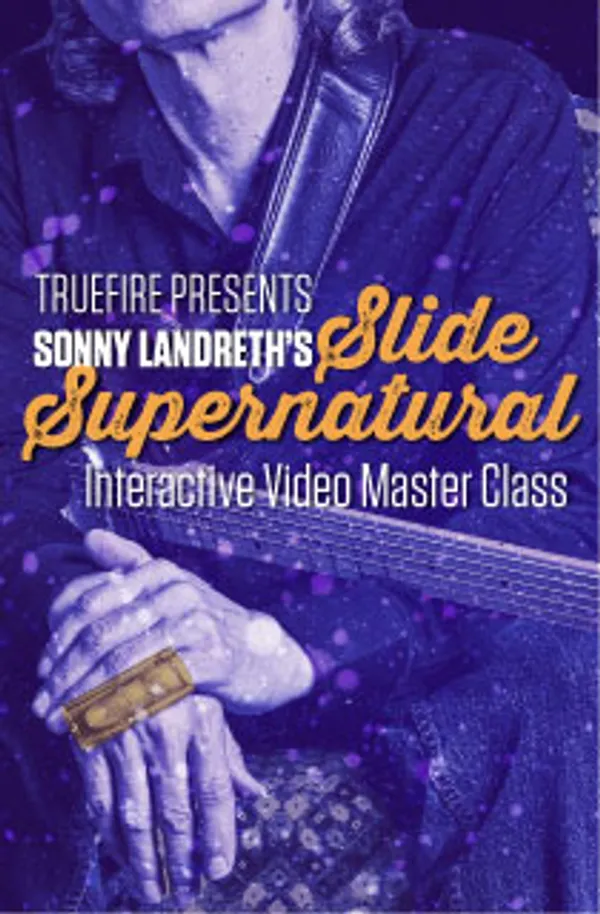
This is an amazing course. I already played some slide, and I knew the basics before I started with this course, but I was copying my heroes, Derek Truck and Duane Allman. Because of this course I learned how to play slide with my pinky, and I learned how to fret behind the slide. Because of this course I found my own voice/style on the guitar. Sonny Landreth is an amazing guitar player, and an amazing teacher.
chimaeraobscura
Verified buyer
10/04/22
How Not to Suck at Slide Blues Guitar
My slide playing is diseased, and Sonny Landreth is the prescription I need for good blues slide technique. Great course!
JohnSmithers
Verified buyer
07/15/22
Helpful
I was interested in learning the slide technique and this course certainly delivered.To be recommended.
psalm119
Verified buyer
07/13/22
This instructional is great , it is one of the kind , because you find just a few around , I just checked out the intto , and i knew it will be a winner , the material in dense , and teacher really good , excellent player , i wax lucky to get this video on discount , great truefire
Try 14 days free. Cancel any time.