Quantum Rock

Essential skills & approaches for instrumental rock guitar

Marty FriedmanTommy EmmanuelSteve VaiEric GalesEric Johnson

Get this course and 1,000+ more with All Access

Try 14 days free. Cancel any time.

Purchase Individual Course for $5.00
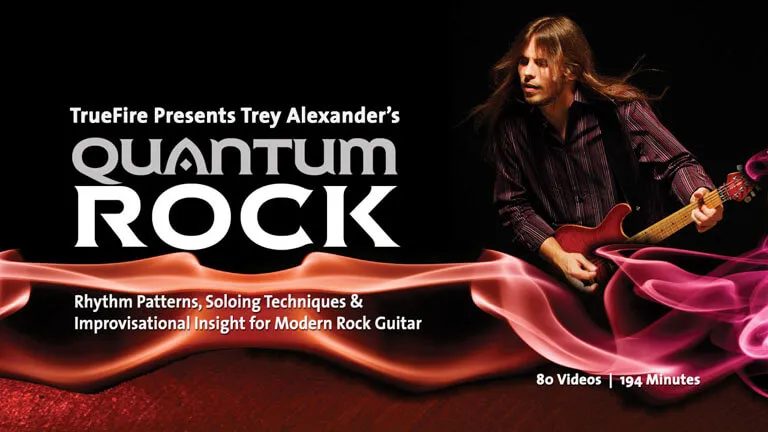
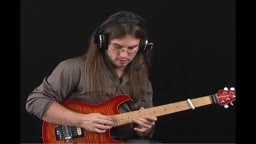
Quantum Rock

About this course

No other instrumental musical style has evolved quicker, or with greater sophistication, than electric rock guitar. The influence and progression from one generation to the next is clearly quantifiable in terms of tone, technique, harmony, composition and versatility. Years ago, if you had a grip on 1-4-5 progressions, pentatonic scales, a few bends and a couple of double-stops, you could gig or jam with pretty much anyone. Today however, rockers must have a big bag of theoretical, musical, physical and technical chops just to get by. And that's what Quantum Rock is all about - essential skill development for today's new generation of rock guitarist.

Contemporary rock guitarists are comfortable playing over changes, have solid command of right and left-hand techniques, can easily navigate the fretboard vertically and horizontally, are theoretically aware, possess strong improvisational skills and are adept at developing melodic ideas and rhythmic grooves. Need guidance in some or all of these areas? Dig deep into Trey Alexander's Quantum Rock!

Your Quantum Rock instructor is Trey Alexander, Guitar Hero 2006. "Possessing all of the qualities generally associated with the modern day guitar hero anddemonstrating them with a level of maturity far beyond his years, Trey is the type of musician who is destined to have a significant impact on the guitar community," says Greg Howe. Joe Satriani agrees that, "we'll be hearing great things from him!" Guitar Player editor Jude Gold raves about Trey's "astonishing focus, devotion, and versatility." Best of all for we students of Quantum Rock, Trey is a natural educator with potent communication skills.

Trey presents a range of modern rock arrangements designed to expose you to the variety of contemporary grooves, rhythmic patterns, techniques, phrasing and theoretical approaches that modern rock guitar players must have a grip on. You'll work through ballads, up-tempo power grooves, Latin-spiced rock and jazz-rock. Trey even walks you through the arrangement that blew the judges away and earned him the coveted Guitar Hero award.

You'll also learn Trey's approach and subtle inflections for utilizing expressions such as legato, tapping, sweeping and harmonics as musical elements to serve the melody rather than distract from it. No pyrotechnical fancy tricks or mindless shredding here.

Quantum Rock is not for the weak of heart, nor is the course suitable for beginner or early intermediate players (check out Trey's beginner rock course here). While the concepts are explained and demonstrated very clearly, you will spend serious time in the shed getting a grip on these techniques, skills and knowledge. Fear not though, Quantum Rock is a hands-on playing course — no tedious theory, boring exercises or theoretical dribble. You will be rockin' out from the very first lesson, and will quickly develop a raging addiction for your Quantum Rock practice sessions.

What you'll learn

  • Use pentatonic scale fragments within rhythm playing
  • Play syncopated rhythm patterns over a B minor groove
  • Execute a melodic walk-down using intervals
  • Add pinch harmonics as rhythmic accents
  • Coordinate rhythm guitar with bass line movement
Release date: 04/09/2008 • 3h 14m runtime
Start Course
Sample lessons
Modern Equivalent: Solo 2
Song
Latin Groove: Rhythm 1
Song
Latin Groove: Rhythm 1
Breakdown
Latin Groove: Rhythm 2
Song

What's included

81 lessons • 40 charts • 10 Jam Tracks

Quantum Rock
Modern Equivalent: Rhythm 1
This is a jazzier composition that I wrote for the Guitar Hero Competition. This is influenced by some of my favorite guitarists such as Guthrie Govan and Greg Howe. This progression uses a Cmin7 to start and walks down to a G. The chords have kind of a Hendrix grip to them, using the thumb to grab the bass notes. This is very useful when wanting to play other parts like melodies or small riffs that fill up the space of a three piece band. Most of my life I have played in a three piece band so I feel it is essential to learn how to comp and fill at the same time. This is also a great song to play using just your fingers. This will add a particularly smooth sound and when running it through a nice clean Mesa or Fender it's going to give you a real rich and creamy tone, almost a piano like sound. I also talk about slash chords and how they can give you quite a different sound when playing this track as a solo guitarist (without a band). This will not only give your playing a sophisticated feel but it will also make it quite funky! I also touch base on 3rds. This will give you some movement. Enjoy!!
Modern Equivalent: Rhythm 1
This is a jazzier composition that I wrote for the Guitar Hero Competition. This is influenced by some of my favorite guitarists such as Guthrie Govan and Greg Howe. This progression uses a Cmin7 to start and walks down to a G. The chords have kind of a Hendrix grip to them, using the thumb to grab the bass notes. This is very useful when wanting to play other parts like melodies or small riffs that fill up the space of a three piece band. Most of my life I have played in a three piece band so I feel it is essential to learn how to comp and fill at the same time. This is also a great song to play using just your fingers. This will add a particularly smooth sound and when running it through a nice clean Mesa or Fender it's going to give you a real rich and creamy tone, almost a piano like sound. I also talk about slash chords and how they can give you quite a different sound when playing this track as a solo guitarist (without a band). This will not only give your playing a sophisticated feel but it will also make it quite funky! I also touch base on 3rds. This will give you some movement. Enjoy!!
Modern Equivalent: Rhythm 2
This rhythm uses some alterations of the chords. The way that I looked at these chords was in the scaleular sense. Sometimes it is a good idea to look at the fret board as a whole and not think of what notes I am playing and try and do my best to let my ears find what they like. I think sometimes we all forget how important our ears are. The way that I came up with the variations was using the C Minor scale, I simply picked out notes that I enjoyed listening to. This helped to avoid grabbing some of the normal grips that you would use in rock and blues. I tried not to think about which chords I played and I really concentrated on letting my ear guide me to them. It is amazing what lurks in the back of your mind and if you take the time out to listen I think we all have very hip and cool things lurking in there. Remember that all of the things that we are learning are ultimately going to be used to help facilitate learning what is in our hearts and minds. That way, when the music is passed down to us we are capable of attempting to recreate it. At the end of the rhythm you will be doing a funk like rhythm with some double stop lines and some muting. This will add an extreme funk effect! Really concentrate on muting any unwanted notes. There is a great statement that the notes not being played are just as important as the ones coming out of your amplifier. You will also notice some repeating lines that are coupled with the bass notes. This creates a nice movement. Sometimes the bassist can give us the comfortability of playing the same thing and it still feeling like it has movement. So remember if you take any three notes and play them together it is going to create a chord that you may or may not like. Also keep in mind that there are no wrong notes just notes that you or I like better. Enjoy every sound that comes out and then take your time to listen to what you enjoy hearing!
Modern Equivalent: Rhythm 2
This rhythm uses some alterations of the chords. The way that I looked at these chords was in the scaleular sense. Sometimes it is a good idea to look at the fret board as a whole and not think of what notes I am playing and try and do my best to let my ears find what they like. I think sometimes we all forget how important our ears are. The way that I came up with the variations was using the C Minor scale, I simply picked out notes that I enjoyed listening to. This helped to avoid grabbing some of the normal grips that you would use in rock and blues. I tried not to think about which chords I played and I really concentrated on letting my ear guide me to them. It is amazing what lurks in the back of your mind and if you take the time out to listen I think we all have very hip and cool things lurking in there. Remember that all of the things that we are learning are ultimately going to be used to help facilitate learning what is in our hearts and minds. That way, when the music is passed down to us we are capable of attempting to recreate it. At the end of the rhythm you will be doing a funk like rhythm with some double stop lines and some muting. This will add an extreme funk effect! Really concentrate on muting any unwanted notes. There is a great statement that the notes not being played are just as important as the ones coming out of your amplifier. You will also notice some repeating lines that are coupled with the bass notes. This creates a nice movement. Sometimes the bassist can give us the comfortability of playing the same thing and it still feeling like it has movement. So remember if you take any three notes and play them together it is going to create a chord that you may or may not like. Also keep in mind that there are no wrong notes just notes that you or I like better. Enjoy every sound that comes out and then take your time to listen to what you enjoy hearing!
Modern Equivalent: Solo 1
This solo is a very clean creamy solo! A good way to get a nice sound for this solo is to use a Fender or a Mesa Boogie Lone Star like the one I used on this video. I also like to use my tone knob. I think that the tone knob is very underused and musicians like Eric Clapton and Eric Johnson did quite amazing tonal changes with them. So I would sit down with a nice clean sounding amp and really tweak and play around with it. You will be quite amazed with what you come up with! In this example I utilize two different scales. The C minor scale and the c minor pentatonic scale. I also use some blue tones that give this solo a little hip twist from your standard pentatonic and minor scales. You will then learn about bouncing back and forth off of the same notes, kind of like petal-toning. You will also see the huge difference it will make by just sliding into the notes instead of playing it normal (without the slur). Remember to sing along with your notes. I remember one of my first teachers, Tommy Gunn would have me sing the notes I was playing. This helped to better translate what I was hearing in my mind. So do not worry about how good you sing just start doing it and I am sure you will notice a difference in your playing! In the next part of the solo I outlined some notes from a Bb major chord. You will also notice that these notes exist in the minor scale as well. It is really important that you learn all of the positions of the scales so that you are familiar with all of the shapes. This will not only help free up the rest of the fret board but will help teach you all of the areas that you can play the same lines. And, a lot of soloing is repeating licks and passages with only slight differences. Be sure to check out the MAN at this, B.B. King!! At the end of this solo we walk that pentatonic up into some 6ths that really bring the end of the solo to a nice spot. Then we will overview a bit of a unique way to slide. This references keyboardists that use their pitch shifting bar. This is one of the only ways that you can take a static note and have the pitch raise and lower all in one motion! Check out Greg Howe for this kind of stuff. He is a superb and fantastic guitarist! At the very end we talk about dropping the pick and getting a little bit of Wes on you by using the side of your thumb! Remember, take all of these ideas and apply them to other solos in other styles of music. There is nothing wrong with taking these licks and putting them into your own playing!
Modern Equivalent: Solo 1
This solo is a very clean creamy solo! A good way to get a nice sound for this solo is to use a Fender or a Mesa Boogie Lone Star like the one I used on this video. I also like to use my tone knob. I think that the tone knob is very underused and musicians like Eric Clapton and Eric Johnson did quite amazing tonal changes with them. So I would sit down with a nice clean sounding amp and really tweak and play around with it. You will be quite amazed with what you come up with! In this example I utilize two different scales. The C minor scale and the c minor pentatonic scale. I also use some blue tones that give this solo a little hip twist from your standard pentatonic and minor scales. You will then learn about bouncing back and forth off of the same notes, kind of like petal-toning. You will also see the huge difference it will make by just sliding into the notes instead of playing it normal (without the slur). Remember to sing along with your notes. I remember one of my first teachers, Tommy Gunn would have me sing the notes I was playing. This helped to better translate what I was hearing in my mind. So do not worry about how good you sing just start doing it and I am sure you will notice a difference in your playing! In the next part of the solo I outlined some notes from a Bb major chord. You will also notice that these notes exist in the minor scale as well. It is really important that you learn all of the positions of the scales so that you are familiar with all of the shapes. This will not only help free up the rest of the fret board but will help teach you all of the areas that you can play the same lines. And, a lot of soloing is repeating licks and passages with only slight differences. Be sure to check out the MAN at this, B.B. King!! At the end of this solo we walk that pentatonic up into some 6ths that really bring the end of the solo to a nice spot. Then we will overview a bit of a unique way to slide. This references keyboardists that use their pitch shifting bar. This is one of the only ways that you can take a static note and have the pitch raise and lower all in one motion! Check out Greg Howe for this kind of stuff. He is a superb and fantastic guitarist! At the very end we talk about dropping the pick and getting a little bit of Wes on you by using the side of your thumb! Remember, take all of these ideas and apply them to other solos in other styles of music. There is nothing wrong with taking these licks and putting them into your own playing!

+ 74 more lessons

Start Course

Reviews

3 results

ironjens

Verified buyer

11/13/20

Ready to Rock!
Stephen B.

08/23/19

Lovin' It!

So much of current day rock seems so alien to me; distortion for the sake of distortion, loudness for the sake of creating a wall of noise - personally, I find such ilk unmusical, unmelodic, and psychically draining. That is why I was so happy to find the approach Trey has taken in this course. It is infused with a large chunk of latin themes, rhythms and melodies taught with a maturity of the musical constructions that is hard to match. The pacing he uses enables one to handily follow the teaching, and respond to numerous "ah-ha" moments. Good work Trey, and thank you! Several of the compositions will hold a cherished place in my own repertoire.

Rebell0

10/18/18

Howe, Vai, Eric Johnson inspired licks....and that's about it.

I was slightly disappointed with this course. Though there are some cool licks in the style of Greg Howe, Vai, Satriani, and Eric Johnson, the rhythm / backing tracks are kind of lame and uninspired, as are the melodies of the "tunes". Trey is a good player, sure , but this course is starting to show its age, and seemed to be put together quickly, and therefore was a no go for me. I had a hard time finishing this one, but wanted to give a fair review. 3 stars.

Stop searching. Start improving with All Access.

Try 14 days free. Cancel any time.