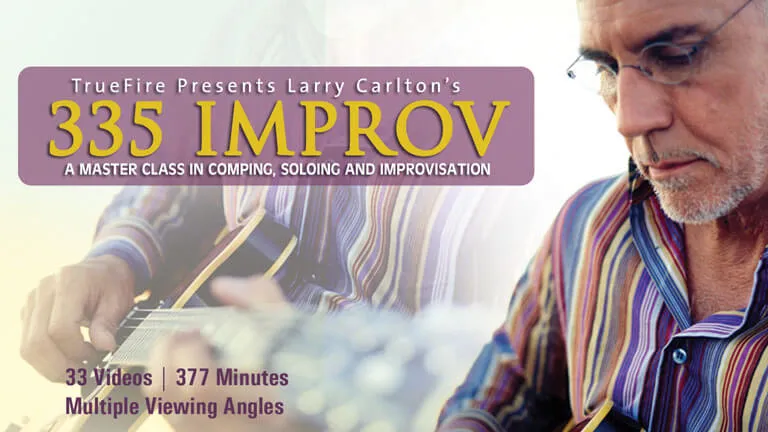
335 Improv

A master class in comping, soloing and improvisation

Marty FriedmanTommy EmmanuelSteve VaiEric GalesEric Johnson

Get this course and 1,000+ more with All Access

Try 14 days free. Cancel any time.

Purchase Individual Course for $24.99
335 Improv

About this course

Improvisation is a bit of a paradox for musicians. On the one hand, improvisation is a personal and creative expression of an individual player. Yet, it's also an interactive art form where players spontaneously feed and respond to each other during the creative process. And the freedom a player enjoys when improvising might appear to be at odds with the rigid discipline of practice and study necessary to achieve that freedom.

The more knowledgeable and practiced the player, the less encumbered that player is with the technical and theoretical, thus the more likely that player will craft interesting, compelling improvisations. But what do you study and practice? What theory needs to be mastered? How do you learn how to improvise? Larry Carlton's 335 Improv will guide your journey with an approach that is highly enlightening and extraordinarily accessible.

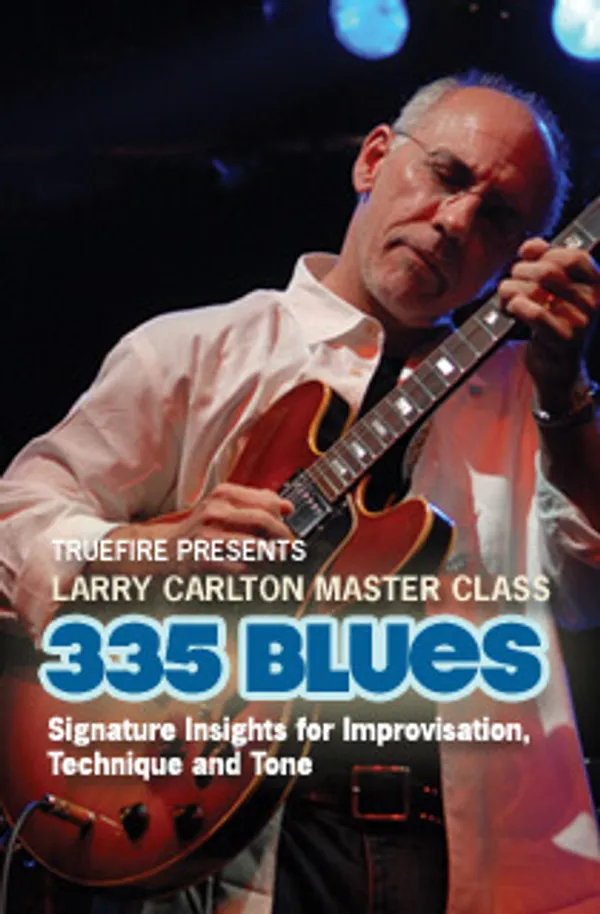
Eighteen-time Grammy nominee and three-time Grammy winner, Larry Carlton is certainly one of the most versatile and accomplished guitarist walking the planet today. With over 3,000 sessions, 200 hit records and 100 gold albums to his credit, Carlton has improvised thousands of memorable guitar solos, comps and parts over the course of his career. Suffice to say that Mr. 335 is uniquely qualified to present this curriculum.

"I get asked all of the time about my improvisations. What scales and arpeggios do I use? Am I thinking street key or parent key? Do I have stock approaches to progressions? Do I use modes? While the answer is "no" to most of these questions, I have certainly studied and am very much aware of these principles, but my personal approach is quite different when I’m improvising."

Carlton’s passion for education fueled his enthusiasm for producing this course, "I’m excited about 335 Improv and the opportunity to present my own approach to improvisation, which by the way, works just as well for me over rock, blues and pop, as it does with jazz as I will demonstrate in the course."

335 Improv is organized into six sections, where each section covers a series of related topics and each uses a vamp or section from one of Carlton's tunes as the practice track. The tracks were cherry picked by Larry to provide a range of harmonic and rhythmic situations, in a variety of styles ranging from rock to blues to jazz.

What you'll learn

  • Use diminished scales over altered dominant chords
  • Apply melodic minor scales in jazz contexts
  • Navigate complex jazz progressions using common tones
  • Apply pedal tones above melodic lines for fuller sound
  • Anticipate chord changes in improvisation
Release date: 11/19/2009 • 6h 17m runtime
Start Course
Sample lessons
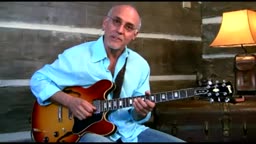
Approaches to Soloing
Lesson 1:3
>> Full View
>> Full View
Approaches to Soloing
>> Fretboard View
>> Fretboard View
Approaches to Soloing
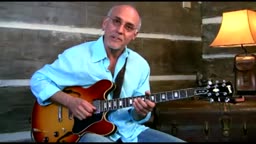
Breaking Down Triads
Lesson 1:5

What's included

99 lessons • 30 charts • 10 Jam Tracks

335 Improv
Welcome to 335 Improv!

I get asked all of the time about how I approach improvisation. What scales and arpeggios do I use? Am I thinking street key or parent key? Do I have stock approaches to progressions? Do I use modes? While the answer is "no" to most of these questions, I have certainly studied and am very much aware of these principles, but my personal approach is quite different when I'm actually improvising. 335 Improv will answer many of these questions, and I'm excited about be able to share my own approach to improvisation.

I've been blessed to work with, and learn from, so many accomplished musicians over the years. Now I get the chance to share many of these "tricks of the trade" with you. I've also been fortunate enough to work in all style of music and so, 335 Improv is not just a "jazz" improvisation course. The approaches that we'll cover here will work over blues, rock, pop - virtually any style of music!

I've organized 335 Improv into six sections, where each section covers a variety of topics and each uses a vamp or section from one of my tunes as the practice track that we'll be working with to demonstrate a specific harmonic and rhythmic situation.

SECTION 1
1: 1 Comping 2-Chord Pattern
1: 2 Expanding Comp Choices
1: 3 Approaches to Soloing
1: 4 The Triad Approach
1: 5 Breaking Down Triads
1: 6 Chromatics
1: 7 Concepts in Play

SECTION 2
2: 1 Comp & Solo Over 1 Chord
2: 2 Shifting the Raised 9
2: 3 Comping on a Raised 9
2: 4 The Diminished Scale
2: 5 Shifting the Diminished Scale
2: 6 Concepts in Play

SECTION 3
3: 1 Chords & Melody
3: 2 Complementing the Melody
3: 3 Comping Performance
3: 4 Improvising Over Chord Changes
3: 5 Connecting Chord Tones
3: 6 Concepts in Play

SECTION 4
4: 1 Pedal Tones
4: 2 Blues Rhythm Voicings
4: 3 Melodic Minor
4: 4 Concepts in Play

SECTION 5
5: 1 Melody & Rhythm
5: 2 Thinking Through the Changes
5: 3 Soloing Concepts in Play


SECTION 6
6: 1 I-VI-II-V Progression
6: 2 Available Scales
6: 3 Soloing Approaches for I-VI-II-V
6: 4 Making Music with Scales
6: 5 Concepts in Play


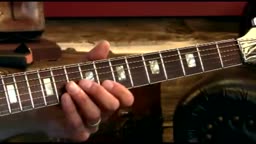
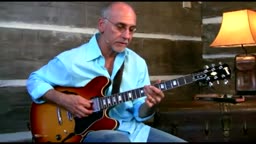
We've included many tools for you to work with as you progress through the course. For starters, each individual video lesson is available with three views; a multi-split-screen view, a full view, and a Fretboard View. TrueFire's video lesson player further expands the ways you can work with the videos with controls like full-screen, looping, keyboard shortcuts, rewind, fast-forward and functions to easily call up tab, notation and the practice rhythm tracks.

Everything I play in the course, including the extensive improvisations, is notated in tab, standard notation and PowerTab so that you can "see" and "hear" the notation played out at any tempo without change on pitch. You can also print out the notation for your reference. Plus, I've made annotations in the charts to help point out how I'm approaching a particular section of the improvisation. All of the backing tracks that I use in the course are also included so that you can likewise work with the tracks as you apply the principles being covered.

In my opinion, the best way to work with 335 Improv is to first watch all of the videos, following along with the notation in hand. This will introduce you to the range of topics that we'll be covering and how they connect to one another. Once you've gone through everything, grab your guitar and dig in from the beginning.

There's likely quite a bit of work ahead of you to get a solid grip on many of the principles and concepts that we'll be covering. So, take it one step at a time and then apply what you've learned immediately by playing over one of the included rhythm tracks or one of your own tracks. And remember; practice what you must, but play what you love!

Comping 2-Chord Pattern
You can find a world of options even within the simplest chord changes. All of the improvs in this section are based on the vamp from my tune "Rio Samba," which features a two-chord change between F9sus4 and F9. Then it just modulates down a half step to E9sus4 and E9.

When comping, you never have to be stuck strictly with the given changes for a rhythm part. Instead, look for opportunities to alter and expand the changes without straying too far from their basic tonalities. For example, an Eb triad can be used in place of the opening F9sus4 chord. And since the notes in an Eb triad match the upper voices of a Cm7 chord, you can substitute Cm7 every time you see F9sus4.

Check the PDF or PowerTab for notation and tab of the voicing options that I play on the video. Then explore inversions of your own, incorporating new bass and upper-string notes. As you'll see, it can be as interesting and exciting to improvise a rhythm part as it is to improvise a solo.
>> Full View
You can find a world of options even within the simplest chord changes. All of the improvs in this section are based on the vamp from my tune "Rio Samba," which features a two-chord change between F9sus4 and F9. Then it just modulates down a half step to E9sus4 and E9.

When comping, you never have to be stuck strictly with the given changes for a rhythm part. Instead, look for opportunities to alter and expand the changes without straying too far from their basic tonalities. For example, an Eb triad can be used in place of the opening F9sus4 chord. And since the notes in an Eb triad match the upper voices of a Cm7 chord, you can substitute Cm7 every time you see F9sus4.

Check the PDF or PowerTab for notation and tab of the voicing options that I play on the video. Then explore inversions of your own, incorporating new bass and upper-string notes. As you'll see, it can be as interesting and exciting to improvise a rhythm part as it is to improvise a solo.
>> Fretboard View
You can find a world of options even within the simplest chord changes. All of the improvs in this section are based on the vamp from my tune "Rio Samba," which features a two-chord change between F9sus4 and F9. Then it just modulates down a half step to E9sus4 and E9.

When comping, you never have to be stuck strictly with the given changes for a rhythm part. Instead, look for opportunities to alter and expand the changes without straying too far from their basic tonalities. For example, an Eb triad can be used in place of the opening F9sus4 chord. And since the notes in an Eb triad match the upper voices of a Cm7 chord, you can substitute Cm7 every time you see F9sus4.

Check the PDF or PowerTab for notation and tab of the voicing options that I play on the video. Then explore inversions of your own, incorporating new bass and upper-string notes. As you'll see, it can be as interesting and exciting to improvise a rhythm part as it is to improvise a solo.
Expanding Comp Choices
Now that you know Cm7 can be used in place of the vamp's F9sus4, think about the many choices you have using Cm7. For starters, Cm7 can be voiced any number of ways: with tightly grouped intervals providing lots of tension or with the intervals spread out for a nice, open sound. You can also use the same voicings played in a higher or lower position on the neck.

Changing chord voicings is essential when you're supporting a soloist, so make sure you have an ample supply at your command. I've given you a head start with the voicings shown in PowerTab but don't stop there - learn all you can!

Remember that you're no more locked into Cm7 than you were to that first F9sus4 chord. Cm9 can be substituted for a Cm7, right? And since Cm9 shares notes with an F13 chord, why not explore that substitution? Keep stretching, exploring and likewise learning as many substitutions as you can. They are essential improvisational tools for feeding ideas to the soloist and/or reacting to what the soloist is playing.

Knowing your inversions and substitutions, and their notes and degrees, is also essential for improvisational soloing. For example, if I am improvising over a two-chord change, I know the common tones between those two chords, and can build my melodic phrases around those common tones with great results.
>> Full View
Now that you know Cm7 can be used in place of the vamp's F9sus4, think about the many choices you have using Cm7. For starters, Cm7 can be voiced any number of ways: with tightly grouped intervals providing lots of tension or with the intervals spread out for a nice, open sound. You can also use the same voicings played in a higher or lower position on the neck.

Changing chord voicings is essential when you're supporting a soloist, so make sure you have an ample supply at your command. I've given you a head start with the voicings shown in PowerTab but don't stop there - learn all you can!

Remember that you're no more locked into Cm7 than you were to that first F9sus4 chord. Cm9 can be substituted for a Cm7, right? And since Cm9 shares notes with an F13 chord, why not explore that substitution? Keep stretching, exploring and likewise learning as many substitutions as you can. They are essential improvisational tools for feeding ideas to the soloist and/or reacting to what the soloist is playing.

Knowing your inversions and substitutions, and their notes and degrees, is also essential for improvisational soloing. For example, if I am improvising over a two-chord change, I know the common tones between those two chords, and can build my melodic phrases around those common tones with great results.
>> Fretboard View
Now that you know Cm7 can be used in place of the vamp's F9sus4, think about the many choices you have using Cm7. For starters, Cm7 can be voiced any number of ways: with tightly grouped intervals providing lots of tension or with the intervals spread out for a nice, open sound. You can also use the same voicings played in a higher or lower position on the neck.

Changing chord voicings is essential when you're supporting a soloist, so make sure you have an ample supply at your command. I've given you a head start with the voicings shown in PowerTab but don't stop there - learn all you can!

Remember that you're no more locked into Cm7 than you were to that first F9sus4 chord. Cm9 can be substituted for a Cm7, right? And since Cm9 shares notes with an F13 chord, why not explore that substitution? Keep stretching, exploring and likewise learning as many substitutions as you can. They are essential improvisational tools for feeding ideas to the soloist and/or reacting to what the soloist is playing.

Knowing your inversions and substitutions, and their notes and degrees, is also essential for improvisational soloing. For example, if I am improvising over a two-chord change, I know the common tones between those two chords, and can build my melodic phrases around those common tones with great results.

+ 92 more lessons

Start Course

Reviews

23 results

Lunaticevolver

Verified buyer

07/09/26

Larry Carlton , what a legend and unique player , just the way he analyzes topics as melodic tendency and how to develop motifs , just gives anyone interested in developing this important skill to compose and come up with cool ideas for melodies an dsee the whole picture in a clear way 10 out of 10 !

Mikeno1

Verified buyer

01/12/26

Larry Carlton’s secret sauce!

I’ve been a fan of Larry Carlton since over 40 years. Having Larry explaining his improvisational concepts over some of his best compositions is a real chance to learn from an inspiring person and fusion guitar master.

Pelch

Verified buyer

01/04/25

I love this man! I met him in Austin, Texas! I love this instructional. Please send as much information to my email.

rwhuber.bob

Verified buyer

10/15/24

Many thanks

A great course from one of my guitar heroes. It's also VERY difficult to find lessons of this quality!

mox001

Verified buyer

07/02/23

A classic

An older title, but packed full of useful and usable info

Stop searching. Start improving with All Access.

Try 14 days free. Cancel any time.