
sofficino
Verified buyer
05/24/26
A true Legend of a guitar





Get this course and 1,000+ more with All Access
Try 7 days free. Cancel any time.

About this course
What you'll learn
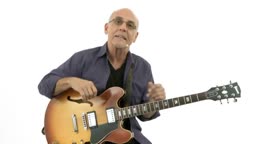
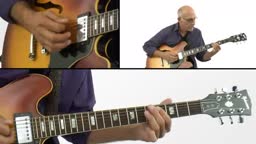
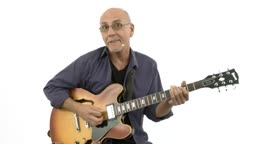
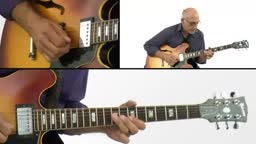
25 lessons • 12 charts • 12 Jam Tracks
If you’re familiar with my solos, you know that I usually start with a short statement that sets the theme for the story I go on to tell you with my improvisation. That short statement is a motif, and it sets the stage for everything that follows.
Motifs and themes are very useful when soloing and comping. They help you tell your story. They help you connect with your audience. And they help you interact with the band.
I'm excited to share with you many of the ways that work with motifs. We’ll talk about, demonstrate and apply approaches including space, dynamics, repetition, imitation, playing in different registers, listening to the band, imitating bass lines and other parts, common tones, implying chords and expressions.
We'll work through 12 lesson sets, each featuring a rhythm track, which we'll apply a different approach to. Everything is tabbed and notated plus you'll get all of the rhythm tracks to work with on your own.
Ready to get started? Grab your guitar and lets dig in!
Using a slow blues track in the key of G, with a rhythm guitar part, Larry demonstrates several approaches for establishing a motif and then developing it into a full solo.
Larry addresses approaches including imitation, playing in different registers and the use and importance of space to let the lines breath and give the audience a chance to follow along.
Using a slow blues track in the key of G, with a rhythm guitar part, Larry demonstrates several approaches for establishing a motif and then developing it into a full solo.
Larry addresses approaches including imitation, playing in different registers and the use and importance of space to let the lines breath and give the audience a chance to follow along.
Larry demonstrates how to imitate some of the lines and rhythms that the other musicians are playing. He also demonstrates how place your motifs between parts. Both are very effective approaches for establishing and then developing motifs.
Larry demonstrates how to imitate some of the lines and rhythms that the other musicians are playing. He also demonstrates how place your motifs between parts. Both are very effective approaches for establishing and then developing motifs.
Even without melodic reinforcement, playing parts of your solo softer or louder is a strong approach for pulling the entire solo together and connecting with the audience. Dynamics happens to also be one of the easiest techniques to execute, yet most players don't take advantage of it.
Playing a line in a lower register, and then playing that very same line in a higher register is also a very easy approach for motivic development. Altering the lines slightly, or using a call and answer approach, while using different registers is a very effective tool as well.
Even without melodic reinforcement, playing parts of your solo softer or louder is a strong approach for pulling the entire solo together and connecting with the audience. Dynamics happens to also be one of the easiest techniques to execute, yet most players don't take advantage of it.
Playing a line in a lower register, and then playing that very same line in a higher register is also a very easy approach for motivic development. Altering the lines slightly, or using a call and answer approach, while using different registers is a very effective tool as well.
+ 18 more lessons
20 results
sofficino
Verified buyer
05/24/26
A true Legend of a guitar
Delaube
Verified buyer
10/25/25
Not just about guitar but musicality.
Mahkmud
Verified buyer
05/14/25
Larry Carlton 335 Blues Motifs
A great course, good insight into Larry Carlton’s style, improvisation and techniques and navigating the guitar fretboard.
Maddyd1
Verified buyer
01/05/25
Blues Motifs
Solid advice from a respected blues guitarist… Nice bite sized teachable segments with awesome backing tracks… Like the insight into listening to your band mates so that you enhance each others playing. .
antom
Verified buyer
01/09/24
Modern and sophisticated blues
Very nice course, modern and sophisticated blues from a master of contemporary blues.
Try 14 days free. Cancel any time.