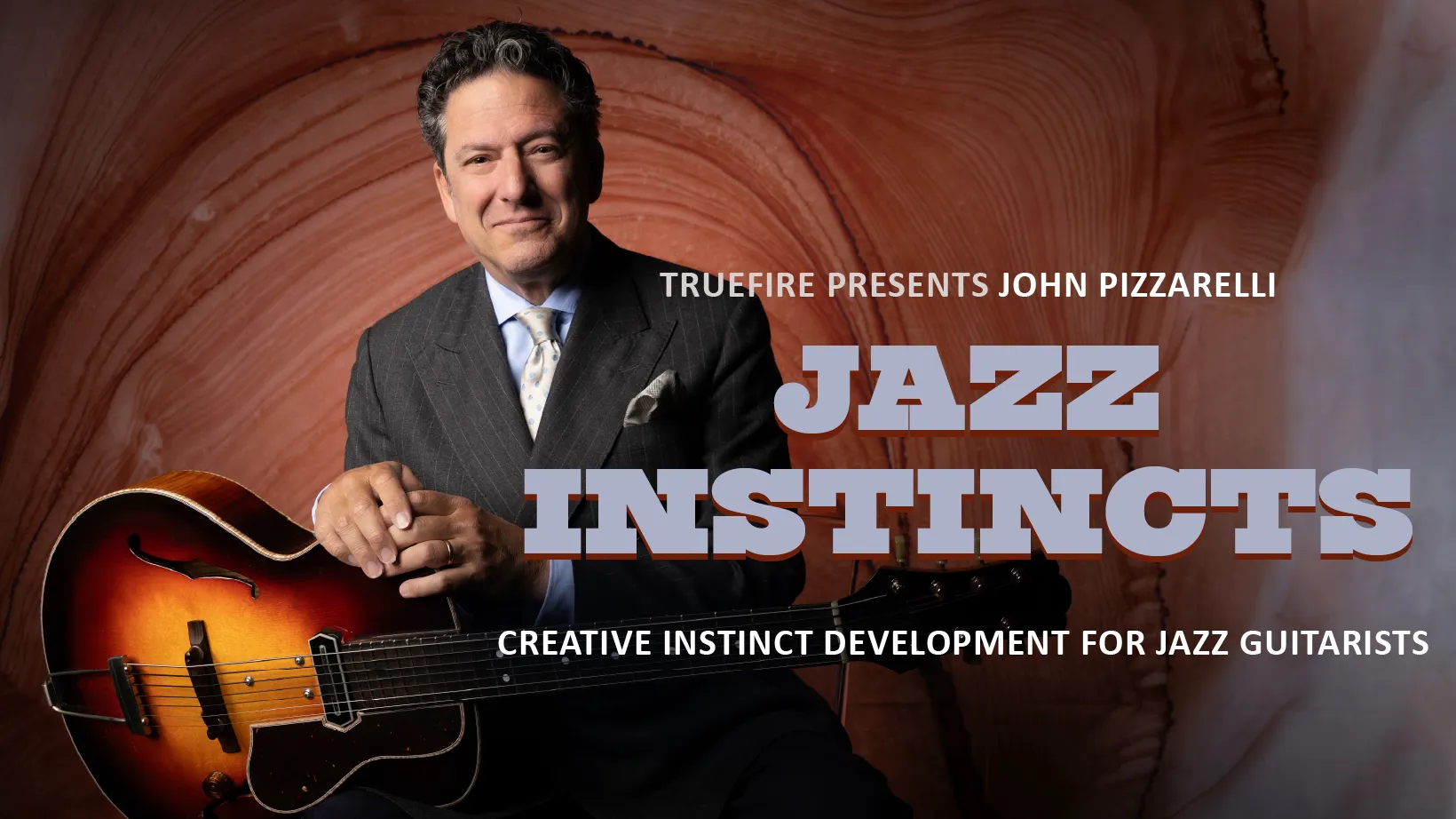
Jazz Instincts

Creative Instincts for Jazz Guitarists

Marty FriedmanTommy EmmanuelSteve VaiEric GalesEric Johnson

Get this course and 1,000+ more with All Access

Try 14 days free. Cancel any time.

Purchase Individual Course for $24.99
Jazz Instincts

About this course

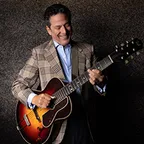
"A virtuoso guitarist, an expressive/authentic vocalist with tremendous intervallic control, John Pizzarelli has that elusive Sinatra quality of making every listener feel like he’s making music just for you.”

John has established himself as a prime contemporary interpreter of the Great American Songbook and beyond. He has recorded 23 albums and appeared as a session musician or vocalist for Frank Sinatra, Paul McCartney, James Taylor, Natalie Cole, Rosemary Clooney, Rickie Lee Jones, Dave Van Ronk, Buddy DeFranco, and his father Bucky Pizzarelli.

We’re thrilled to welcome John to the family with his first TrueFire masterclass, Jazz Instincts! You will likewise be delighted as you play and practice your way through John’s highly enlightening, hands-on Jazz Instinct curriculum.

”Jazz provides boundless freedom to express ourselves spontaneously and creatively. We start our learning journey by developing a vocabulary of scales, arpeggios, chord voicings, rhythm, and technique. Still, when we perform and interact with other musicians, our creative instincts govern what we play in the moment. 

In this masterclass, we’ll work on your technique, and expand your vocabulary by examining 1-6-2-5 progressions, jazz swing feels, walking bass, chordal soloing, single note playing, comping, reharmonization, and a lot more. We’ll practice and play together over each of the tracks, which is how we start developing your artistic instincts.”


John’s comprehensive curriculum includes 17 ear-opening master lesson sets. | Basic Chord Structures for a 1-6-2-5 Progression | Essential Walking Chords Patterns | More Walking Bass Lines | More Active Walking Bass Approach | Walking Chords to Spice Up Changes | Comping with Upper Voicings | Guitar Heroes and Key Influences | Building Efficiency in Rhythm Comping | Rhythm Comping Applied |How To Approach Jazz Intros | Scat Singing & Playing | Single Note Playing | Developing Swing Feel | Reharmonization & Chords | Applications for Reharmonization | The “I’ll Remember April” Story | and Tone & Gear Talk.

John shows you how to apply all key concepts and techniques in a musical context via ten soloing and comping performance studies using backing tracks of commonly encountered jazz progressions and feels.

Each study includes an overview, a comping performance, a soloing performance, and detailed breakdowns. You’ll play and practice with John until you feel comfortable tackling the backing tracks independently.

You’ll have TrueFire’s interactive learning tools to customize your workspace and learn at your own pace.

The performances are tabbed, notated, and synced to the video lessons with controls for looping, slow motion, fretboard animation, and other tools designed to accelerate your progress.

You’ll also get the tab and standard notation files to print out, downloadable Guitar Pro files, and backing tracks to practice and record with.

Grab your guitar, and let’s dig in with John Pizzarelli!

P.S. Check out John’s companion Jazz Instinct edition of IN THE JAM for an immersive jamming experience. Put all your new chops to work as if you were on stage with John at a gig.

What you'll learn

  • Exploring broken chord solo techniques in the style of George Van Eps
  • How to arrange a rhythm part that builds intensity over multiple choruses
  • Creating supportive foundations for improvisation
  • Learning to balance chord melody and single-note approaches
  • Understanding the relationship between rhythm guitar and soloist
Release date: 04/25/2024 • 4h 14m runtime
Start Course
Sample lessons
Sunrise Bossa
Sunrise Bossa
Overview
Sunrise Bossa | Rhythm Guitar
Performance
Sunrise Bossa
Sunrise Bossa
Breakdown
Take a Train | Lead Guitar
Performance

What's included

59 lessons • 35 charts • 10 Jam Tracks

Jazz Instincts
Hey there, it's John Pizzarelli, and I'm thrilled to welcome you to Jazz Instincts. Jazz provides boundless freedom to express ourselves spontaneously and creatively. Start our learning journey developing a vocabulary of scales, arpeggios, chord voicings, rhythms, and technique.

But when we perform and interact with other musicians, it's our creative instincts that govern what we play in the moment. In this masterclass, we'll work on your technique and expand your vocabulary by examining progressions, jazz swing feels, walking bass, chordal soloing, single-note playing, comping, reharmonization, and a lot more.

We'll practice and play together over each of the tracks, and this is how we start developing your artistic instincts. So are you ready? Grab your guitar, and let's dive in!
Basic Chord Structures for a 1 6 2 5
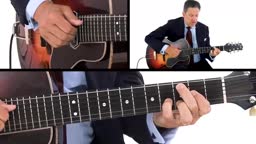
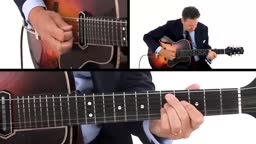
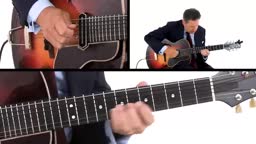
In this demonstration, I'll show you the 1-6-2-5 chord progression in two different positions on the guitar. We'll see that despite the numerous chords available, mastering about six or seven chord formations can allow you to play all over the guitar neck. We'll start in the key of C, where I'll use a six-string guitar to illustrate the progression with C, A minor, D minor, and G7 chords. For those with a seven-string guitar, like mine with a low A, the concept applies equally well, enhancing the bass range.

I'll demonstrate playing these chords using a fingerstyle technique, which involves using the thumb and two fingers, with the pick tucked away for those who prefer using a pick. This approach is particularly effective for learning how to play rhythm on the guitar, focusing on the bass note within each chord, a crucial skill for accompanying other musicians.

Following this, we'll explore the same chord progression in the key of G, adding two more chord formations to our toolkit. Even though I primarily play a seven-string guitar, this demonstration is designed to be accessible for six-string guitar players as well.
A Blues
In this lesson, we're going to dive into playing the blues in the key of A. I'll demonstrate a variety of techniques, starting with a staccato style reminiscent of a piano player's approach. You'll notice the emphasis on the bass as we explore basic blues chords. Additionally, I'll incorporate a technique where I mimic the piano's rhythm, creating a dynamic ba-doom doom doom pattern with my fingers, which you can also achieve using a pick.

We'll also explore the Freddie Green rhythm style, showcasing how it seamlessly integrates without overshadowing the bass, adding a rich rhythm layer to our playing. Beyond rhythm techniques, I'll guide you through some captivating single-note playing, drawing from my personal repertoire of licks and tricks developed over the years. This will include a special mention of a Bucky Pizzarelli lick, an interesting addition that I've adapted into my style. Keep an ear out for these elements as we delve into the blues performance.
A Blues | Rhythm Guitar
In this lesson, we're going to dive into playing the blues in the key of A. I'll demonstrate a variety of techniques, starting with a staccato style reminiscent of a piano player's approach. You'll notice the emphasis on the bass as we explore basic blues chords. Additionally, I'll incorporate a technique where I mimic the piano's rhythm, creating a dynamic ba-doom doom doom pattern with my fingers, which you can also achieve using a pick.

We'll also explore the Freddie Green rhythm style, showcasing how it seamlessly integrates without overshadowing the bass, adding a rich rhythm layer to our playing. Beyond rhythm techniques, I'll guide you through some captivating single-note playing, drawing from my personal repertoire of licks and tricks developed over the years. This will include a special mention of a Bucky Pizzarelli lick, an interesting addition that I've adapted into my style. Keep an ear out for these elements as we delve into the blues performance.
A Blues | Lead Guitar
In this lesson, we're going to dive into playing the blues in the key of A. I'll demonstrate a variety of techniques, starting with a staccato style reminiscent of a piano player's approach. You'll notice the emphasis on the bass as we explore basic blues chords. Additionally, I'll incorporate a technique where I mimic the piano's rhythm, creating a dynamic ba-doom doom doom pattern with my fingers, which you can also achieve using a pick.

We'll also explore the Freddie Green rhythm style, showcasing how it seamlessly integrates without overshadowing the bass, adding a rich rhythm layer to our playing. Beyond rhythm techniques, I'll guide you through some captivating single-note playing, drawing from my personal repertoire of licks and tricks developed over the years. This will include a special mention of a Bucky Pizzarelli lick, an interesting addition that I've adapted into my style. Keep an ear out for these elements as we delve into the blues performance.
A Blues
In this lesson, we're going to dive into playing the blues in the key of A. I'll demonstrate a variety of techniques, starting with a staccato style reminiscent of a piano player's approach. You'll notice the emphasis on the bass as we explore basic blues chords. Additionally, I'll incorporate a technique where I mimic the piano's rhythm, creating a dynamic ba-doom doom doom pattern with my fingers, which you can also achieve using a pick.

We'll also explore the Freddie Green rhythm style, showcasing how it seamlessly integrates without overshadowing the bass, adding a rich rhythm layer to our playing. Beyond rhythm techniques, I'll guide you through some captivating single-note playing, drawing from my personal repertoire of licks and tricks developed over the years. This will include a special mention of a Bucky Pizzarelli lick, an interesting addition that I've adapted into my style. Keep an ear out for these elements as we delve into the blues performance.
Essential Walking Chords Pattern
In this lesson, we'll delve into the technique of "walking the chords" on the guitar, a method that brings the harmonization of scales to life. Starting with the harmonization of the C major scale, we demonstrate how each note in the scale—C, D, E, and F—can be harmonized to create a progression of chords: C major, D minor, E minor, and F major 7, before descending back down. This technique is illustrated on both six-string and seven-string guitars, showcasing the ease of transitioning to a seven-string by simply adding an octave lower for a richer sound.

Additionally, we address a common misconception about using a guitar pick. Contrary to what some believe, the technique involves keeping the pick handy for quick transitions between fingerstyle and pick playing, emphasizing the importance of wetting the thumb and pointer finger for a firmer grip on the pick. This approach prevents the pick from slipping, a useful tip for ensuring smooth play.

We also explore the concept of simulating a bass line on the guitar, eliminating the need for a separate bass player. This is achieved through a technique that highlights the bass notes within chord progressions, effectively merging the roles of bass and guitar into a single instrument.

Extending our lesson to the key of G, we apply the same principles: harmonizing the G major scale and walking the chords to create a seamless progression from G to A minor, B minor, C major 7, and back, demonstrating the versatility of this technique across different keys.

+ 52 more lessons

Start Course

Reviews

13 results

ausjam1

Verified buyer

07/05/26

Jazz instincts

Having loved Bucky Pizzarelli’s and his son’s playing for years, this course is a great way to get insights into both playing styles. Well thought out and informative
Ohio5665

Verified buyer

09/14/25

Jazz Instincts

Lots of info and concepts in this course! John gives you alot to work on and does a great job of teaching and demonstrating the lessons. There is enough information in these lessons to keep me going for a long time!

damackey11

Verified buyer

09/09/25

Jazz Instincts

This course is a must have. It is fantastic from start to finish. Not every great player is a great teacher, John is the exception. He layers the 1-6-2-5 between chordal and soloing and takes us on a journey of flawless technique. This course helps to elevate our own playing. You want to make time for this one. Dan Mackey

rickdelsavio

Verified buyer

06/29/25

Great chord work.

Saw John last Friday. Bought video next day. Learned lots of useful material. Particularly chord stuff.

Aaron S.

02/05/25

Best Jazz course on here

Love this Jazz course, John is a great teacher and very down to earth. Hope to see more material from him!

Stop searching. Start improving with All Access.

Try 14 days free. Cancel any time.