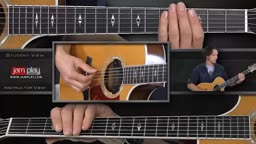

Applied Fingerstyle Harmonics

Elevate Your Fingerstyle Playing with Harmonics

Marty FriedmanTommy EmmanuelSteve VaiEric GalesEric Johnson

Get this course and 1,000+ more with All Access

Try 14 days free. Cancel any time.

Purchase Individual Course for $9.99
Applied Fingerstyle Harmonics

About this course

Studying harmonics is essential for any fingerstyle guitar player – they’re part of what gives the genre such depth and atmosphere. Harmonics produce an ethereal tone that can enhance melodies, create dynamic contrasts, and add richness to fingerstyle arrangements. By mastering both natural and artificial harmonics, players can develop greater finger dexterity, precision, and control, allowing for more intricate and captivating performances.

In Justin Roth’s “Applied Fingerstyle Harmonics,” you’ll get a crash course in harmonics and learn how you can incorporate them into your playing. Justin will introduce you to the concepts you need to get started and provide you with valuable insights on how you can start exploring natural, artificial and cascading harmonics.

“We're going to do a deep dive into harmonics in this course, and explore how they relate to fingerstyle and folk guitar. We'll start with natural harmonics and then explore other locations where we can find them.

After that, we'll move beyond natural harmonics to explore artificial harmonics, leading us into cascading harmonics. We'll also make sure we understand the relationship of these harmonics from string to string and how they work on single strings as we go up the neck, identifying the notes and how they create chords or scales.”


You’ll have TrueFire’s interactive learning tools at your fingertips to customize your workspace and learn at your own pace.

The demonstrations and performances are tabbed, notated, and synced to the video lessons with controls for looping, slow motion, fretboard animation, and other tools designed to accelerate your progress.

You’ll also get tab and standard notation files to print out, downloadable Guitar Pro files, and backing tracks to practice and record with.

Grab your guitar, and let’s dig in with Justin Roth!

What you'll learn

  • Master the fingerpicking pattern that alternates harmonics with open strings
  • Create different chord voicings by changing harmonic positions (5th, 7th, 12th frets)
  • Play chord progressions using harmonics without changing left-hand chord shapes
  • Combine pull-offs with harmonics for descending melodic phrases
  • Create continuous melodic lines from low to high and back
Release date: 09/03/2024 • 4h 55m runtime
Start Course
Sample lessons
Articulation Techniques Using the 12th Fret
Practice Session
Obscure Harmonic Locations
Demonstration
Obscure Harmonic Locations
Practice Session

What's included

32 lessons • 31 charts

Applied Fingerstyle Harmonics
Hey everyone, this is Justin Roth thank you for joining me!

We're going to do a deep dive into harmonics and how they relate to fingerstyle and folk guitar. We’ll start with natural harmonics, then explore other locations where they can be found.

After that, we'll dive into artificial harmonics, which will lead us into cascading harmonics. We’ll also make sure to understand the relationship between harmonics from string to string, and how they work as we go up single strings. We’ll cover what the notes are and how they create chords or scales.

I had a lot of fun putting this pack together, and I believe it contains a lot of valuable insights that I wish I had known when I first started with harmonics. So please join me, and we’ll get started on the first lesson.
What are Harmonics
I'm thrilled to guide you through this series on fingerstyle harmonics. We'll explore what harmonics are—overtones produced at specific intervals on your guitar strings, like the 12th, 7th, and 5th frets. Whether you're new to harmonics or have some experience, I'll explain how to create natural harmonics over open strings and artificial harmonics when fretting notes. We'll cover techniques like plucking, pinching, and tapping to articulate these sounds, adding unique textures to your playing, whether in chord progressions or melodic phrases. Let's dive in and discover how these beautiful, bell-like tones can enhance your music!
Articulation Techniques Using the 12th Fret
In this lesson, we'll start with articulation techniques, essential for making harmonics ring clearly on your guitar. The key is to hold the string just long enough to produce the harmonic and then lift your finger to let the note resonate, without muting it too quickly. Picking closer to the bridge can add snap to the string, especially for harmonics on lower frets. We'll focus on balancing dynamics between different harmonics, with the 12th fret being the easiest to articulate. We'll practice downstrokes with the thumb and upstrokes with the fingers to ensure clean articulation in fingerstyle playing.
Articulation Techniques Using the 12th Fret
In this lesson, we'll start with articulation techniques, essential for making harmonics ring clearly on your guitar. The key is to hold the string just long enough to produce the harmonic and then lift your finger to let the note resonate, without muting it too quickly. Picking closer to the bridge can add snap to the string, especially for harmonics on lower frets. We'll focus on balancing dynamics between different harmonics, with the 12th fret being the easiest to articulate. We'll practice downstrokes with the thumb and upstrokes with the fingers to ensure clean articulation in fingerstyle playing.
Octave Harmonics Using the 5th Fret
Welcome to the next lesson! We're diving deeper into harmonics now that we've covered some articulation basics. We'll explore where these harmonics are located, what notes they correspond to, and why they work, focusing first on octaves. Starting with the familiar 12th fret harmonic, which gives us an octave above the open string, we'll learn how the physics of string division apply differently across various positions. For instance, the 5th fret harmonic produces a note two octaves up from the original pitch, despite not being a simple division of the string length. Understanding these relationships is key to mastering harmonics, and we'll also touch on how using a capo changes the positioning of these harmonics. Let's get started!
Octave Harmonics Using the 5th Fret
Welcome to the next lesson! We're diving deeper into harmonics now that we've covered some articulation basics. We'll explore where these harmonics are located, what notes they correspond to, and why they work, focusing first on octaves. Starting with the familiar 12th fret harmonic, which gives us an octave above the open string, we'll learn how the physics of string division apply differently across various positions. For instance, the 5th fret harmonic produces a note two octaves up from the original pitch, despite not being a simple division of the string length. Understanding these relationships is key to mastering harmonics, and we'll also touch on how using a capo changes the positioning of these harmonics. Let's get started!
7th Fret Harmonics
In this lesson, we'll continue exploring harmonics by focusing on the 7th fret, which produces a harmonic an octave plus a 5th above the open string. Unlike the 12th and 5th frets, this harmonic is easier to articulate and closely relates to the note you'd fret underneath it. For example, on the low E string, the 7th fret harmonic produces a B note, which is an octave higher than the B you'd play on the 7th fret. This technique applies across all strings, allowing us to add notes to our harmonics, setting the stage for creating chords and melodies in future lessons.

+ 25 more lessons

Start Course

Reviews

1 result

bcguitar7

Verified buyer

10/26/24

Great enhancement for chord melody

This course covers technics that can quickly be applied to ones playing. Very thorough. Highly recommend this course.


Stop searching. Start improving with All Access.

Try 14 days free. Cancel any time.