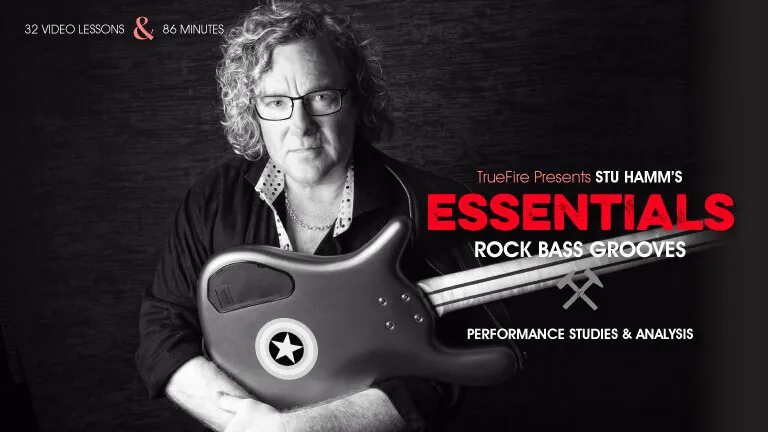
Essentials: Rock Bass Grooves

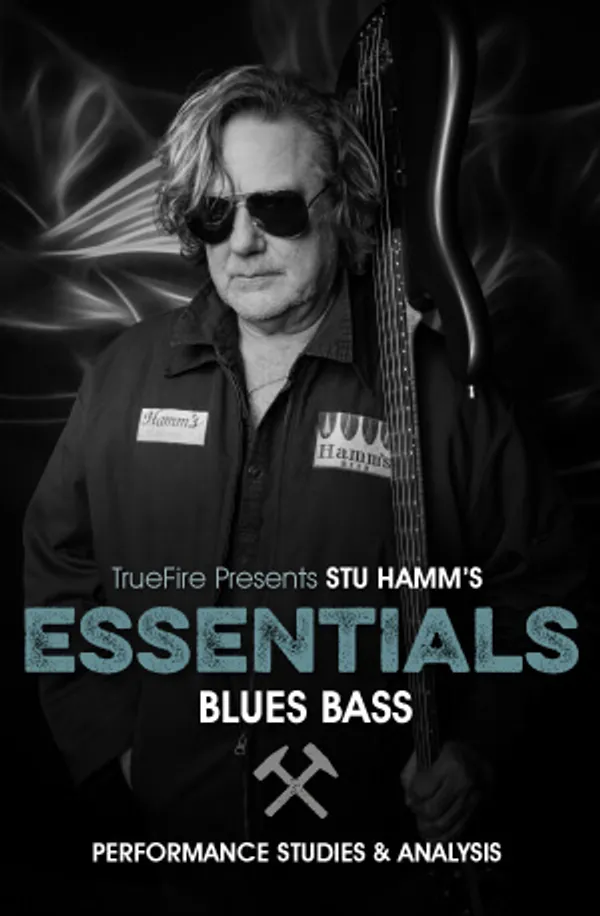
10 rock bass grooves you must know presented by Stu Hamm

Marty FriedmanTommy EmmanuelSteve VaiEric GalesEric Johnson

Get this course and 1,000+ more with All Access

Try 14 days free. Cancel any time.

Purchase Individual Course for $9.99
Essentials: Rock Bass Grooves

About this course

The role of the bass player in a rock setting is critical -- you’ve got to lock up with the drummer rhythmically to establish the groove, and at the same time, provide a harmonic foundation for the vocalist and other instruments to play off of.

In this Rock Bass Grooves edition of Essentials, Stu Hamm will guide you through 10 Rock Groove performance studies ranging across a variety of tempos, keys and rock styles.

Stu demonstrates all of the bass grooves over rhythm tracks and then breaks them down by stepping you through the key concepts, techniques and creative approaches that he used in each performance study.

Rock Solid - ”The first thing that you're going to be asked to do as a rock solid bassist is to hold it down by pumping out the eighth notes. This is not as easy as it may seem as first, taking a real attention to detail and precision. The eighth notes need to be perfectly placed and played with an aggressive attitude AND control to move the groove forward. Pay close attention to the pushes on bars 3 and 4, and how you land on the downbeat when you go back to the root at the start of the phrase. The pentatonic slides in bars 1 and 5 are classic Paul McCartney lines that will serve you well.”

Cash - ”Our second rock groove is called "Cash" and is reminiscent of one of the great Pink Floyd bass-lines. This groove is in 7/4 time, which may be a little tricky if you've never played "odd time" grooves before. It's good practice to actually count the beats out loud as the play the bass-line for the first few times. The 7/4 groove is divided into two sections, first with a 5 beat phrase and ending with a 2 beat phrase. Be sure to emphasize this when you play the part! Playing this bass-line with a pick will also help you get that Pink Floyd sound.”

Boogie Bass - ”Learning how to lay down a swinging/rocking boogie bass-line is essential for any rock bass player. Please take note of the rhythmic instructions at the upper left hand corner of the chart. This tells you that although the eighth notes are written normally, they're played as a triplet figure with the first two notes tied to achieve a "swing" or "syncopated" feel. There's varying levels of how much "swing" you feel, and a lot of that is determined by how much you emphasize the downbeat and lay off the second half of the beat. Experiment with different levels of swing feel to see what is appropriate for the song, which should always be the main goal of any bassist.”

Rock Funk - ”Flea of the Red Hot Chili Peppers introduced a whole generations of rock bass players to the possibility of using thumb and slap bass techniques to add a little funk to their rock. Here's a groove designed to get you started in that direction as well. Once again, note the rhythmic notation alerting us that we'll be swinging the feel in this song, also getting to slap and pop full triplets in C, D, and G. You have to remember to play this with a light touch when you are slapping and popping to achieve a full, solid tone. Hitting too hard with your right hand will make for a very percussive and tinny bass tone.”

Sweet Blues - ”Any list of "Greatest Rock Bass-lines" will include "Sweet Emotion" as played by Tom Hamilton of Aerosmith. Here's a bass-line intended to capture the same vibe and introduce you to the technique of using open notes. While this figure can be played across the fretboard, I find it much more grooving when you use the open string to achieve that signature sound and vibe. Chris Squire of Yes uses this to great effect in the track "Sound Chaser" from Relayer, check it out!”

Daze Days - ”No course on rock bass playing can ignore John-Paul Jones of Led Zeppelin. In this bass-line, which is meant to recall "Dazed and Confused," I believe that you'll find this seemingly simple and slow bass-line a real challenge. We're first introduced to the "slide" as we slide our hand up the fretboard to play the G on the 15th fret of the E string, playing all of the notes on the E string for a more sustained and fuller tone. Try playing it on the other strings and then only on the open E to see what I mean. Having to play a bass-line that's this slow points out areas that need improvement, with any tendency to bend the notes sharp or add bad sounding will be highlighted. Give every note its full value with as pure and even a tone as possible and this bass-line will sound GOOD!”

Sure - ”Another bass-line that'll appear on anyone's list of "Greatest Rock Bass-lines" will be "Roundabout" as played by Chris Squire of Yes. In this track, I've attempted to capture the spirit of Chris' unique bass style. At first you'll play a unison line, meaning a phrase that is played together by all members of the band. You'll have to listen closely to how the drums and guitar are playing it to play it and blend in. The main groove contains a stream of sixteenth notes that need to be played with precision, accuracy, and a rocking feel. Pay close attention to the hammer-ons from G to A in the phrase at the end of the line, coming back to the unison line.”

Traffic - ”For our eighth rock groove, I've chosen a rock shuffle in the key of G that includes another unison line in the style of "Freeway Jam" by Jeff Beck. Once again, the score tells us that we'll be swinging the eighth notes, so listen to the rest of the band to cop the right feel. This groove also uses some major pentatonic slides/hammers that give it a unique sound. This is a good time to get used to reading a chart to give you the form, which can be a little tricky if you're not used to reading repeat signs.”


Led Man - ”For rock groove #9, I've combined the bass feels of two giants of rock: Ozzy Osbourne and Led Zeppelin. The first part of the groove is a set of absolutely straight pumping eighth notes… there's no swinging these puppies, they need to be even and rockin'! Think "Iron Man" to give you an example of the feel we're going for here. Pay attention to the unison hits in bar 5, then going back to pumping eighth notes. In bar 17, we go to a half time reggae feel, again using a slide from the second to the major third. This groove seemingly has three different parts, and it's your job to make them all sound cohesive as a whole and make one groove out of the song.”

School Spirit - ”For our last rock groove, let's mash-up two more giants of rock...Nirvana and Iron Maiden! The first part of this groove is an edgy aggressive line that can be played using a pick. Notice the dynamic markings in the chart, which add to the overall vibe when you play the first 8 bars quietly and then step on the gas when you repeat the section. Starting at Bar 9, we have the sort of galloping groove that Steve Harris of Iron Maiden is famous for. This figure can be played with a pick as well, or you can really dig in with your fingers to get that signature sound. Be careful with the unison line at the end of the phrase, the whole notes sound best when played without any vibrato and as legato as possible.”

All of the performances are tabbed and notated for your practice, reference and study purposes. You’ll also get Guitar Pro files so that you can play, loop and/or slow down the tab and notation as you work through the lessons. Plus, Stu generously includes all of the rhythm tracks for you to work with on your own.

Grab your bass guitar and let’s get our rock groove on with Stu Hamm!

What you'll learn

  • Play a medium-tempo blues rock shuffle
  • Create diverse rock bass grooves
  • Create percussive rock guitar sounds
  • Understand Steve Harris-style galloping technique
  • Develop bass line flexibility across rock sub-genres
Release date: 11/13/2015 • 1h 22m runtime
Start Course
Sample lessons
Cash
Cash
Performance
Rock Funk
Rock Funk
Overview
Rock Funk
Rock Funk
Performance
Rock Funk
Rock Funk
Breakdown

What's included

32 lessons • 10 charts • 10 Jam Tracks

Essentials: Rock Bass Grooves

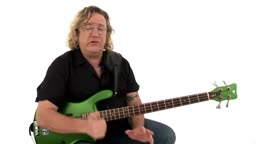
Hi, I'm Stu Hamm and welcome to Essentials: Rock Bass Grooves. The role of the bass player in the rock setting is critical; you have to lock up with the drummer rhythmically to establish the groove and at the same time provide a harmonic foundation for the vocalist and other instruments to play off of. In this edition of Essentials, we'll jump right into the playing and work through ten rock grooves, ranging from a variety of keys and subgenres.

I'll perform every piece and break it down for you, pointing out every technique you need to know, and of course you'll have all the standard notation, tabs, and jam tracks included as well. So grab your bass and let's get started!

Rock Solid

The first thing that you're going to be asked to do as a rock solid bassist is to hold it down by pumping out the eighth notes. This is not as easy as it may seem as first, taking a real attention to detail and precision. The eighth notes need to be perfectly placed and played with an aggressive attitude AND control to move the groove forward. Pay close attention to the pushes on bars 3 and 4, and how you land on the downbeat when you go back to the root at the start of the phrase. The pentatonic slides in bars 1 and 5 are classic Paul McCartney lines that will serve you well.

Rock Solid

The first thing that you're going to be asked to do as a rock solid bassist is to hold it down by pumping out the eighth notes. This is not as easy as it may seem as first, taking a real attention to detail and precision. The eighth notes need to be perfectly placed and played with an aggressive attitude AND control to move the groove forward. Pay close attention to the pushes on bars 3 and 4, and how you land on the downbeat when you go back to the root at the start of the phrase. The pentatonic slides in bars 1 and 5 are classic Paul McCartney lines that will serve you well.

Rock Solid

The first thing that you're going to be asked to do as a rock solid bassist is to hold it down by pumping out the eighth notes. This is not as easy as it may seem as first, taking a real attention to detail and precision. The eighth notes need to be perfectly placed and played with an aggressive attitude AND control to move the groove forward. Pay close attention to the pushes on bars 3 and 4, and how you land on the downbeat when you go back to the root at the start of the phrase. The pentatonic slides in bars 1 and 5 are classic Paul McCartney lines that will serve you well.

Cash

Our second rock groove is called "Cash" and is reminiscent of one of the great Pink Floyd basslines. This groove is in 7/4 time, which may be a little tricky if you've never played "odd time" grooves before. It's good practice to actually count the beats out loud as the play the bassline for the first few times. The 7/4 groove is divided into two sections, first with a 5 beat phrase and ending with a 2 beat phrase. Be sure to emphasize this when you play the part! Playing this bassline with a pick will also help you get that Pink Floyd sound.

Cash

Our second rock groove is called "Cash" and is reminiscent of one of the great Pink Floyd basslines. This groove is in 7/4 time, which may be a little tricky if you've never played "odd time" grooves before. It's good practice to actually count the beats out loud as the play the bassline for the first few times. The 7/4 groove is divided into two sections, first with a 5 beat phrase and ending with a 2 beat phrase. Be sure to emphasize this when you play the part! Playing this bassline with a pick will also help you get that Pink Floyd sound.

Cash

Our second rock groove is called "Cash" and is reminiscent of one of the great Pink Floyd basslines. This groove is in 7/4 time, which may be a little tricky if you've never played "odd time" grooves before. It's good practice to actually count the beats out loud as the play the bassline for the first few times. The 7/4 groove is divided into two sections, first with a 5 beat phrase and ending with a 2 beat phrase. Be sure to emphasize this when you play the part! Playing this bassline with a pick will also help you get that Pink Floyd sound.

+ 25 more lessons

Start Course

Reviews

13 results

GerBear362

Verified buyer

03/13/26

Great Instructional Videos

I like the detail provided in the breakdowns. And the instructions on HOW to play, not simply WHAT to play

arnsin

Verified buyer

11/03/22

gir meg mye fremgang

jotka53

Verified buyer

08/08/22

Stu‘ s essential series is great

IvanBlanco

Verified buyer

03/25/21

Rocking!

Excellent to start to rock on bass!

champignon56

Verified buyer

02/26/21

It rocks !

Stop searching. Start improving with All Access.

Try 14 days free. Cancel any time.