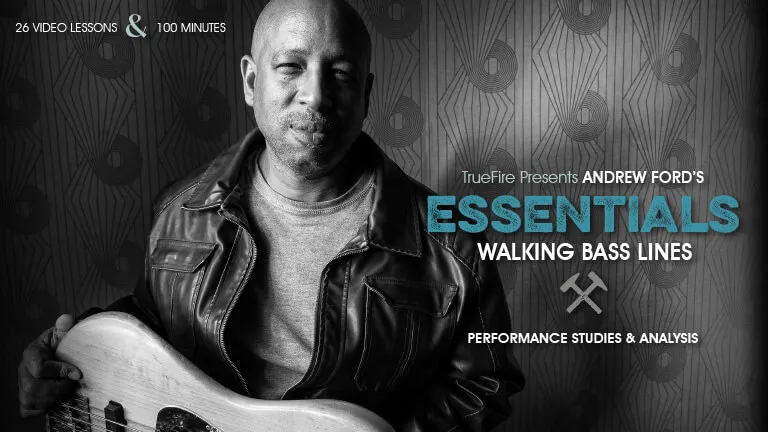
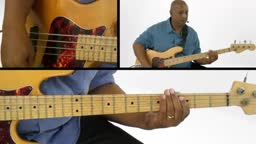
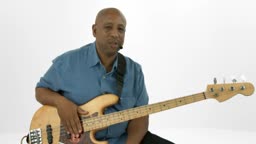
Essentials: Walking Bass Lines

Performance studies focused on the essentials of walking bass lines

Marty FriedmanTommy EmmanuelSteve VaiEric GalesEric Johnson

Get this course and 1,000+ more with All Access

Try 14 days free. Cancel any time.

Purchase Individual Course for $9.99
Essentials: Walking Bass Lines

About this course

Andrew Ford guides you on an illuminating exploration of 8 versatile Walking Bass Performance Studies. The bass lines, techniques and harmonic approaches that you’ll learn across these 8 studies can be used in your own original compositions, arrangements, vamps, jams and creative development.

“Every bass player needs to know how to play walking bass lines. It’s THE foundation of jazz bass playing and dates back to the 1800’s when the sound was used by classical composers. Jazz greats like Paul Chambers, Ray Brown, and Ron Carter refined the walking concept and you’ll hear it all over contemporary pop, blues and even popular rock tunes.

Learning to play walking bass lines is essential in many ways. First, it’s a great way to navigate chord changes, the sound really propels a song forward, and ultimately understanding the foundations of walking bass lines is definitely gonna help you get and keep more gigs.”

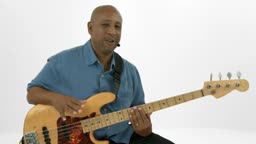
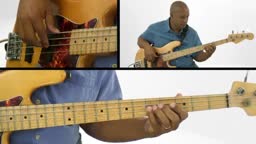
For each Performance Study, Andrew will give you an overview of the approach, describes its harmonic characteristics and then perform the study. In the breakdown section of each study, Andrew will break it down measure-by-measure emphasizing the techniques you’ll need to perform the walking bass lines as written and then use those techniques and approaches to craft your own lines.

Andrew’s 8 Performance Studies range across a variety of keys and feels, to illustrate a wide set of harmonic and technical approaches:

(1) Sunny Side Up (2-5 and 2-5-1 patterns examining how simple and repetitive note choices and patterns can still make solid, great sounding walking bass lines)

(2) So Now What? (an example of a modal jazz walking bass line consisting of only two chords focusing on the Dorian mode and mixing chordal, alternate scales and chromatic lines liberally)

(3) Silk and Satin (features a lot of 2-5 patterns, triplets, implied turnarounds, ghost notes, and walking over the same chord for two bars straight, allowing time to create tension and release)

(4) 1-3-5 Blues (explores the concept of having a beginning note, a support note, and then right to the transition note for the next chord when walking in 3/4 time)

(5) Rockin' and Walkin' Medley (a collection of bass lines, played in the same tempo and key, based on hit pop songs by the Beatles, Beach Boys, Marvin Gaye and Chicago)

(6) E Dub (very versatile walking bass line approach for a blues shuffle using bigger interval leaps, targeted note choices in turnarounds and a traditional blues shuffle groove)

(7) Rays Dance (walking bass line approaches for triplet rhythms, ghost notes, finding note choices over two alternating chords, and jumping up to the higher range of the bass for impact)

(8) Sunday Mornin’ (gospel style walking bass line in Ab working with two of the most common progressions when playing these "shout" patterns, 1 to 5 progression, and 1 chord to the 4 chord progression)

Everything is tabbed and notated, plus you’ll also get all of the rhythm tracks to work with on your own.

Grab your bass, shine those shoes and let’s get walking…

About the Series

Designed for intermediate and advanced students, TrueFire’s Essentials courses consist of Performance Studies focused on the "essential" harmonic and technical characteristics of a particular style of playing. Educators first perform the study for demonstration purposes and then break it down for the student. Performance Studies include tab, notation and practice rhythm tracks.

What you'll learn

  • Navigate chord changes using walking bass technique
  • Create smooth voice leading between chords in jazz progressions
  • Play walking bass lines in multiple keys
  • Apply walking bass to jazz, blues, rock, pop, and gospel styles
  • Apply swing feel to walking bass lines
Release date: 01/27/2015 • 1h 40m runtime
Start Course
Sample lessons
Sunny Side Up
Sunny Side Up
Overview
Sunny Side Up
Sunny Side Up
Performance
Sunny Side Up
Sunny Side Up
Breakdown
Rockin and Walkin Medley
Overview

What's included

26 lessons • 8 charts • 8 Jam Tracks

Essentials: Walking Bass Lines
When thinking about walking bass some think strictly in terms of jazz. Although walking bass is a monumental part of the foundation of jazz, many other styles incorporate walking bass lines also. You can find walking bass lines in pop, rock, country, r&b, gospel and other styles of music. Artists like the Beatles, Led Zeppelin, Marvin Gaye, Queen, Van Morrison, Billy Joel, Chicago and others have had hit songs featuring walking bass. We will examine how the basic concepts of walking bass can be applied to creating your own walking bass lines in jazz, and a variety of other styles. Many bass players find the concept of walking bass elusive. In this course I will demonstrate some of the essential concepts to develop walking bass lines that groove, support the melody and soloist, sound good sonically, and are fun to play.
Sunny Side Up
This first walking bass line is based on Leroy Vinnegars performance on the song Sunny Side Of The Street. Leroy's nickname was "The Walker" so I thought it was appropriate to include his style of walking in this collection. Also, he was self taught, less technical, and really all about the feel. In this first one we will check out some 2-5 and 2-5-1 patterns and examine how simple and sometimes repetive note choices and patterns can still make solid, great sounding bass lines. Lets dig into this one .
Sunny Side Up
Now let's check out the performance for this tune. This first walking bass line is based on Leroy Vinnegars performance on the song Sunny Side Of The Street. Leroy's nickname was "The Walker" so I thought it was appropriate to include his style of walking in this collection. Also, he was self taught, less technical, and really all about the feel. In this first one we will check out some 2-5 and 2-5-1 patterns and examine how simple and sometimes repetive note choices and patterns can still make solid, great sounding bass lines.
Sunny Side Up
First thing to notice is there are a lot of roots on the first beat of the chord changes. This really anchors the band and helps to hear the chord progression. The first bar is a C chord and we simply play the chord tones which are C, the root, moving down to the major 3rd, E, then the 5, G on the E string and finally back to the root C that transitions using a half step movement to the B note in the next bar. Bar 2 has a 2-5 progression in A minor. Over the B minor 7 flat 5 we simply play the root twice without outlining the chord which is perfectly acceptable and for beats 3 and 4 over the E7 chord we use the neutral chord tones E and B, root and 5. What I mean by neutral is that we could have used these same 2 notes had the chord been EMaj, maj 7th, minor, minor 7th, suspended or a number of other chords. Next we have an F chord where we use primarily chord tones but add the 6, the notes are 1, major 3rd, 6 and 5, F, A, D, and C. Again we have a smooth transition to from the C to D, our root in bar 4. Here again we play 2 quarter note roots for the Dm7 chord and over the G7 we play the root, G, and 5, D, using swinging 8th notes and end on a quarter note chromatic passing tone, Ab. In bar 5 we have an Am7 chord and here we do a simple walking pattern consisting of 1, 2, 3, and back to 1. Our last 1, A, moves by a 1-4 relationship smoothly to D in bar 6 which is our root, in this bar we have a diatonic walkdown from D, to C, to B, and then A. We have 2 chords again in bar 7, actually bars 7 and 8 form a 2-5-1 pattern. So we begin with a 1-5 movement for the 1st 2 beats, D to A, and then 1-3 in the second half, G to B. Then we move up a half step to C, down to the major 3rd, E, down again to D, the 2, and finish with the 5, G. Now we repeat that 8 bar chord progression with new notes. In bar 9 we have the C chord again this time we start on the 5 and walk down the major scale but use a ghost note in between the first 2 notes, G to F, we continue walking down to E, the 3, and D, the 2 then another ghost note using the A string. We use only roots in bar 10, two B's to two E's, simple but does the job, all about the feel. Bar 11 starts on the root, F, walks down to E, continues to D, and ends on the major 3rd, A. We sort of imply a D minor chord on beats 3 and 4, Dm7 is closely related to the F chord. In bar 12 we go back to playing roots only, G, and G# or Ab, we spice it up with a ghost note in there but again it's really about the feel in this case, not the complex or fancy notes you can come up with. In bar 13 we again begin with the root, A, move to a ghost note on the A string, walk down the triad to E, C, then the root A. We repeat our same pattern from bar 6 in bar 14, D, C, B, A. Over the 2-5 in bar 15 we start with the root D, minor 3rd, F, then G to B, root, third over the G7 chord. This time when we get to the 1 chord, C, we do a walk down that implies a chromatic descending chord progression, C, B, Bb, and A. Next we have the bridge section which starts with another 2-5-1 progression in bars 17-20. Bar 17 has another scalar type walk down using the scale based on the Gm7 chord which is the Dorian scale, we start with G, the root, and walk down to F, the b7, then E, the 6, then the 5, D, we keep that descending motion going by playing the root, C, or our next chord, down to Bb, the b7 of our mixolydian scale, A, the 6, and G, the 5. We actually walk down one more note, to F which is the root of our chord for bars 19 and 20. Bar 19 repeats our pattern from bar 3, bar 20 starts on the 5, C, goes up to the 2, G, down to F, the root, then a chromatic connecting note, Eb that leads us to bar 5 of our bridge, the D7 chord. We do a more simplified walk down here starting on the root, D, to the b7, C, to B, our 6, then repeat the B before encountering another 2-5, A-D. We simply outline both chords in bar 22 with the corresponding 1-5, for Am7, A to E, for D7, D to A. In bar 23 we get a little more colorful over the G7 by starting with the root but walking up chromatically to Ab, then to A, the 2, and finally down to Eb a chromatic note that takes us to D, the root of our next 2-5. Here in bar 24 is a familiar 1-3 movement, D to F, then to the root G, down to the 5 but an anticipation which is often done to accentuate a new section or returning to a previous section, in this case going back to A. Now bar 25 begins our final 8 bars of the phrase. Our anticipation note, C, holds over until the second beat of bar 25, we then play E, the major 3rd, G, the 5, a ghost note on the A string and then back to the 1. The next bar starts on the root, B of our Bm7b5 chord, then we play the b5, F, and finish with 2 simple E roots. Bars 27 and 28 are repeats of bars 11 and 12. Now we have the last 4 bars, the first one, bar 28 starts with a familiar motif from bar 13, the root, and ghost note and then the 5, E, but then goes to the root down an octave and up to a chromatic note, Eb that leads us to the root, D, in bar 30. The pattern here is root-5-root-3, D, A, D, F#. This walks up to G, the root of our next chord change, even though we have a suspended to 7 chord the pattern works over both chords, its the same one we played in bar 17 even though that is over a minor chord, they share some of the same scale notes. Our last bar resolves but also sets up the top of the phrase again with the G7 chord. Our notes here are root-3 over the C chord, C to E, and swinging 8th notes over the G7 chord starting on the 5, D, to low E, the 6, and finally to G, the root, as a quarter note.
So Now What?
This next bass line is inspired by the Miles Davis song So What played by Paul Chambers that includes one the most famous bass features in jazz. This is an example of modal jazz consisting of only 2 chords focusing on the Dorian mode. We have the liberty to play longer phrases with these type of modal songs, mixing chordal, alternate scale and chromatic lines liberally. Lets check it out.
So Now What?
Now let's check out the performance. This tune is inspired by the Miles Davis song So What played by Paul Chambers that includes one the most famous bass features in jazz. This is an example of modal jazz consisting of only 2 chords focusing on the Dorian mode. We have the liberty to play longer phrases with these type of modal songs, mixing chordal, alternate scale and chromatic lines liberally.
So Now What?
For the first 16 bars we will be playing Dm7, the Dorian scale is the scale of choice over this chord though we make liberal use of chromatic passing tones. In the second half of the B section we will think Db major scale instead of the Eb Dorian scale in our walking process, as Paul did on the original track. Db major scale shares the same notes as Eb dorian. We start the bass line with 8th notes, propelling the song forward with the two D's and continue to climb up diatonically with E, the 2, and F, the minor 3rd, we end the bar with the 6, part of the Dorian scale. The next bar starts on the 5th, A, but again we are thinking in longer phrases here and not bar to bar. From the A we walk down to the minor 3rd, F, the 2, E, and down to the 5 and octave lower. Bar 3 starts on the root, D, and goes down to F, the minor third, low E, the 2, and ends the bar on a chromatic Ab that leads us to the A, our 5, in bar 4 and here is where we play our minor 6, Bb, part of the natural minor scale, we finish this 4 bar phrase with C, the b7, and Db which leads us to the D or root in bar 5. Bar 5 begins like bar 1 with skipping 8th notes but 1-5 this time instead of two roots. We follow that with another diatonic walk up, E, F, and G, continuing that walk to the next bar with the 5, A. Bar 6 continues with the 2, E in a 1-4 movement then down to C, the b7 and lastly to Db which is again used as a transitioning note. The next bar begins with D, the root, going down to F, the minor 3rd, followed by G, the 4, walking up chromatically using Ab to A the first note of bar 8. Bar 8 follows A with C, the b7, E, the 2, chromatically down using Eb to the root D in bar 9. This bar has another chromatic walk down, D, Db on beat 2, C, b7, and skipping to Bb, the minor 6 that transitions to A, the 5 and 1st note of our new bar. We jump up from A to F, the minor 3rd, down to the 2, and back up to the 5, A. We start exploring new areas of the fretboard in bar 11 starting with D at the 7th fret of the G string. We walk up diatonically to the 2, E, the minor 3rd, F as an 8th note and the second 8th note being a ghost or muted note on the D string leading to Bb, the minor 6 and connects us to A, the 5, in bar 12, we continue to walk down in that bar from A to G, the 4, F, minor 3rd, E, the 2, and into the new bar, 13, with the root D. Bar 13 begins a skipping figure using wide intervals and open strings for effect. Starts on open D and moves to F at the 10th fret of the G string, back to D and then back to F before ending with another Bb leading us to A in bar 14. We have a pattern walk in bar 14 where we are walking down in thirds, first major and then minor third intervals, A to F then G to E. In bar 15 we have a common box shaped pattern that can be used over minor and dominant chords because there is no third, we have, D, root, then the octave, D, b7, C and the 5, A. From the A we walk down to the 4, G, the minor 3rd, F, 2, E, and to the root, D in bar 16.

Now bar 17 is where we change to chord number 2 of our two chord song. We go up a half step to Eb minor 7. Here I think Db major scale for half of the 8 bars of Ebm7, If you play the Eb dorian scale starting on Db, you get the Db major scale. Ok, the first 4 bars highlight the Eb dorian scale, we start on the root, Eb, then Db, the b7, C, the 6 and Gb, the minor 3rd, in the second bar,18, we play as an extension of bar 17 with the first note being F, the 2, then down to the b7, Db, to Bb the 5, and lastly a chromatic note D that leads us up a half step to Eb, the root in bar 19, to the 5, Bb, walk down chromatically to A, then Ab the 4 which gets us to Gb in bar 20, down to Eb, the root, A, a chromatic note leading to the 5, Bb. Now in the next four bars we are still playing Ebm7 but we outline the Db major scale. We start on the root Db, to the 4, Gb, the 2, Eb, then the 5, Ab. These translate to the b7, minor 3rd, root and 4 of Eb dorian. Back in Db for the 2nd bar we start on the major 3rd, F, Ab, the 5, major 7, C, and the 6, Bb. For bar 23 we have the root, Db, major 7, C, Ab, the 5, and Bb, the 6. The last bar of this phrase starts on the 4, Gb, the 5, Ab, major 3rd, F, and the root, Db.

Next we are back to Dm7 for the last 8 bars. We begin with a triplet to help define the new section. Notes are D, F, and G, root, minor 3rd, and 4. Second beat is the b7, C, the 6, B, then Bb that connects us to the A in bar 26 which is the 5, down to G, the 4, to F, the minor 3rd, and back to the 5, A. Bar 27 walks diatonically up the D dorian scale from D to E, F, 1,2,3 then skips to the 5, A. The last bar of this phrase starts on F at the 10 fret of the G string which is the minor 3rd, down to the 2, E, to C, the b7 and finishing on A, the 5. Our last 4 bars of the song start on the root D, to the b7, C, skipping 8th notes on beat 3 which are Bb, the minor 6, to G, the 4, moves up to A in bar 30, then walks back down diatonically to G, F, and E, 4, flat 3, and 2. Another swinging skipping phase on beat 1 with 8th notes playing 1 and 5, D and A, this walks up to a chromatic note, C# that leads to D, the root back down to another chromatic note Ab, and finally to A, the 5, F, the minor 3rd, E, the 2, and a chromatic connector Eb that gets back to the top.


+ 19 more lessons

Start Course

Reviews

8 results

guitaralice

Verified buyer

04/12/26

Essentials: Walking Bass Lines

If you want a great overview of where walking bass lines can be used, then this is the Workshop from Andrew Ford for you. The familiar advantages of the Trufire website, such as play-alongs, sheet music, and tutorials, are available. Eight styles are presented. The range extends from old jazz and modal jazz to jazz standards, blues, rock, and gospel. With his calm, deep voice, Andrew Ford explains his compositions in a way that is truly enjoyable. It's exceptional. You get to see how he composed and compiled the practice pieces for this workshop. It's wonderful. It's quite easy to understand all the compositions and how to play them. All the pieces can be played by bass players of a moderate level. So: Let's Walk with Andrew Ford!

00bassman00

Verified buyer

03/27/25

Walking bass lines

Awesome

Revman2015

01/31/21

Genius

Andrew Fords’s instruction is clear right from the get go! This course in particular is fantastic for learning the techniques of how to play and craft your playing on multiple layers, with the assistance walking bass line voicings and who doesn’t . Using hammer on and pull offs in different sections of the tune to fill out the sound is a must do. Genius.

StringTheorist

Verified buyer

01/01/21

These Strings Are Made For WALKING!

I'm a guitarist who has recently acquired a bass and wants to move beyond simply playing guitar lines on the bass guitar! Walking bass lines are such a fundamental and integral part of so many styles of music and of bass playing that they are an essential part of understanding and playing the instrument. Andrew Ford is a truly great teacher as well as a great player and his relaxed demeanour makes mastering these walking bass lines a stroll in the park! He covers essential genres, styles and concepts of walking bass lines and really joins up the dots of the bass guitar and demystifies the walking bass style.

morningfield

Verified buyer

12/20/20

Thanks!!

Stop searching. Start improving with All Access.

Try 14 days free. Cancel any time.