
Fingerstyle Blues Handbook 1

Step-by-step fingerstyle blues guitar method

Marty FriedmanTommy EmmanuelSteve VaiEric GalesEric Johnson

Get this course and 1,000+ more with All Access

Try 14 days free. Cancel any time.

Purchase Individual Course for $24.99
Fingerstyle Blues Handbook 1

About this course

Step between the covers of the Fingerstyle Blues Handbook and let David Hamburger introduce you to the solo instrumental world of fingerstyle blues guitar. Ideal for lifelong flatpickers, this progressive series of lessons will soon have you thumping and grooving on twenty deep blue instrumentals, enough to keep you picking on the porch for hours on end.

Fingerstyle Blues Handbook introduces you to "steady bass," the key technique in many contemporary and classic blues styles. You will learn how to quickly achieve finger and thumb independence so you can play chords and solos with your fingers while your thumb maintains the groove. You'll learn single note and double stop blues licks, blues chord voicings, descending bass lines and vamps, and how to play eight, twelve and sixteen bar blues in the keys of E, A, D, A minor and E minor. Each of the twenty lessons features a fingerstyle blues tune that you learn and add to your repertoire.

This course provides a solid foundation for playing solo fingerstyle blues guitar and taking on David's more advanced New School Fingerstyle Blues course also from TrueFire.

What you'll learn

  • Use index finger for alternating string picking while maintaining thumb bass
  • Perform syncopated slides that start on offbeats and land on downbeats
  • Execute syncopated offbeat chord hits (John Lee Hooker boogie pattern)
  • Play a 12-bar blues in drop D tuning
  • Coordinate independent bass lines with melodic phrases
Release date: 11/10/2005 • 3h 58m runtime
Start Course
Sample lessons
Lesson 1
Lesson 1
Performance
Lesson 2
Lesson 2
Pre-Lesson Wrap
Lesson 2
Lesson 2
Performance
Lesson 3
Lesson 3
Pre-Lesson Wrap

What's included

40 lessons • 20 charts

Lesson 1
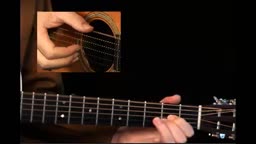
The position of your right hand over the strings can make a big difference in the kind of strength and volume you're able to pick the strings with. Also, when you get your thumb out in front of your fingers, closer to the fingerboard, it makes it easier to do palm muting. Palm muting means resting the thumb side of your palm on the bass strings, right where the strings meet the bridge. It gives your bass notes a dry, thumpy sound while leaving the high strings free to ring out.
Lesson 1
The position of your right hand over the strings can make a big difference in the kind of strength and volume you're able to pick the strings with. Also, when you get your thumb out in front of your fingers, closer to the fingerboard, it makes it easier to do palm muting. Palm muting means resting the thumb side of your palm on the bass strings, right where the strings meet the bridge. It gives your bass notes a dry, thumpy sound while leaving the high strings free to ring out.
Lesson 2
When you're picking three strings at a time with your fingers, check to make sure all three strings are ringing out at about the same volume. It's easy for the middle string of the three - in this case, the second string, which you're picking with your middle finger - to get lost in the shuffle. Try picking just the second and first string, then just the second and third string. Then add back in the first string to pick all three, and listen for the sound of the second string in the mix.
Lesson 2
When you're picking three strings at a time with your fingers, check to make sure all three strings are ringing out at about the same volume. It's easy for the middle string of the three - in this case, the second string, which you're picking with your middle finger - to get lost in the shuffle. Try picking just the second and first string, then just the second and third string. Then add back in the first string to pick all three, and listen for the sound of the second string in the mix.
Lesson 3
Throughout these lessons, we're assigning a specific picking finger to each string: index for the third string, middle for the second string, ring for the first string. If you're playing a three-note chord on top, as in lesson 2, you have to do this, but it's a good idea even when you're picking single notes on top, as this lesson. Having a specific finger playing each string simplifies your right hand choices and your fingers' muscle memory becomes part of how you memorize each tune. >> Reference Source: Dave van Ronk (http://www.culcom.net/~shadow1/bio.htm)
Lesson 3
Throughout these lessons, we're assigning a specific picking finger to each string: index for the third string, middle for the second string, ring for the first string. If you're playing a three-note chord on top, as in lesson 2, you have to do this, but it's a good idea even when you're picking single notes on top, as this lesson. Having a specific finger playing each string simplifies your right hand choices and your fingers' muscle memory becomes part of how you memorize each tune. >> Reference Source: Dave van Ronk (http://www.culcom.net/~shadow1/bio.htm)
Lesson 4
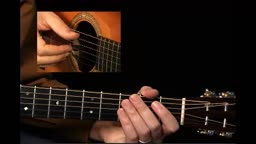
The first three lessons have been in what guitarists call open position, meaning that we've been playing just open strings, plus notes played on the first four frets of the guitar. For this lesson, we're in third position, which means you play the notes at the third fret with your index finger, the notes at the fourth fret with your middle finger, the notes at the fifth fret with your ring finger, and so on.

+ 33 more lessons

Start Course

Reviews

52 results

trongtle

Verified buyer

05/08/26

The perfect blueprint for thumb independence!

This course is exactly what I needed to finally crack the code on acoustic fingerstyle blues. David Hamburger does an incredible job of breaking down the Steady Bass technique into bite-sized, manageable lessons that fit perfectly into my daily practice schedule. Instead of just throwing random licks at you, the progression is extremely logical. It builds up beautifully to a complete and satisfying 'Etude in E' that makes you feel like a real blues player. Highly recommended for anyone wanting to build a rock-solid foundation without getting overwhelmed!

Virwill7

Verified buyer

04/23/26

Excellent teaching

David’s course is beautifully conceived and constructed. Each lesson builds on the previous lesson in building-block fashion. The pacing is excellent. And each lesson is filmed at angles that make the proper fingerings plain to see. David has a low key and droll manner that is quietly encouraging and fun - and perfectly suits the music. Highly recommended.

Achille5789

Verified buyer

04/08/26

excellent

very good lessons for blues. essentiel

bobyboby

Verified buyer

03/13/26

Just purchased

I am spending my time here and the second blues course I bought. . . so far so good

robfrancisco

Verified buyer

09/15/25

I had been a "campfire guitarist" for many years and recently became interested in the blues, particularly acoustic fingerstyle blues. As a complete beginner at both blues and fingerstyle, this course was absolutely perfect for me. It provided just enough of a challenge to keep my brain stimulated, but not to the point of leaving me frustrated. I love the instructor, especially his dry sense of humor. I'm finding his compositions creative and very fun to play. I only have a couple more lessons left, and will be sad when it's over.

Stop searching. Start improving with All Access.

Try 14 days free. Cancel any time.