
Guitar Lab: The Art of Practicing, Vol. 7
Build The Habits Behind Great Playing





Get this course and 1,000+ more with All Access
Try 7 days free. Cancel any time.

About this course
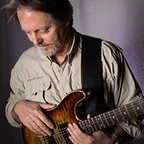
The Art of Practicing, Volume 7 continues Brad Carlton’s deep dive into the mindset, discipline, and self-awareness required to become a better musician. Building on the concepts explored in Volume 6 and drawing on more than 56 years of teaching experience, Brad continues to share the core principles behind effective practice, showing you how to listen more deeply, assess your own playing honestly, and build the habits that lead to real musical growth. This is not a course about memorizing licks or running exercises without purpose. It is about learning how to practice with focus, intention, and a clear understanding of what you are trying to improve.
Brad continues to break down the different roles you need to play in your own development, from teacher to student to coach, while helping you better understand how to identify weaknesses, set goals, and stay motivated through the process. You’ll dig deeper into the ideas and approaches introduced throughout the series, developing a stronger understanding of how to organize your practice, evaluate your progress, and make the most of the time you spend with your instrument.
Along the way, Volume 7 strengthens much more than your practice routine. You’ll continue sharpening your listening, improving your time, developing better fretboard awareness, building stronger technique, and learning how to approach mistakes, improvisation, performance, and recording with a more productive mindset. By the end of the course, you’ll have an even clearer understanding of how to guide your own musical growth and make your practice time more focused, creative, and rewarding.So listen closely, take your time, and let’s continue with The Art of Practicing, Volume 7.
Release date: 11/02/2026 • 1h 40m runtime
Sample lessons
Choosing Your Technique
Matching Your Voice
What's included
15 lessons • 1 charts • 1 Jam Tracks
Brad Carlton with Volume Seven, the final volume of The Art of Practicing.
I will take a lot of different techniques, the idea of inserting slurs in a line, and apply them to a cool groove, a bouncy kind of shuffle thing, a two-five.
And you're gonna learn how to apply all these principles that I've talked about in all seven volumes.
I will take a lot of different techniques, the idea of inserting slurs in a line, and apply them to a cool groove, a bouncy kind of shuffle thing, a two-five.
And you're gonna learn how to apply all these principles that I've talked about in all seven volumes.
In this lesson, we’ll explore how to choose techniques based on the sound we want to create. We’ll experiment with picking, hammer-ons, pull-offs, slides, bends, pickup settings, tone controls, and different approaches to articulation so we can better match the sound we hear in our head.
In this lesson, we’ll learn how singing along with what we play can strengthen the connection between our ears, voice, and instrument. We’ll work with simple melodic ideas, scale tones, bends, rhythms, and articulations while training ourselves to recognize and reproduce the sounds we create on the guitar.
In this lesson, we’ll reverse the process and practice playing the musical ideas we hear and sing. We’ll use our voice to shape rhythm, pitch, articulation, dynamics, and phrasing, then translate those ideas onto the fretboard as we develop a more direct connection between our musical imagination and our hands.
In this lesson, we’ll explore aural memorization by focusing on what we hear. We’ll practice listening for chord changes, rhythms, melodic shapes, and individual phrases, breaking more complicated ideas into smaller sections so we can internalize the music before trying to reproduce it on the instrument.
In this lesson, we’ll go over the visual side of memorization and learn how watching the fretboard can strengthen our understanding of the instrument. We’ll practice seeing notes and positions before we play them, looking ahead during position shifts, and allowing our eyes to help guide our hands around the neck.
In this lesson, we’ll explore tactile memorization and the role physical repetition plays in learning music. We’ll focus on how shapes, finger movements, position shifts, and repeated physical patterns can become familiar enough that our hands begin to recognize them naturally.
+ 8 more lessons
Reviews
No reviews yet
Complete this course and be the first to share your experience.
Stop searching. Start improving with All Access.
Try 14 days free. Cancel any time.
