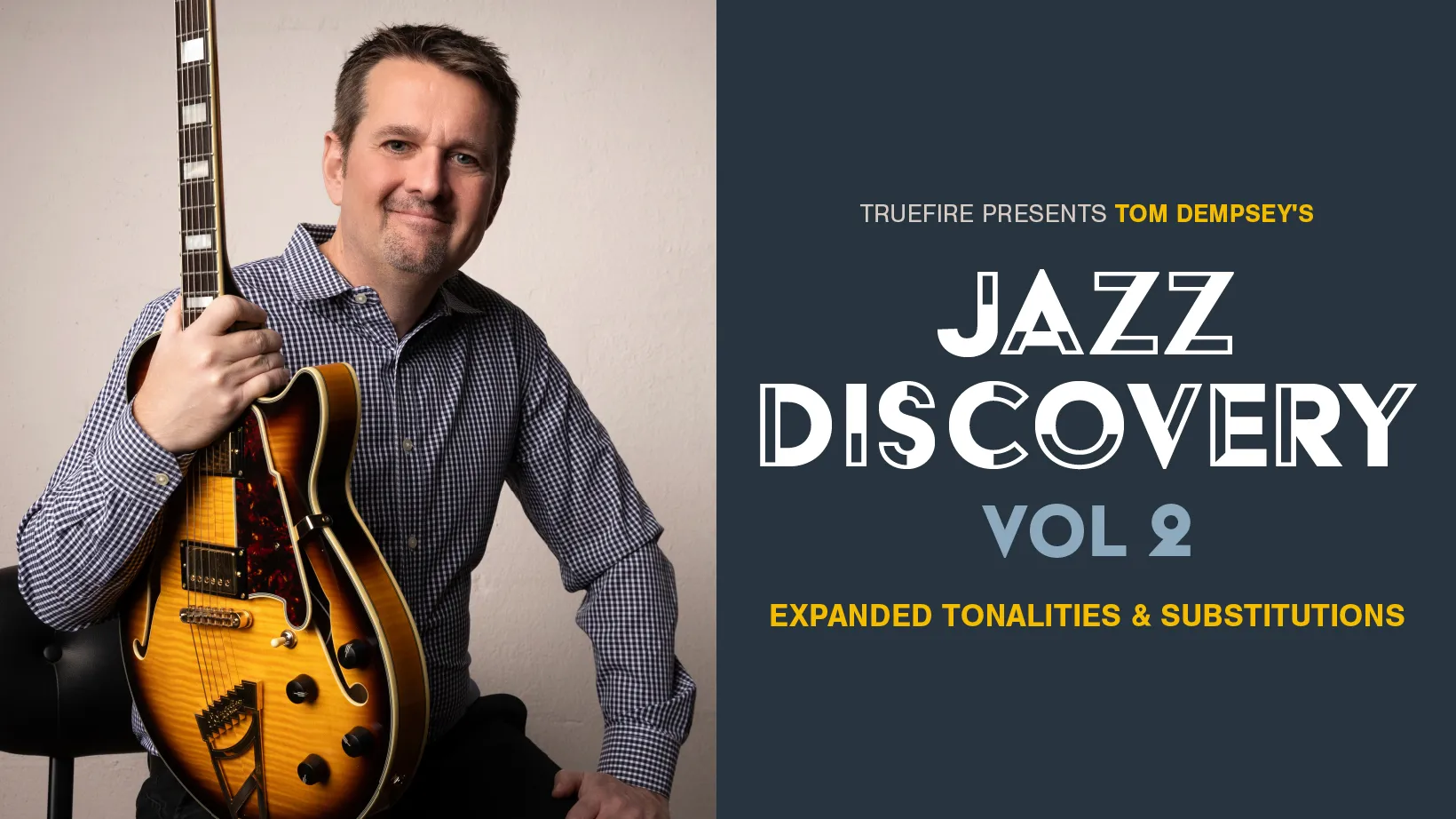
Jazz Discovery, Vol. 2

Expanded Tonalities for Jazz Improvisation

Marty FriedmanTommy EmmanuelSteve VaiEric GalesEric Johnson

Get this course and 1,000+ more with All Access

Try 14 days free. Cancel any time.

Purchase Individual Course for $24.99
Jazz Discovery, Vol. 2

About this course

In jazz guitar, leveling up means deepening your understanding of harmony, refining your improvisation, and learning to comp with greater musicality and nuance. Whether you're working through standards, exploring bebop language, or building confidence over jazz blues changes, a strong command of jazz vocabulary is essential.

This three-volume masterclass series, “Jazz Discovery,” explores jazz's improvisational language, from its rhythmic nuances to the complex harmonies that provide limitless creative freedom. Tom’s engaging and enlightening curriculum builds that essential foundation to help you think, feel, and play like a seasoned jazz musician.

In Jazz Discovery Vol. 2, Tom picks up where Volume 1 left off: guiding you through new tonalities, more sophisticated chord voicings, and real-world improvisation strategies that expand your fluency and feel.

You’ll explore:
  • Essential Jazz Tonalities: Major, Dorian, and Mixolydian scale applications
  • The Bebop Scale: Learn to play “through” and “to” the changes with bebop language
  • Rootless Chord Voicings: Major, dominant 7th, and minor 7th voicings & subs
  • II-V-I Mastery: Voicing options, comping strategies, and soloing concepts
  • Jazz Blues Progressions: Comping and soloing with dominant and pentatonic flavors
  • Guided Practice Sessions:Play-alongs to internalize every concept in context
You’ll also get access to Tom’s backing tracks and TrueFire’s learning tools including synced tab, slow-mo, looping, and fretboard animations so you can follow along at your own pace and deepen your understanding every step of the way.

“Ready to discover the next level of jazz? We’ll expand on the foundations and give you the tools to solo and comp with real fluency,” says Tom.

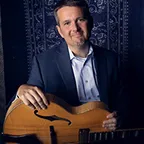
Tom Dempsey has performed and recorded with Wynton Marsalis, Jim Hall, John Abercrombie, John Scofield, Tal Farlow, Jack McDuff, Bobby McFerrin, Mel Torme, Dave Brubeck, and dozens of other marquee jazz artists. He is a music professor at NYC City University, has nine best-selling TrueFire courses, and has produced TrueFire’s critically acclaimed masterclass with Pat Martino, The Nature of Guitar.

So grab your guitar, plug in, and let’s dive deep with Tom Dempsey.

What you'll learn

  • Play rootless chord voicings for major, dominant, and minor seventh chords
  • Apply chord substitutions in jazz comping
  • Solo through jazz standards using multiple scale tonalities
  • Improvise with fluency over jazz chord changes
  • Bring out chord harmony through modal improvisation
Release date: 06/11/2025 • 1h 39m runtime
Start Course
Sample lessons
Soloing with the Dominant Scale: 1
Improv Practice Session
Soloing with the Dominant Scale: 2
Improv Practice Session

What's included

27 lessons • 24 charts • 11 Jam Tracks

Jazz Discovery, Vol. 2
Hey, I’m Tom Dempsey, and I wanna welcome you to the second volume of Jazz Discovery. If you joined us for Volume One, you’ve already begun to understand and apply the foundational elements of jazz guitar — things like pentatonic and blues scales, soloing, essential harmony, and jazz rhythms.

Well, here in the second edition of the series, we’ll expand into the major, minor, Dorian, and dominant scale tonalities, teaching you how to solo through jazz standards and improvise with fluency.

We’ll also explore rootless chord voicings and substitutions for major, dominant, and minor seventh chords — all key skills for more jazz comping sophistication. We’ll continue our study of jazz blues changes and popular diatonic jazz progressions, with a ton of practice sessions along the way to set you up for success in a variety of real-world jazz scenarios.

Plus, there’s tab sync and notation for everything we work on, along with slow-mo controls, looping, and fretboard animations to help you learn at your own pace.

So, are you ready to discover the next level of jazz? Grab your guitar and let’s get started.
Quick Review of Volume 1
Hey, welcome to Volume Two! In this course, we’re building on everything we covered in the first volume—so if you're solid on your pentatonics, blues scales, and those foundational jazz progressions, you're in a great spot to dive in. We’ll expand into major, minor, dominant, and bebop scales, and I’ll walk you through how to understand and apply the major scale in a practical, hands-on way. I’ll break down the theory in a clear, usable format and then show you how to play these scales all over the neck, using fingerings that make sense and feel good under your hands. If you’ve got the basics down and you’re ready to level up your improvisation and fretboard fluency, let’s get started.
The Major Scale
In this lesson, we’re diving deep into the major scale—how it’s built, how it functions, and how you can actually use it in your playing. I’ll break down the theory in a simple way that makes sense, then walk you through a series of practical fingerings across the neck using a consistent approach I call “tonality shapes.” We’ll look at a few different options for each position, so you can find what works best for your hands, whether you prefer a stretch or a shift. By the end of this lesson, you’ll not only have the scale under your fingers—you’ll understand how it’s put together and be well on your way to playing it fluidly in any key.
Soloing with The Major Scale
In this part of the lesson, I’ll show you how to start turning the C major scale into music by improvising over a static C major chord. You’ll hear how the scale fits naturally over the harmony, and I’ll walk you through using it to come up with your own melodic ideas. The goal here is to get comfortable hearing the sound of the scale in context and start making it your own. So take some time to play around with the concepts I demonstrate—then when you’re ready, I’ll see you in the next lesson.
Rootless Major Chords and "Subs"
In this lesson, I’m breaking down a bunch of different ways you can approach playing a C major seven chord—from basic voicings tied to familiar scale shapes, to more advanced rootless and inversion-based voicings that open up the harmony. We’ll also talk about how to start thinking beyond the root chord using diatonic substitutions—like replacing your one major with a six minor or a three minor—to get richer textures and more creative options. It’s all about understanding the full range of sounds available to you and learning how to make them work musically. So dig in, experiment with these shapes and substitutions, and I’ll see you in the next lesson when you're ready.
ii-V-I: Major Scale "Through" the Changes
In this lesson, we’re looking at how to approach a 2-5-1 progression using just the major scale. I’ll show you how you can outline the entire progression—D minor 7 to G7 to C major 7—by sticking within the key center and still come up with musical, effective lines. This is a great way to start connecting the dots between chord changes and scale-based improvisation. So take some time to play along with the track, try out some of the phrasing ideas I demonstrate, and see how the major scale can carry you through. When you’re feeling good with it, I’ll see you in the next lesson.
ii-V-I: Major Scale "To" the Changes
In this lesson, we’re taking things a step further by moving through a progression that shifts keys—similar to what you'd hear in a tune like Miles Davis’ Tune Up. I’ll show you how to approach each 2-5-1 using the major scale from the corresponding key, and how to flow through those changes smoothly on the neck. This is all about getting comfortable shifting between keys while keeping your phrasing musical and connected. So take your time with it, explore how your major scale fingerings work in different positions, and when you're ready, I’ll see you in the next lesson.

+ 20 more lessons

Start Course

Reviews

1 result

rwabob

Verified buyer

09/27/25

Excellent course. The focus on the major scale is perfect. The solo examples are understandable and quite tasty - It would be helpful though if there was a little commentary to point out the use of musical concepts such as his use of target tones that make these examples flow so nicely. No big analysis needed but just point out an example or 2. Thanks!

Stop searching. Start improving with All Access.

Try 14 days free. Cancel any time.