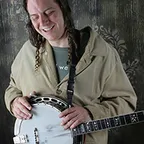
Guitar players are drawn to any stringed instrument. If its got strings on it, and its in arm's reach, a guitarist will pick it up and attempt to play it. Banjo is no exception. Problem of course is making music with it given its strange string configuration, bizarre tuning and those weird things you attach to your fingers. And so we put it down and return to our familiar six strings, tunings and fingerings. If only someone put a guitar-to-banjo translation crash together 'cause it sure would be fun picking a little bluegrass banjo with the boys...
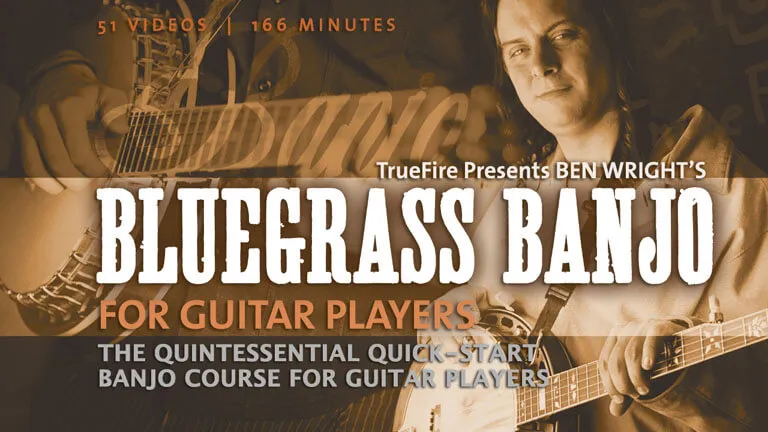
Sure enough, you won't have more fun playing any other style of music than you would jamming bluegrass tunes with your buds on the porch or on the stage. The tunes are easy to learn and everybody takes turns playing the melody, comping the rhythm and taking solos. And if you're into bluegrass music, and already play guitar, then learning how to play banjo is a hop, skip and jump away with Ben Wright's Bluegrass Banjo for Guitar Players.
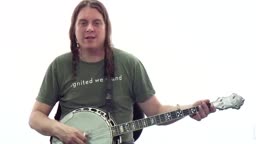
Ben, not unlike many banjo players, started out as a guitar player himself and so, he's been there, done it, and has the tee-shirt so to speak. Ben organized the course into four sections; Banjo Primer, Right-Hand Basics, Chord Vocabulary and Repertoire. Work through these four sections and you'll be up and running lickety-split.
The Banjo Primer section covers all of the essential fundamentals that a guitarists needs to know; parts of the banjo, fingerpicks, holding the banjo, open G tuning, a few timing tips, and a handful of versatile chords. Guitarists will fly through this section.
The Right-Hand Basics section will introduce you to the chop, a basic 4-note roll, an alternating thumb roll, a forward roll and a forward-reverse roll. If these terms are familiar to you as a fingerpicker player, you will likewise fly through this section. If you're new to fingerpicking, then no time like the present to learn these simple moves. This section includes a series of playalongs and so you'll be playing some bluegrass banjo practically from the start! Easy stuff and tons of fun!
The Chord Vocabulary section puts the entire bluegrass songbook at your fingertips with moveable major, minor and 7th chord forms. Ben also shows you how to use a capo and how to vamp. You'll be able to play any tune, in any key, anywhere on the fretboard. The bluegrass world is your oyster!
Technically you're now ready to start heading out to the local bluegrass jams, BUT you might want to have a few tunes under your belt and so Ben put together a selection of 12 popular bluegrass tunes that he'll teach you in the last section of the course. You'll learn Will The Circle Be Unbroken, Crawdad Song, Salty Dog, Wagon Wheel, My Sweet Baby's Arms, Dooley, Old Home Place, Rocky Top, I'll Fly Away, Blue Moon of Kentucky, Cabin in Caroline and I Saw The Light.
So yea, problem solved. Ben Wrights crash banjo course for guitar players is now just a click away. Pick up Banjo for Guitar Players, spend a little time in the shed, call the buds, grab some moonshine and play your hearts out 'til the cows come home.
What you'll learn
Apply vamping technique to 1-4-5 chord progressions
Position right hand closer to neck for less ringing and more percussive tone
Add left hand damping to existing chopping technique for more percussive sound
Learn proper capo placement technique to minimize tuning issues
Understand the role of banjo as rhythmic/percussive instrument in backup situations
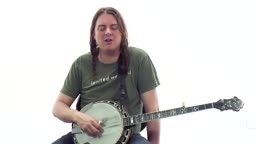
Welcome to Bluegrass Banjo for Guitar Players. This course is a great introduction to the supreme bad-assery that is the five string banjo in a bluegrass context. One of the awesome things about this style of playing is that it's incredibly versatile. This course will be focusing on bluegrass styling and tunes, but it's important to realize that you can add banjo to so many genres of music, including folk, rock, jazz, old-time, and many more. By the end of this course, you'll have the basics of both the right and left hand down to the point where you can sit in with pretty much anyone. Have fun and watch out for the banjo infection that will set in quickly. Once you have it, you won't be able to get rid of it.
The first section of the course covers the basics of the instrument and what differentiates it from the guitar. You will find quite a few similarities (chording and finger picking) and you'll also find some major differences (weird 5th string, anyone?).
Here you'll learn about the parts of the instrument as well as the differences between a banjo and a guitar. This section has a short description of how to capo and also why the banjo has a truly distinct sound. It's important to become familiar with all the parts of the instrument as well as simply getting used to holding it before you start playing.
This section covers how picks work and why they are essential for bluegrass banjo picking. Finger pick types and positioning are discussed here as well as the way you hit the strings to get the best tone. Right hand technique is important to play correctly right from the start, so here we get into how to properly attack the strings and proper right hand position.
How you hold a banjo can affect your playing. Here we cover a good way to hold the instrument while sitting and standing. A bluegrass banjo can be an extremely heavy instrument and you want to consider your back if you're playing it for long periods of time. Many people play standing up and I found it best to start rehearsing that way when I joined my first band.
Here we discuss the standard G tuning of a banjo. We also talk about the fifth string peg and how it's probably a good idea to buy a geared tuner if you're playing an old banjo. Old style tension tuners are extremely difficult to tune and a good cam tuner is pretty cheap and easy to install. Most music stores will do it for about $20.
This is possibly the most important part of the primer. Speed is something that all aspiring bluegrass banjoists want to acquire immediately. Slow down, slow down, slow down. Speed will come with persistence and moving the count on the metronome forward too fast will result in sloppy playing. I still go back to the very basics regularly and play them slowly with a metronome.
Just commenced the banjo coming from guitar.
This course is incredible.
Ben Wright gives the student a straight forward structured approach at learning an additional stringed instrument.
Great collection of lessons, great pace, great instructor.
What more could one ask for.
P
pjmaestr0
12/22/22
I have other banjo courses but this is the best one hands down.
I just finished this course and it's fantastic the way Ben explains all the details very slow and clear and he focused on 3 rolls and keeping things simple. He covers bar chords as well. The repertoire in this course is incredible and I have now learnt the banjo becasue of this course. I have other banjo courses but this is the best one hands down.
Highly recomment this course it's brilliant!
B
BDHerndon
Verified buyer
08/16/21
Great way to break into banjo.
I found this module quite enjoyable and easy to follow. A lot of fun!