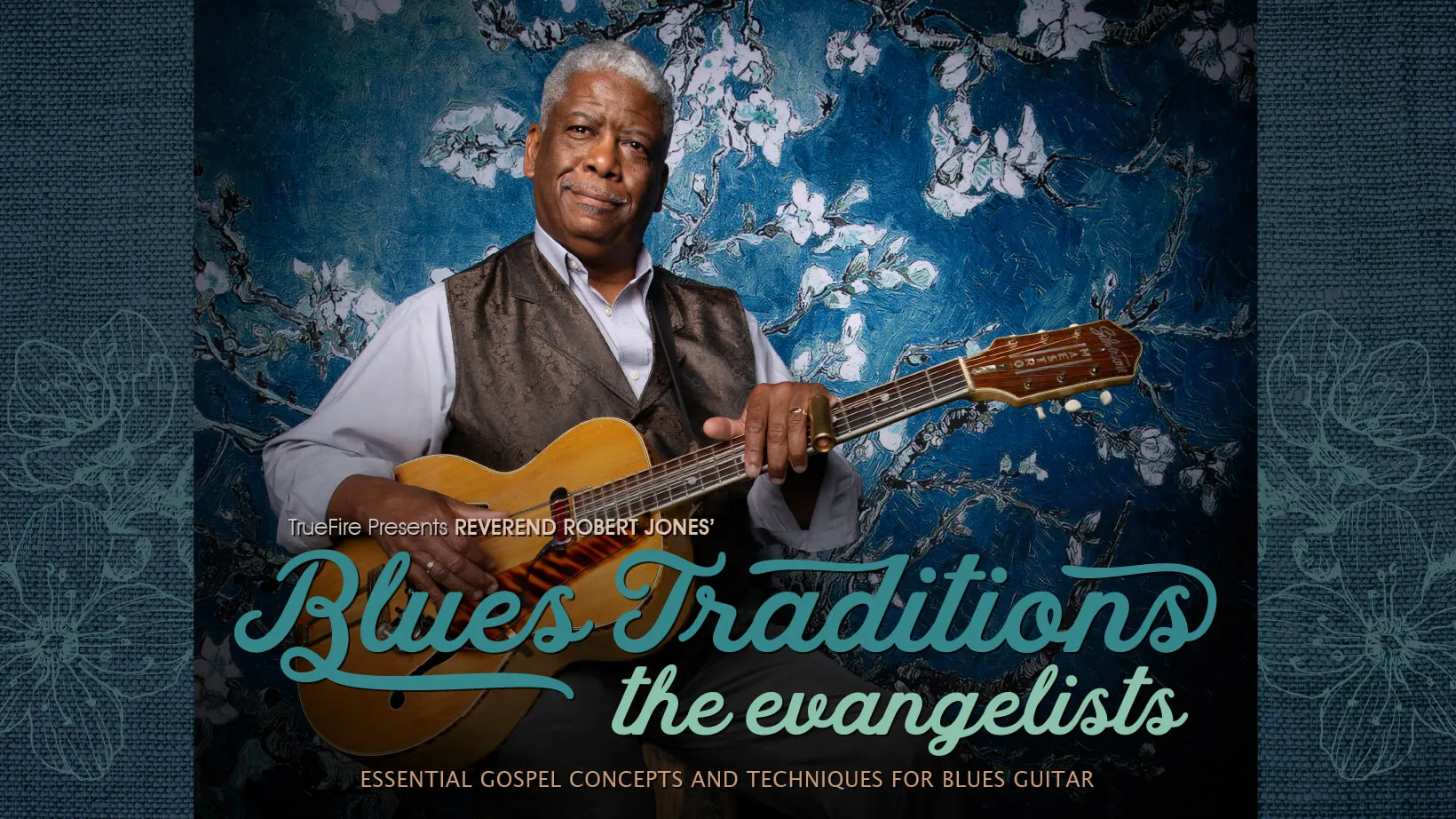
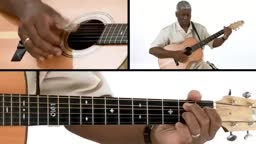
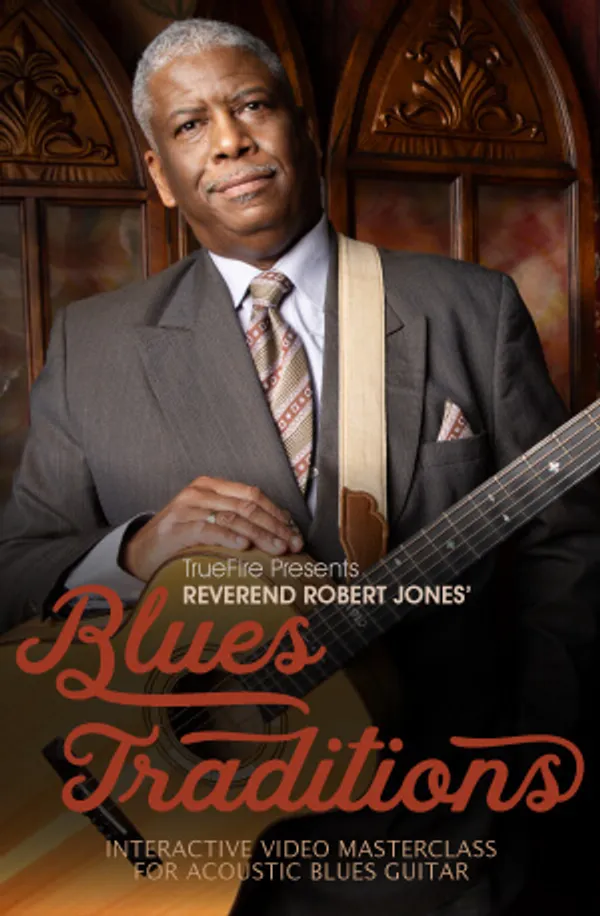
Built primarily on blues music, Gospel is a relatively modern style originating in the ‘30s evolving from spirituals and hymns. Spirituals tend to be very individualistic and freeform, while hymns rely on predictable rhythms and "call and response." Gospel can feature elements of both, but also tends to have more of a performance feel, utilizing concepts like soloing and instrumental versatility. In Blues Traditions: The Evangelists, Rev. Robert Jones will take you on a musical journey through some of the most notable Gospel influences on blues guitar playing.
"Our primary focus in this course is demonstrating how artists like Mississippi Fred McDowell, Blind Willie Johnson, Sister Rosetta Tharpe, Josh White, Thomas Dorsey, Howard Carroll, and Reverend Gary Davis presented this inspirational African American sacred music. I’ve organized the curriculum into two sections. In section one, we’ll look at a handful of essential Gospel-rooted concepts like using passing chords to build movement, major pentatonic sounds, boogie-woogie, relative minor, and one six two five progressions. We’ll learn to apply these principles over tunes like Wade in the Water, This Little Light of Mine, Since I Laid My Burden Down, Touch the Hem of His Garment, and Precious Lord, Take My Hand. The second section looks at five pioneers of gospel guitar and the way they approached tunes from the traditional gospel songbook."
You’ll play your way through Gospel songs like Jesus is on the Mainline, Jesus Make Up My Dying Bed, Down by the Riverside, and Samson & Delilah. Rev. Jones will explain and demonstrate all of the key concepts and approaches along the way. You’ll get standard notation and tabs for all of the performance studies. Plus, you’ll be able to use TrueFire’s learning tools to sync the tab and notation to the video lesson. You can also loop or slow down the videos so that you can work with the lessons at your own pace. All of the backing tracks are included to work with on your own as well.
Grab your guitar and let’s play the blues with Reverend Robert Jones!
What you'll learn
Create smooth, vocal-like guitar phrasing
Learn Hill Country blues approach that stays on the I chord
Choose between manufactured and open notes for musical expression
Understand the difference between Texas and Piedmont blues approaches
Develop groove-based playing rather than progression-based
Hi, I'm Rev. Robert Jones. Welcome to "The Evangelists" chapter of Blues Traditions!
This package is divided into two large sections: Section 1 looks at some of the general concepts that underpin African American sacred music on the guitar. Section 2 focuses on some examples of how traditional guitarists used these concepts in their playing and recordings. In many ways, gospel and prayer and praise hymns can be more challenging to play and to teach than traditional blues. This is true because energy and emotion of gospel tends to be more varied than blues. You're often not just playing your song, you're often playing a song that tries to convey the emotions of those listening and of those singing with you. Nevertheless, the music is worth the effort and the journey.
Ready? Grab your guitar, and let's get started.
African American sacred music has roots that run deep. Many of the elements of the music are tied to African musical concepts like using polyrhythms based in drumming, improvisation, use of pentatonic scales, and instrumental call and response. These concepts are also found in blues, but in sacred music they lend themselves to worship. As the great Willie Dixon was fond of saying, "When a man sings to God and heaven he sings a spiritual, but when he sings to earth and man, he is singing the blues."
Understanding the differences that exist between spirituals, prayer/praise hymns and gospel is important. As I talk about in the video, spirituals were born in slavery and really laid the foundation of most of the African American music that followed. Spirituals tended to be very individualistic. They were often sorrowful, and they were often based in Old Testament imagery (for example, songs might be based on the exploits of Moses, Joshua, David or Daniel). Prayer and praise hymns, on the other hand, came later. Prayer and praise hymns are more geared to group singing, often use repetition for the purpose of building emotion and togetherness. Gospel is a 20th century style that emphasizes vocal and instrument virtuosity. Gospel is a professional style that often borrows from the popular music around it. Think - I sing a spirituals in my room, we sing a prayer and praise hymns in our church, but Aretha sang gospel on the stage.
We use "Wade in the Water", a traditional spiritual, to illustrate the differences between spirituals, prayer and praise and gospel songs. Obviously, it's not the melody that defines the style, it's the approach. So, in this segment, I try to show how you can play the same tune any number of ways. The idea is to make the song into what you need it to be, whether it is an individual song, a group song or a performance song.
I hope that it is easy to hear blues concepts like the use of the minor pentatonic scale, call and response and singing behind the beat in a sacred music context.
One of the things that really help to distinguish gospel from blues, is in the way that gospel uses chordal movement. As I talk about in the video gospel tends to borrow from piano concepts to "march" from one chord to another. For example, instead to going from a G (I) chord directly to a C (IV) chord, a gospel change might go from G to F#, to F to C. This really mimics the role that a group (choir, quartet, partner) might take on in group singing. One of the concepts that we will see again and again, is that the guitar is another voice that sings along with you.
Reinforcing the idea that gospel allows you to make the music into what you need it to be, we take a look at another old song, "This Little Light of Mine".
Pretty dang good. Reverend Robert Jones is hella knowledgeable
M
mbtetowimu
Verified buyer
11/03/25
Touch the Soul of Blues
Just the list of songs on the list should be enough to weigh more than anything I can say. Blues has such a beautiful gospel voice is a rarely understood by some of the young listeners from today. Must listen, must learn.
E
Earnesen
Verified buyer
08/30/25
Fantastic course
I’m a huge fan of Reverend Gary Davis and Mississippi John Hurt. This course helped a lot in terms of working on the feel of the rhythm and mechanics of ragtime playing. Excellent.