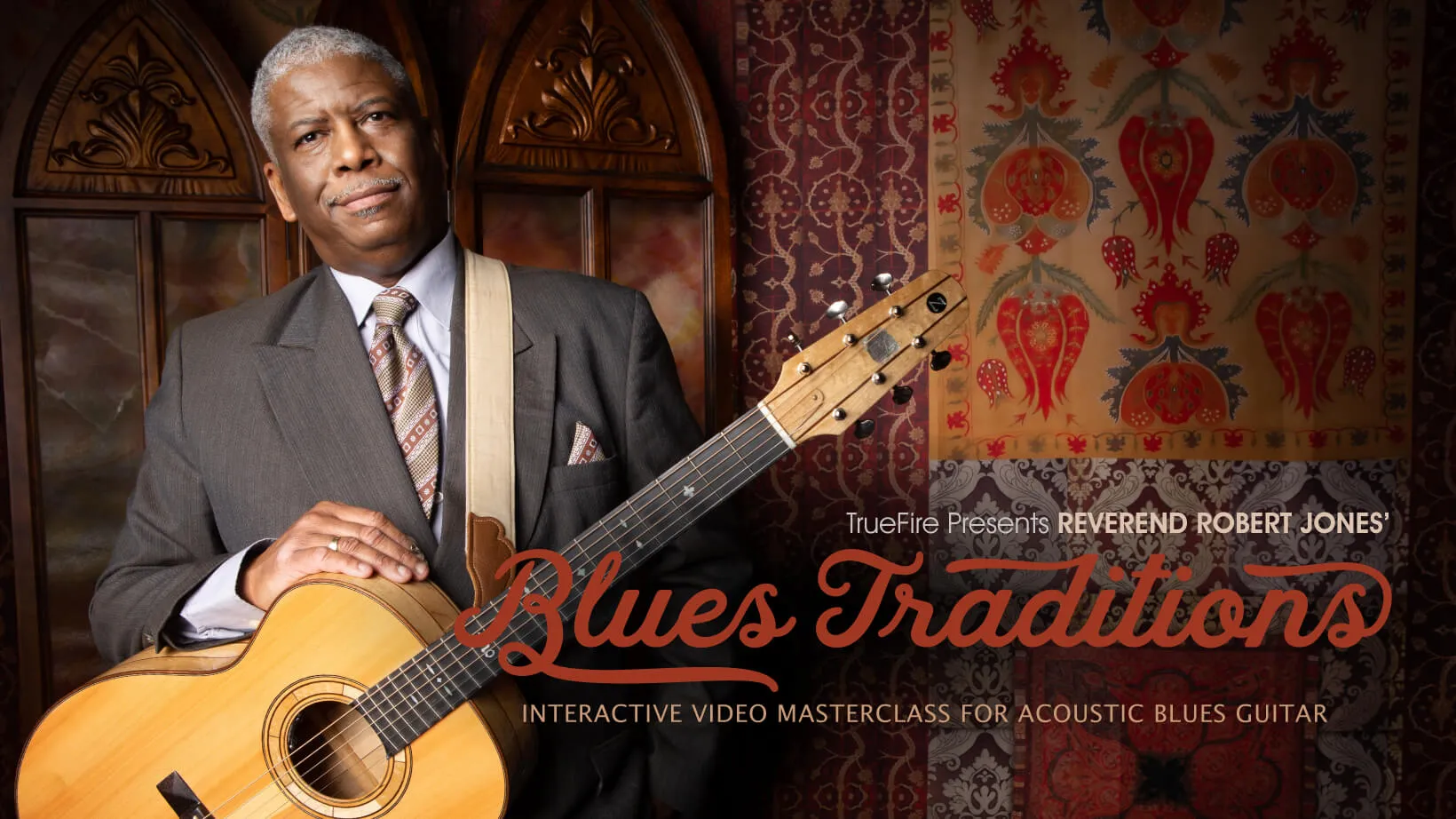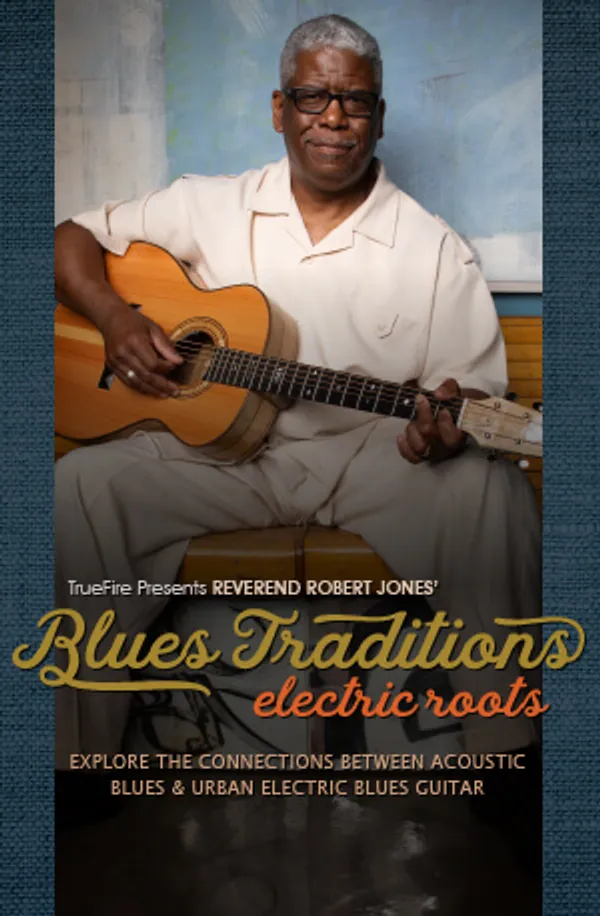
Blues Traditions

Interactive Video Masterclass for Acoustic Blues Guitar

Marty FriedmanTommy EmmanuelSteve VaiEric GalesEric Johnson

Get this course and 1,000+ more with All Access

Try 14 days free. Cancel any time.

Purchase Individual Course for $19.99
Blues Traditions

About this course

With its origins dating back over 130 years ago, Blues is the most influential music across the entire American songbook. Country music, bluegrass, R&B, gospel, rock, folk, Cajun, Creole, rap, jazz, soul and countless other styles all boast voluminous songbooks that are built on traditional blues progressions, principles, and techniques.

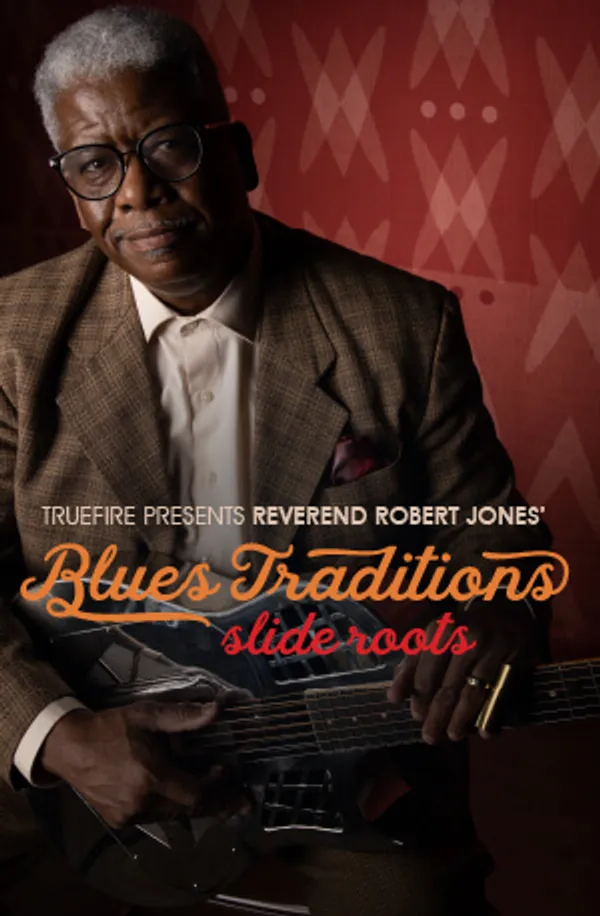
Reverend Robert Jones’ Blues Traditions highly engaging, hands-on curriculum explores the roots of African American blues guitar fingerpicking revealing the key approaches, traditions, and techniques that comprise the genre across a variety of regional and artist-specific styles.

”The blues, and its traditions, can teach us a lot about the history, cultural changes, creativity, and resilience of African American culture. Here in Blues Traditions, I’m excited to share with you some of the key principles that underpin traditional African American guitar fingerpicking regardless of regional, personal or genre specific styles. The approaches that I’ll show you are true whether you’re playing a Lightnin’ Hopkins tune, an uptown blues, Rhythm and Blues, and even gospel.  

Since all of these approaches come out of the blues tradition, there are things that they all have in common, and learning these commonalities will allow one to move more easily between styles and add a blues flavor to any style of music you play.”


You’ll play your way through the entire course with Rev. Jones. He’ll teach you 7 key blues guitar traditions and approaches and then guide you through a series of 7 performance studies representing a wide variety of styles, which utilize those traditions and techniques.

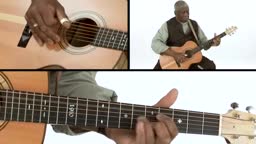
Rev. Jones will explain and demonstrate all of the key concepts and approaches along the way.  You’ll get standard notation and tabs for each of the performances. In addition, you’ll be able to loop or slow down any of the videos so that you can work with the lessons at your own pace.

Grab your guitar and let’s play the blues with Reverend Robert Jones!

What you'll learn

  • Create bass lines and improvisation between chord positions
  • Play chord inversions to create movement and variety in accompaniment
  • Apply CAGED system to gospel and blues styles
  • Understand key principles that underpin traditional African American guitar fingerpicking
  • Gain ability to move more easily between different blues and blues-influenced styles
Release date: 05/30/2019 • 4h 13m runtime
Start Course
Sample lessons
The Piedmont Roll Pattern
The Blues Tradition: 1
Good Woman
Good Woman
Overview
Good Woman
Good Woman
Performance
Good Woman
Good Woman
Breakdown

What's included

30 lessons • 14 charts

The Blues Tradition
Hi, I'm Rev. Robert Jones, and welcome to Blues Traditions. If you love playing the guitar like I do, I think you're in for a treat. In this course, we'll be exploring the art of solo guitar fingerpicking in the blues style. We're going to sample a variety of blues styles, exploring traditional blues approaches from Texas, Mississippi, North Carolina, and beyond. More importantly, we will talk about principles and tools that you can use to understand how these styles both relate and differ from one another.
The Piedmont Roll Pattern
The Piedmont Roll is a picking pattern derived primarily from East Coast players like Rev. Gary Davis, Elizabeth Cotton and Blind Blake. I learned it from "Bowling Green" John Cephas.

The idea revolves around playing a four string pattern between your thumb and finger or fingers. For example, while holding a first position "E" chord, you would play string 2 with your finger, string 4 with your thumb, string 1 with your finger, then string 6 with your thumb. Watch the video and start slow. The Piedmont Roll is a wonderful finger picking tool!
Two Nickel Blues
This is really a section where we learn how to break down and apply the Piedmont Roll musically. This pattern can be applied to many kinds of music, not just the blues. Once you get the idea of playing an alternating bass out of a given chord shape, try playing a tune that you know well, that you have always strummed, with the Piedmont Roll. You'll discover, all of a sudden, that you're fingerpicking!
Two Nickel Blues
"Two Nickel Blues" is in the tradition of Blind Lemon Jefferson's "One Dime Blues". Blind Lemon was a contemporary of Lead Belly (Huddie Ledbetter) was America's first important country blues recording star. While the song is a twelve bar blues in the key of E, it takes some interesting detours getting there.
Two Nickel Blues
"Two Nickel Blues" is a blues in E, but notice that it takes some interesting chordal detours along the way. That's what makes it cool! For example, the beginning of the song, which might have simply have you playing an E chord for four bars in a typical blues, uses a pattern that goes E-A-C#7-B7-E in the same space. Also note that this song also begins to teach the idea of using different chord shapes to get different voicings. It's all explained in the lesson, but remember, it's the fact that you've got a solid roll in your right hand that makes all of that left hand stuff work so well.
The Home and the Answer
A big part of African American musical culture is something referred to as "call and response", or here called "Home and Answer". In church, it's the "amen" that follows the preacher's shout, on a work gang it would be the collective "grunt" of the workers, but in the blues, it's the guitar responding to what the singer has just sung. One of the great melodic tools for getting the guitar to "sing" with you (or to respond to you) is the minor pentatonic scale, also known as the "blues scale". This lesson uses the song, "Baby Please Don't Go" to explore the importance of the blues scale and the idea of "call and response".
Jailhouse Blues
This is another tune from the Texas blues tradition. It's based on Lightnin' Hopkins' "Penitentiary Blues", and it emphasizes using the minor pentatonic scale especially in the context of "call and response" between the singer and the guitarist.

+ 23 more lessons

Start Course

Reviews

40 results

mbtetowimu

Verified buyer

11/03/25

phenomenal

Blues Traditions is such a legendary foundational course for all that love the blues
10YearsGone

Verified buyer

10/22/25

Best way to learn Traditional Blues!

Been playing for decades and wanted to go back and learn something I’ve been wanting to learn for a long time . . traditional blues and I just found the Best courses for that! Robert Jones!

NCJUJITSU

Verified buyer

08/29/25

Fun Learning Course

Great teacher and story teller. Teaches techniques that are easy to understand and apply.

HendrikVolkert

Verified buyer

06/27/25

Blues Tradition by reverend Robert Jones

I like his style of explanation very much. It gives a deeper insight in the different aspects of blues-tradition. There are a lot of exercises one can do in his/her own tempo. For me, 75 years old, it goes slowly but steady. When I was 14 years old I bought the LP ‘Living with the Blues’, it changed my life. So, its almost a must to study the basic of blues with Robert Jones.

BluesHarpGuitarGuy

Verified buyer

05/11/25

Fantastic course

Love this!

Stop searching. Start improving with All Access.

Try 14 days free. Cancel any time.