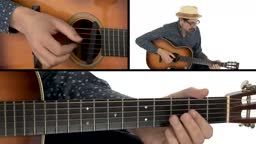
Take 5: Steady Bass

Accelerated Study Program for Steady Bass on Guitar

Marty FriedmanTommy EmmanuelSteve VaiEric GalesEric Johnson

Get this course and 1,000+ more with All Access

Try 14 days free. Cancel any time.

Purchase Individual Course for $9.99
Take 5: Steady Bass

About this course

Steady bass is one of the essential techniques of fingerstyle blues guitar. With this self-accompanied style, you can lay down anything from a back-porch shuffle to a smoky, sophisticated after-hours groove, all by yourself.  

This Steady Bass edition of Take 5 from David Hamburger is an accelerated curriculum designed to help get your steady bass technique up to snuff quickly without having to struggle through a long and tedious series of exercises.

” Steady bass is one of my favorite things to play, and I hope this course gives you a sense for how much you can do and how broad a spectrum of blues you can evoke with this fundamental fingerstyle technique. Memorizing these studies will really help you get them into your fingers, and if you want to go even further, start swapping in different blues licks, voicings or double stops to really make them your own. ”

David kicks off the course with a quick primer where he introduces you to essential right-hand techniques, syncopation and chord voicings, and practice strategies, all from a fingerstyle blues perspective.

David will then guide you through 5 steady bass performance studies, progressing from basic to more advanced applications of the technique. When you're done, you'll have five new fingerstyle blues to play, in various keys and grooves.

David will explain and demonstrate all of the key concepts and approaches along the way.  You’ll get standard notation and tabs for all of the Performance Studies. In addition, you’ll be able to loop or slow down any of the videos so that you can work with the lessons at your own pace.

Grab your guitar and let’s Take 5 with David Hamburger!

———

TrueFire’s Take 5 courses feature an accelerated curricular approach to help students get up to speed quickly on a particular style or technique. Each Take 5 course starts with a primer on the particular style or technique and then guides the student through 5 performance studies progressing from basic applications to more sophisticated approaches.

What you'll learn

  • Navigate complex chord voicings in a blues context (7th, 9th, 13th chords)
  • Execute New Orleans-style syncopated bass patterns on guitar
  • Coordinate pinch technique with chromatic voice leading
  • Translate piano-style arrangements to fingerstyle guitar
  • Understand and play a modified 12-bar blues structure (4+4+4 format)
Release date: 10/04/2018 • 1h 01m runtime
Start Course
Sample lessons
Level 5: Steady Bass
Overview
Level 5: Steady Bass
Performance
Level 5: Steady Bass
Breakdown
Take 5: Steady Bass
Take 5: Steady Bass
Conclusion

What's included

18 lessons • 5 charts

Take 5: Steady Bass
Hi, I'm David Hamburger and welcome to Take 5: Steady Bass. Steady bass is one of the essential techniques of fingerstyle blues guitar. With this self-accompanied style, you can lay down anything from a back-porch shuffle to a smoky, sophisticated after-hours groove all by yourself.

In this course, we'll look at essential right hand techniques, talk about syncopation and chord voicings, and discuss various practice strategies, all from a fingerstyle blues perspective. When we're done, you'll have five new performance studies to play, in various keys and grooves. So let's get started!
Steady Bass Technique
We're going to start with a quick survey of some of the key concepts involved in playing steady bass blues. In this lesson, we'll check out the all-important concept of palm-muting, talk about combining single-note blues licks, chords and chord fragments in both open position and up the neck, and look at how chord anticipations work and why we're using them. I'll also go over some important strategies for how to practice these studies so you really get them under your fingers.
Level 1: Steady Bass
What could be more essential than steady bass blues in E? Also known as monotonic bass and dead-thumb bass, steady bass is the technique employed by classic Texas blues guitarists like Lightnin' Hopkins and Mance Lipscomb. Unlike the alternating-thumb style (think Travis picking or Mississippi John Hurt), steady bass requires less root-position chording of your left hand, leaving you free to do more on the upper strings, as we do from the get-go with this first study.
Level 1: Steady Bass
This first study illustrates just how much mileage you can get out of a few basic materials. Our E chord moves are based around a few standard 7th-chord voicings on the top three strings and some well-placed sixths played on the first and third string. You can get a lot of mileage out of grabbing chord tones in open position, as we do for the IV chord here. And despite the overall blues feel, there's just one out-and-out blues lick in this chorus, the double-time double-stop move in measure 7.
Level 1: Steady Bass
Two things take this study beyond the boundaries of a typical blues. The first is the straight-eighth note feel, more typical of New Orleans pianists like James Booker and Professor Longhair than shuffle-based Texas guitarists. The other is the chord changes. From the first measure, we've got a gospel-sounding climb from E through an F# minor voicing to an E7. In measure six, we change from A7 to A minor as a more colorful way to return to the I. And for the turnaround, a II7 chord, F#7, leads into a similar Amin-E resolution.
Level 2: Steady Bass
With this study, we move from E to A – the other "good key" for solo, steady-bass grooving and improvising. While you could use the open 4th string as the bass note for the IV chord (D7), here we're going for a classic delta-blues voicing, D7/F#, a move you can hear in the playing of Robert Johnson and many other pre-war guitarists. It gives you a deeper sound in the bass, and also leads nicely into or out of an F chord, as seen in measures 5-7.
Level 2: Steady Bass
In part because we're using the left hand to hold down more bass notes than in the first study, we're relying more this time on single notes on top, with the occasional third-string double-stop to fill things in. The bass moves more quickly in spots too, so take the time to play through the bass and the melody separately before beginning to put everything together. To quote Calvin of Calvin and Hobbes, "That's a tip, kids – write it down!"

+ 11 more lessons

Start Course

Reviews

17 results

calcanuck

03/24/25

Take 5: Steady Bass

An incredible introduction to an essential skill- the video than extends the skill to a more jazzy genre - very helpful and informative !!


8c4g4vwm6k

Verified buyer

07/10/23

recommended

very useful to understand

raytcampbell

03/21/23

Great course, interesting and useful.

I always enjoy David Hamburger! He always teaches the history and key players for each of the variations he teaches which gives his lessons interest and life. As far as the music, he is a master of acoustic fingestyle blues and once again delivers useful, fun the play and wonderful to listen to pieces. I also like the Take 5 Series which tends to get right to the point. In this course, he covers some technique and exercises and this moves on to 5 studies. While Hamburger introduces his studies as "edtudes" or performance studies that apply the techniques he's covered, each is a fully developed piece one could easily perform in a set. Great course, interesting and useful.

tompedersen

Verified buyer

12/17/21

Straight forward and fun

While I hadn't encountered a lesson David Hamburger has put out that wasn't top notch, this one was no exception. It was great hearing the style differences in each song within just one simple technique. (Well, kind of simple and great fun!) Explanations were clear and sufficient.

Mikemoodie

Verified buyer

04/10/21

Not quite 'bluesy enough for me

Stop searching. Start improving with All Access.

Try 14 days free. Cancel any time.