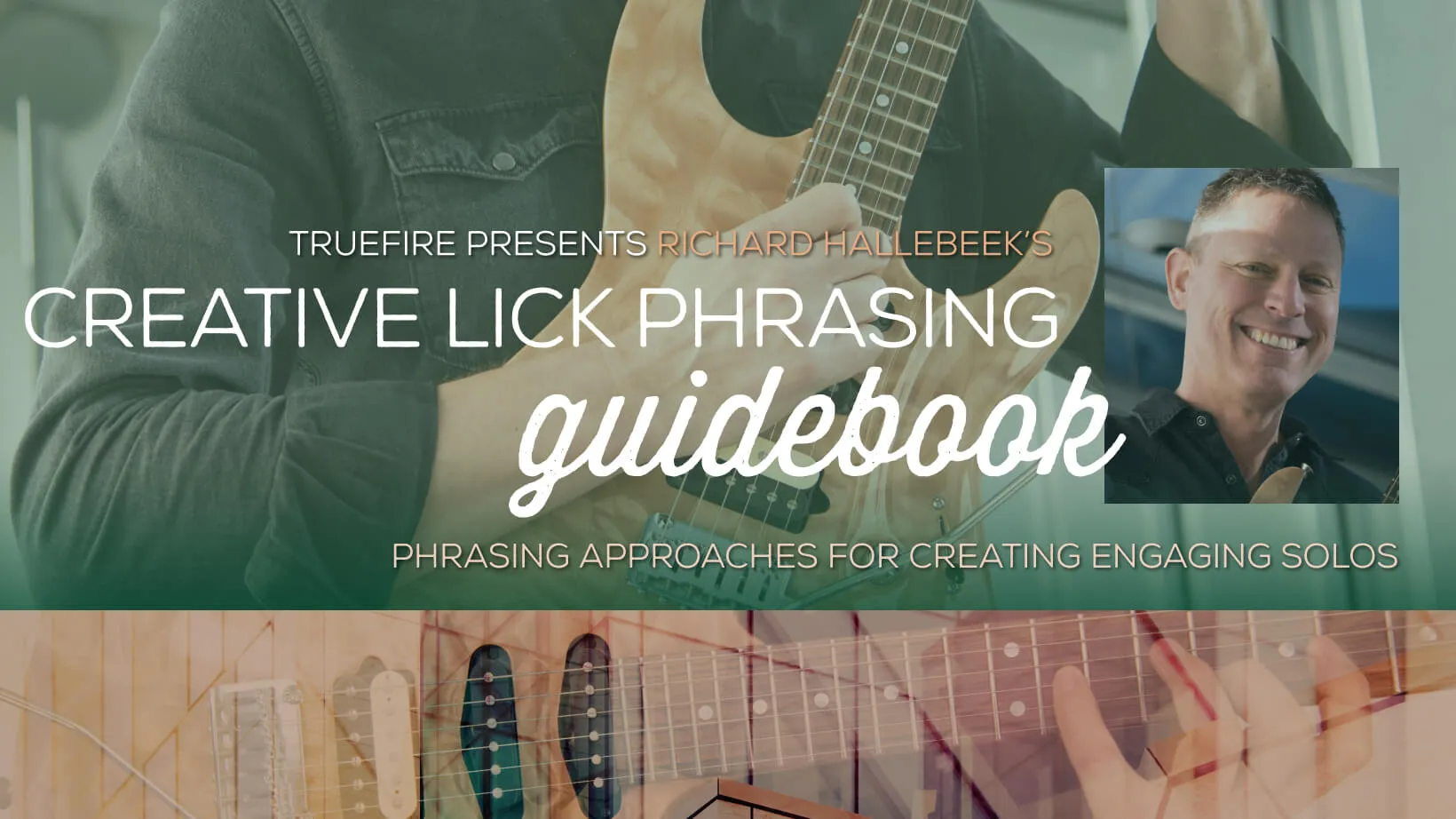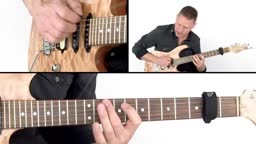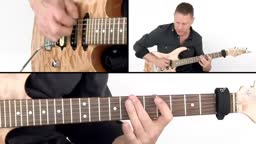
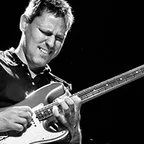
Creative Lick Phrasing Guidebook

Phrasing Approaches for Creating Engaging Solos

Marty FriedmanTommy EmmanuelSteve VaiEric GalesEric Johnson

Get this course and 1,000+ more with All Access

Try 14 days free. Cancel any time.
Purchase Individual Course for $9.99
Creative Lick Phrasing Guidebook

About this course

Musicians who improvise in jazz, rock, and blues need to be able to take any lick or phrase, in their vocabulary and modify it creatively to fit the groove that they’re playing over. Thanks to the unique characteristics of their instrument, guitar players have a very wide palette of harmonic, rhythmic, and positional options at their disposal.

The Creative Lick Phrasing Guidebook from Richard Hallebeek will guide you through 7 concepts and 18 creative approaches for modifying your own licks to make them not only your own but make them stand out in your improvisations and solos.

”I'll show you creative lick concepts and applications for the most commonly encountered chords, like Dominant 7th, Major 7th, Minor 7th, and so on. Each lick application will use a specific strategy, like using pentatonics over a Major 7th groove or using a Melodic Minor on a Minor 7th b5. We'll then tackle different concepts that you can use to twist and turn any of your licks to squeeze the most out of them.”

Richard will present 7 creative lick phrasing concepts: Major 7 Displacement, Triads in Scales, Rolling Fingers, 1-2-4 Scales, Around Chord Tones, Timing Variations, and Drum Book.

He will then apply those different concepts across 18 licks: Major 7 Ionian, Major 7 Lydian, Major 7 Pentatonic, Minor 7 Dorian, Minor 7 Aeolian, Minor 7 Pentatonic, Dominant 7 Mixolydian, Dominant 7 Melodic Minor, Dominant 7 Pentatonic, 7Alt b9b13, 7Alt b9 13 Dim, 7 Alt Pentatonic, m7b5 Locrian, m7b5 Melodic Minor, m7b5 Pentatonic, Triads in Augmented, Triad Line in Augmented, and 1-2-4 in Augmented.

In the final section of the course, Richard will present 5 Soloing Performance Studies showing how his example licks would sound in a musical context by soloing over jam tracks. He'll take the basic licks shown in the previous section and then use different approaches to craft creative versions of the lick in the solo. For each of the 5 Soloing Performance Studies, Richard will first solo over the track and then provide a detailed breakdown of the solo emphasizing how the approaches in the solo relate to the prevailing chord changes.

Richard will explain and demonstrate all of the key concepts and approaches along the way.  You’ll get standard notation and tabs for the key examples and performance studies. Plus, Richard includes all of the rhythm tracks for you to work with on your own. In addition, you’ll be able to loop or slow down any of the videos so that you can work with the lessons at your own pace.

Grab your guitar and let's get creative with Richard Hallebeek!

What you'll learn

  • Navigate between positions on the augmented scale
  • Use chromatic passing tones effectively
  • Connect strings smoothly using transitional notes
  • Understand the half-step density of the augmented scale
  • Understand the half-step-up melodic minor relationship for altered dominants
Release date: 05/16/2018 • 1h 04m runtime
Start Course
Sample lessons
Rolling Fingers
Rolling Fingers
Concept 4
Timing Variations
Timing Variations
Concept 6
C7: G Melodic Minor
C7: G Melodic Minor
Lick 8
C7 Altered: D# Pentatonic
Lick 12

What's included

37 lessons • 27 charts • 23 Jam Tracks

Creative Lick Phrasing Guidebook
Hi, I'm Richard Hallebeek, and welcome to Creative Lick Phrasing. You can recognize a great player by good lines and tasteful phrasing. As an improviser in jazz, rock, and blues, you need to be creative with the licks and phrases you learn. Copying licks from your heroes is important, but that's only the beginning.

In this course, I'll show you 18 example licks on most usable chords, like dominant 7th, major 7th, minor 7th, etc. Each lick will use a specific strategy, like using pentatonics over a major 7th groove or melodic minor on a minor seventh flat 5. We'll then tackle the different concepts you can use to twist and turn these licks around to squeeze the most out of them, like rhythmic displacement, 1-2-4 scales, triads in scales, and playing around chord tones. Be creative with them and make them your own.

Finally, in 5 solo performances, I'll show you examples of how these licks can sound in a real live situation. We'll take one of the basic licks and use different approaches to create your own personal phrases that sound like you. All these licks and performances come with tabs, backing tracks, and extra information. Good luck, and let's get started!
Cmaj7: Ionian
Our first lick is on top of a Cmaj7 chord and uses the Ionian scale.
Rhythmic Displacement
By using rhythmic displacement, you can create variations of a line.
Triads in Scales
Another source of licks and phrases are the triads within a scale.
Cmaj7: Lydian
Lick 2 is on top of a Cmaj7 groove and uses the Lydian scale.
Cmaj7: 3 Pentatonic Scales
You can use three minor pentatonic scales within the C major scale as a source for licks.
Cm7: Dorian
Our fourth lick uses the C Dorian scale.

+ 30 more lessons

Start Course

Reviews

9 results

Osokin

Verified buyer

01/03/23

Killer Licks!

Richard Hallebeek is a tremendous guitar player and an effective teacher. In this course he demonstrates some killer licks using various scales and techniques, and shows how they can be adapted to extract extra mileage from them.

sokato

Verified buyer

02/22/21

Great

It is truly creative.

laetushold

Verified buyer

08/22/20

Great course for exploring intervalic ideas and really breaking out of linear, scale-type improvisations.

MariuszFryc

Verified buyer

08/09/20

18 strategy that broaden your improvisation skills

In this course, you will be learning several concepts or a specific strategy that allow you to play a much hipper lines and broaden your music language vocabulary. Richard is showing us how to apply rhythmic displacement, the triads. How to approach chord tones using chromaticism and passing notes. He explains how to apply minor pentatonic scale over II-V-I progression, how to use the melodic minor or diminished scale over dominant chords or he teaches his 1-2-4 concept to sound more creative and interesting. Finally, in his 5 solo performances, you will see all the techniques application. Of course, all the lines are tabbed and notated. Definitely, this course will widen your musician horizons and broaden your improvisation skills.

kuniya2

Verified buyer

07/29/20

Valuable insght into Fusion

Richard demonstrates in a straight forward way that even the most intricate Fusion licks are based on Pentatonics and Minors. Not a easy course though, will probably take a while to fully grasp and digest the materials offered.

Stop searching. Start improving with All Access.

Try 14 days free. Cancel any time.