Rhythm Lab: Rock & Funk

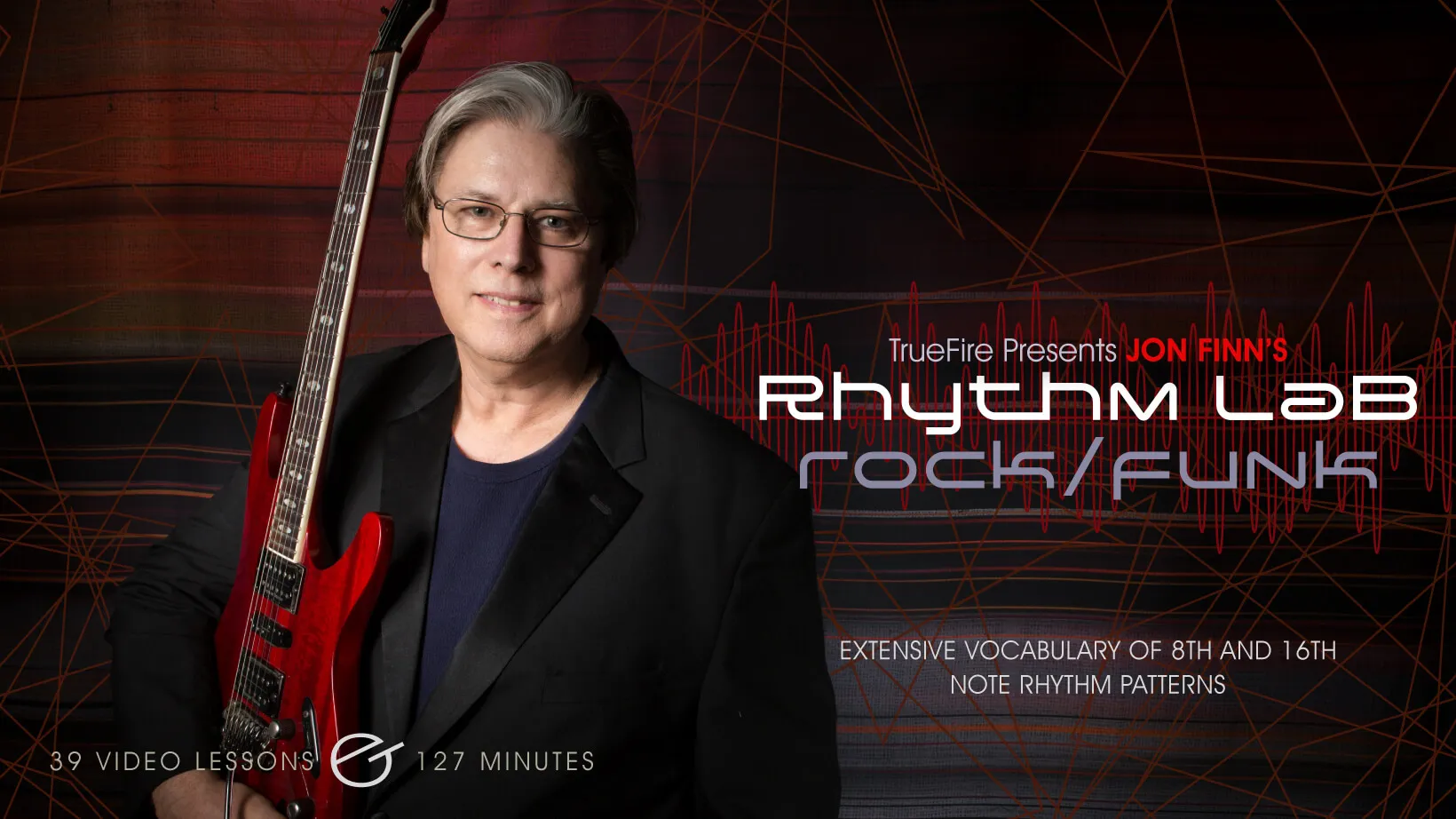
Extensive Vocabulary of 8th and 16th Note Rhythm Patterns

Marty FriedmanTommy EmmanuelSteve VaiEric GalesEric Johnson

Get this course and 1,000+ more with All Access

Try 14 days free. Cancel any time.

Purchase Individual Course for $9.99
Rhythm Lab: Rock & Funk

About this course

Generally speaking, most rock grooves are based on 8th-note rhythms, while most funk grooves are based on 16th-note rhythms. Jon Finn’s Rhythm Lab: Rock & Funk will not only explain in detail how 8th-note and 16th-note rhythms work, you’ll put those rhythmic principles to work across a series of rhythm guitar performance studies.

”Let's face it. If you spend any time working in a band, most of your time will be spent playing rhythm guitar. Good bands want good rhythm guitar players. Oh, and by the way, the best lead guitarists have a great sense of rhythm. So improving your rhythm improves all aspects of your playing.

In this Rock & Funk edition of Rhythm Lab, you’ll play your way through a series of examples and performance studies that feature the most commonly used patterns in rock and funk. By the end of this course, you'll have a deeper understanding of how these rhythms work. Better yet, you'll learn how to make up your own rhythms and never be at a loss to come up with the perfect rhythm for any of the songs you play.”

"I have been waiting for this course to come out. Finally, I got it yesterday & worked through the 8th note exercises. I love it!!! Jon is really a good teacher, he understands guitar players struggles. I really enjoy this course." - Hing Chung Fung, TrueFire Student
Jon organized this edition of Rhythm Lab into three sections. In the first section, you'll dig into straight eighth note rhythm patterns and displacements.

”Now, at it's concept, it's very simple - you learn how to accent on the first 8th note, then the second 8th note, then third, etc. all the way to the eighth. If you look at it on a piece of paper, it's very simple to look at, however, keep in mind that each accent as it sits on the beat feels very different from the rest. When you start combining them, that's when things get a little challenging. It's kind of surprising how different they all sound!”

In the second section, you'll move into sixteenth note territory and work through some of the many accents, displacements, and combinations available to you.

”It's easiest to count 16th notes like "one-y-and-a-two-y-and-a-three-y-and-a-four-y-and-a". We're going to do accents on the first 16th note, then the second 16th note, third, then fourth, etc. and then we'll do combinations of displacements of those 16th notes. Also, instead of chugging 8th notes like we were doing before, we're going to be doing muted strums to represent the unaccented 16th notes, and a chord to represent an accent.”

Finally, in the third section, Jon will guide you through five real-world performance studies. Jon will first perform each study for you over a backing track, and then breakdown the performance emphasizing the rhythmic principles in play.

Jon will explain and demonstrate all of the key concepts and approaches along the way.  You’ll get standard notation, tabs, and diagrams for the key examples and performance studies. Plus, Jon includes all of the rhythm tracks for you to work with on your own. In addition, you’ll be able to loop or slow down any of the performances so that you can work with the materials at your own pace.

Grab your guitar and let's get pump up our rhythmic prowess with Jon Finn!

What you'll learn

  • Navigate quick power chord changes across the fretboard
  • Execute complex rhythm patterns mixing chords, chugs, and licks
  • Integrate slides, hammer-ons, and pull-offs into rhythm playing
  • Use fourth intervals in rhythm guitar context
  • Develop polyrhythmic phrasing skills applicable to funk and jazz contexts
Release date: 03/22/2018 • 2h 06m runtime
Start Course
Sample lessons
Working with a Metronome
Demonstration
8th Note Displacement Combos: 1
Demonstration & Playalong
8th Note Displacement Combos: 8
Demonstration & Playalong
16th Note Displacement Combos: 2
Demonstration & Playalong

What's included

39 lessons • 22 charts • 22 Jam Tracks

Rhythm Lab: Rock & Funk
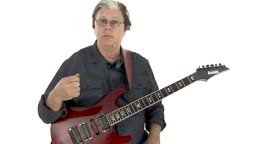
Hi, I'm Jon Finn. Welcome to Rhythm Lab: Rock & Funk! Let's face it. If you spend anytime working in a band, most of your time will be spent playing rhythm guitar. Good bands want good rhythm guitar players. Oh and by the way, the best lead guitarists have a great sense of rhythm. So improving your rhythm improves all aspects of your playing.

Generally speaking, many rock grooves are based on 8th note rhythms, while many funk grooves are based on 16th note rhythms. This course will show you the mechanics for how 8th note and 16th note rhythms work. You'll play your way through a series of examples and performance studies that feature the most commonly used patterns in rock and funk. By the end of this course, you'll have a deeper understanding of how these rhythms work. Better yet, you'll learn how to make up your own rhythms and never be at a loss to come up with the perfect rhythm for any of the songs you play.

I've organized this Rhythm Lab into three sections. In the first section, we'll dig into straight eighth note rhythm patterns and displacements. In the second section, we'll move into sixteenth note territory. Here, we'll work through some of the many accents, displacements and combinations available to you. Finally in the third section, we'll work through five real-world performance studies.

Along with each of the examples and performance studies, you'll have standard notation, tablature, and all the backing tracks to work with on your own. You can also loop or slow down any of the performances to work the contents at your own pace. Grab your guitar, and let's get started!
Why Put in the Work?
Let's talk about why I organized this course the way I did. The basic idea is to show a couple of very simple concepts, and the many ways in which these simple ideas can be manipulated to create lots of different results.
Working with a Metronome
In this lesson, we'll discuss the value of practicing with a metronome. Also, we'll talk a bit about different metronome practice techniques, and ways to think about rhythms and beats.
Eighth Notes & Accents
The first section of this course is dealing with 8th notes, which we're going to do right now, and the second section deals with 16th notes, which will come later. But here, we'll learn about each accent for 8th notes.Now, at it's concept, it's very simple - you learn how to accent on the first 8th note, then the second 8th note, then third, etc. all the way to the eighth. If you look at it on a piece of paper, it's very simple to look at, however, keep in mind that each accent as it sits on the beat feels very different from the rest. When you start combining them, that's when things get a little challenging. It's kind of surprising how different they all sound!
Single 8th Note Displacements
This clip starts with some definitions of terms, and describes how the displacements and accents will be demonstrated. Next, Examples 1-8 are demonstrated. Each example shows a different accent (i.e. accenting the 1st, 2nd, then 3rd, etc.). Each demonstrates only one accent per example.
8th Note Displacement Combos: 1
Each example is 4 measure long and repeated. In each example, the 1st and 3rd measures always accent the 1st eighth note, while the 2nd and 4th measures "displace" the accent. In example 9, measures 2 and 4 accent the 2nd eighth note, while example 10 accents the 3rd eighth note. Each subsequent example accents the next eighth note until all the possibilities are exhausted.
8th Note Displacement Combos: 2
Each example is 4 measures long and repeated. In each example, the 1st and 3rd measures always accent the 2nd eighth note, while the 2nd and 4th measures "displace" the accent. In example 16, measures 2 and 4 accent the 3rd eighth note, while example 17 accents the 4th eighth note. Each subsequent example accents the next eighth note until all the possibilities are exhausted. Note that the chord D5 is played for the first two measures, while Bb5 is played for the 3rd and 4th measures, just to keep things interesting.

+ 32 more lessons

Start Course

Reviews

17 results

Nimzo2005

06/25/24

Terrific course

I have always loved playing rhythm guitar. This course is terrific. Maybe you could find it a little uninspiring at the beginning but then it takes off and the studies are a real fun to play. Highly advised. Thanks Jon. P.S. Rhythm skills is what makes bands to want you.

Nimzo2005

04/19/24

Great course

This course will give you solid rhythm foundations. Studies are fine and you can also use them as backing tracks. My rhythm skills have greatly improved and I am also starting to have more fun with rhythm parts than soloing. Highly raccomended.

Guillermo

12/03/23

please more of this!

this is an excellent course for those who want to start with palm muting. Excellent basic exs at the beginning and wonderful more exigent exs at the end. Where can I find more rythm lessons of this teacher? also the flavours of the final ex's was fantastic, I would like a chords progressions lessons from him too.

Osokin

Verified buyer

04/19/23

Rock & Funk Rhythm Workout!

Jon Finn is an excellent guitar player and teacher, and in this TrueFire course he does a great job of demonstrating ways in which you can really sharpen up your rhythm playing on 8th and 16th note grooves. These are essentially technical drills - but the five "real-world" performance studies at the end of the course really demonstrate what can be achieved with some application. Great stuff!

65horsepwr

Verified buyer

02/08/23

I wanted to add some funk to my rhythm so I got this course on sale. I previewed the contents and viewed some of it. Looking to add variery to my practice and looking forward to starting the whole course!

Stop searching. Start improving with All Access.

Try 14 days free. Cancel any time.