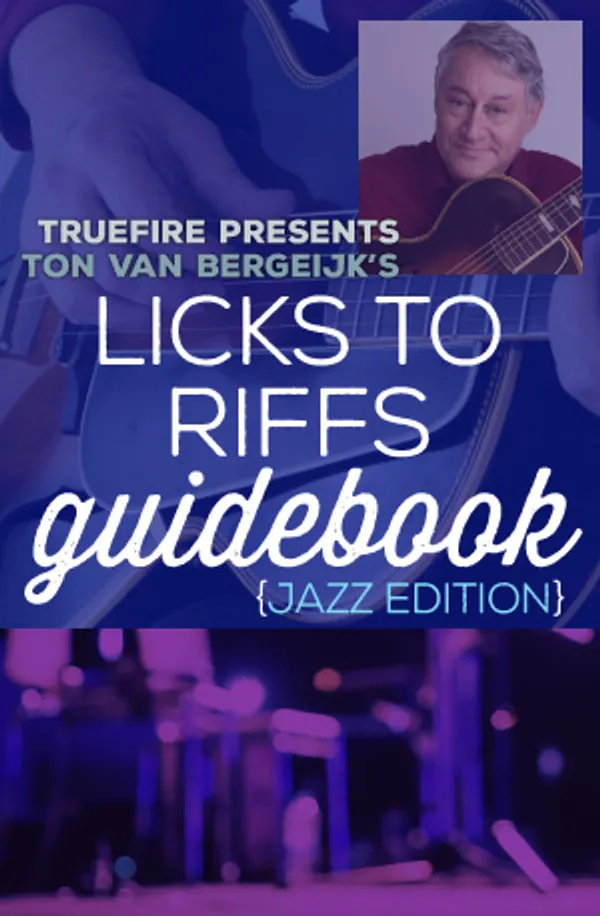

Licks to Riffs Guidebook: Blues

Learn How to Adapt Any Lick to Any Chord Changes

Marty FriedmanTommy EmmanuelSteve VaiEric GalesEric Johnson

Get this course and 1,000+ more with All Access

Try 14 days free. Cancel any time.

Purchase Individual Course for $5.00
Licks to Riffs Guidebook: Blues

About this course

Guitarists love to learn licks from other guitarists and musicians, and then twist and turn those licks to make them their own and expand their vocabulary. Part of that process is learning how to adapt licks to different chord changes and progressions.

In this Licks to Riffs Guidebook for the Blues, master fingerstyle player, Ton van Bergeijk will show you a systematic approach for modifying any lick to make it work over virtually any chord or blues progression.

”I've always found that licks played on other instruments are a great source of inspiration for guitarists. Pianists like Jimmy Yancey or James Booker are at the top of my personal list. For stronger riffs, I look at the great riff orchestras: Count Basie, Al Cooper, and then there's T-Bone Walker, Louis Jordan, Allen Toussaint…musical sources for “riff-spiration” is virtually endless.

Of course, we can translate the lick to guitar, and then play the lick exactly as it was played, over the same chord or chord changes. But if we change just one or more notes, we can create new licks that can be used over other chords and chord changes. I’ll show you how to do that in this Licks To Riffs Guidebook.”


Ton organized the course into two sections. In the first section, you’ll learn how to make a lick fit over the three chords in a standard blues progression. Ton will show you how to "barbershop" a lick and turn it into a riff. Then, he'll demonstrate how easy it is to make changes to that lick for a jazzier blues. In the second section, Ton will teach you 18 of his own favorite licks that he transformed into versatile riffs. You’ll learn piano licks and riffs, and even some great orchestra riffs. All the licks can be played fingerstyle or with a pick. Learning how to get the most of any lick is the key objective of this course, “Get that last drop out of the bottle, squeeze that lemon dry!"All of the performance studies and key examples are tabbed and notated for your practice, reference, and study purposes. You’ll be able to loop or slow down any of the video lessons so that you can work with the lessons at your own pace. Plus, Ton includes all of the backing tracks for you to work with on your own.

Grab your guitar and let’s get our “riff-spiration” on with Ton van Bergeijk!

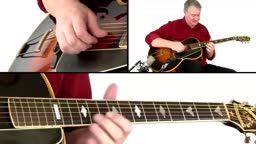
P.S. The guitar that Ton uses for this course is a 1932 Epiphone Masterbuilt De Luxe, kindly lent to him by The Dutch Archtop Guitar Museum. Very cool!

What you'll learn

  • Apply proper voice leading when changing chord qualities
  • Apply slides and triplets in a blues context
  • Create variations of a single lick to add interest throughout a blues progression
  • Transform single licks into versatile riffs that work over multiple chords
  • Understand how to modify chord tones when moving between I and IV chords
Release date: 03/08/2018 • 1h 02m runtime
Start Course
Sample lessons
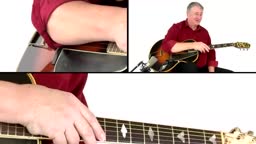
Creating Riffs
Creating Riffs
Concept 1
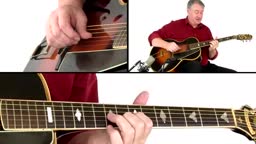
Jazzy Booker
Jazzy Booker
Riff 10
Pianistic Strum
Pianistic Strum
Riff 12
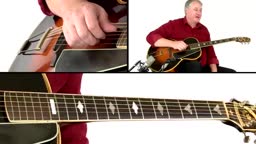
Ernie K-Doe
Ernie K-Doe
Riff 16

What's included

25 lessons • 23 charts • 17 Jam Tracks

Licks To Riffs Guidebook: Blues
Hi, I'm Ton van Bergeijk. This is the Licks To Riffs Guidebook: The Blues Edition. I've always found licks played on other instruments a great source of inspiration for the guitar. Pianists like Jimmy Yancey or James Booker are at the top of my list. For strong riffs, I look at the great riff orchestras: Count Basie, Al Cooper, and then there's T-Bone Walker, Louis Jordan, Allen Toussaint...the list for "riff"-spiration is endless.

Our aim in this course is to get the most out of our licks by changing just one or more notes to fit other chords. In this way, the lick becomes a versatile riff. In the first part of this course, we'll learn what you need to do to make a lick fit over the three chords in a standard blues progression. We'll learn how to barbershop a lick to turn it into a riff. Then, we'll see how easy it is to make changes to that lick for a jazz blues.

In the second part, I'll play you some of my favourite licks turned into riffs. We'll have a look at turning piano licks into riffs, and there're also some great orchestra riffs. All these licks can be played fingerstyle or with a pick. Getting the most out of the lick; that's our aim. Get that last drop out of the bottle, squeeze that lemon dry! All these riffs come with tabs, backing tracks, and text descriptions to help you study.

In the next course, we'll have an in depth look at "licks to riffs" in jazz blues as well as rhythm changes. Let's start riffing!

P.S. The guitar I used for this course is a 1932 Epiphone Masterbuilt De Luxe, kindly lent to my by The Dutch Archtop Guitar Museum.
Riffing
A lick is a phrase that moves over a chord. When you move that very same lick to the other chords of the song's chord scheme, you may have to change one or more notes in order to fit that lick to the new chord. A repetitive lick like that is what we call a riff.
Creating Riffs
How to create licks and riffs? Whatever you like to call it: Finding inspiration, borrowing, stealing...just listen to the old guys. As Buddy Tate put it in an interview, "We didn't care who it was from. If it was good, we listened to it, we copied it off the records, and used it."
Chords I7-IV7
When moving from one chord to another, you'll notice that there are common notes and neighbouring notes. You can play a type of lick that fits both chords. Here we'll look at the I7 to IV7 chord progression.
Jazz Blues
When playing a jazzy blues, you may encounter chords that move over the circle of 5ths. The first six bars of the blues are the same, but then the last six bars may move over a different progression. Let's look how we can approach those chords.
Chords I-V7
When we go from the root to the dominant, let's say from C to G7, we notice that the only note in common is the G. The other notes from G7 - B, D, and F - are pretty near the other notes of the C chord (C and E). You'll have to change more notes if you want to use the same lick over G7 as you do in C. Also, the move to the dominant is at the end of your chord scheme. To avoid monotony, these differences are quite welcome in that part of the song.
Single Line Blues
This is a simple blues riff in C. There are many more alternatives, of course. The riff doesn't have to be note-for-note accurately. You'll have to adjust it to what is feasible, playable, and mainly to one's good taste. If you keep the same timing, you'll have plenty of leeway to avoid awkward fingering.

+ 18 more lessons

Start Course

Reviews

8 results

zj7tjk

Verified buyer

05/23/26

Learning chunks

Variety of artists showing and explaining theory and technique
toonoomen

Verified buyer

05/15/26

Excellent course

Great course for deepening my blues skills . The link with 30’s big band style riffs and boogie woogie piano playing is inspiring. Ton van Bergeijk is a great educator , very detailed , clear and sharp.

jstandjam

Verified buyer

11/28/22

Great Learning

I have been a big fan of Ton Van Bergiejk for many years. I have learned many of the Fingerstyle Songs he did on Mule records via Stefan Grossman. I am very grateful that he has finally come back to fingerstyle guitar. The material in this lesson is excellent. I highly recommend it!

jrdocbenson

Verified buyer

10/31/20

Licks to riffs

I really enjoy this instruction

calholbrook

Verified buyer

03/27/20

Rut buster.

Great course. Stops parroting, and opens up your creativity!

Stop searching. Start improving with All Access.

Try 14 days free. Cancel any time.