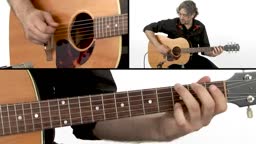
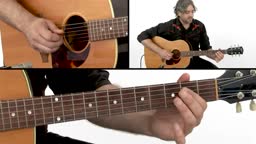
Country music has many sub-genres, from Western Swing, Bluegrass, and Rockabilly, to Country Shuffles, Outlaw, and Country Rock, all the way to Country Boogies, Americana, and the Country Waltz. Each of these important styles has their own distinct techniques, licks, guitar tones, effects, harmonic approaches, and rhythmic cliches.
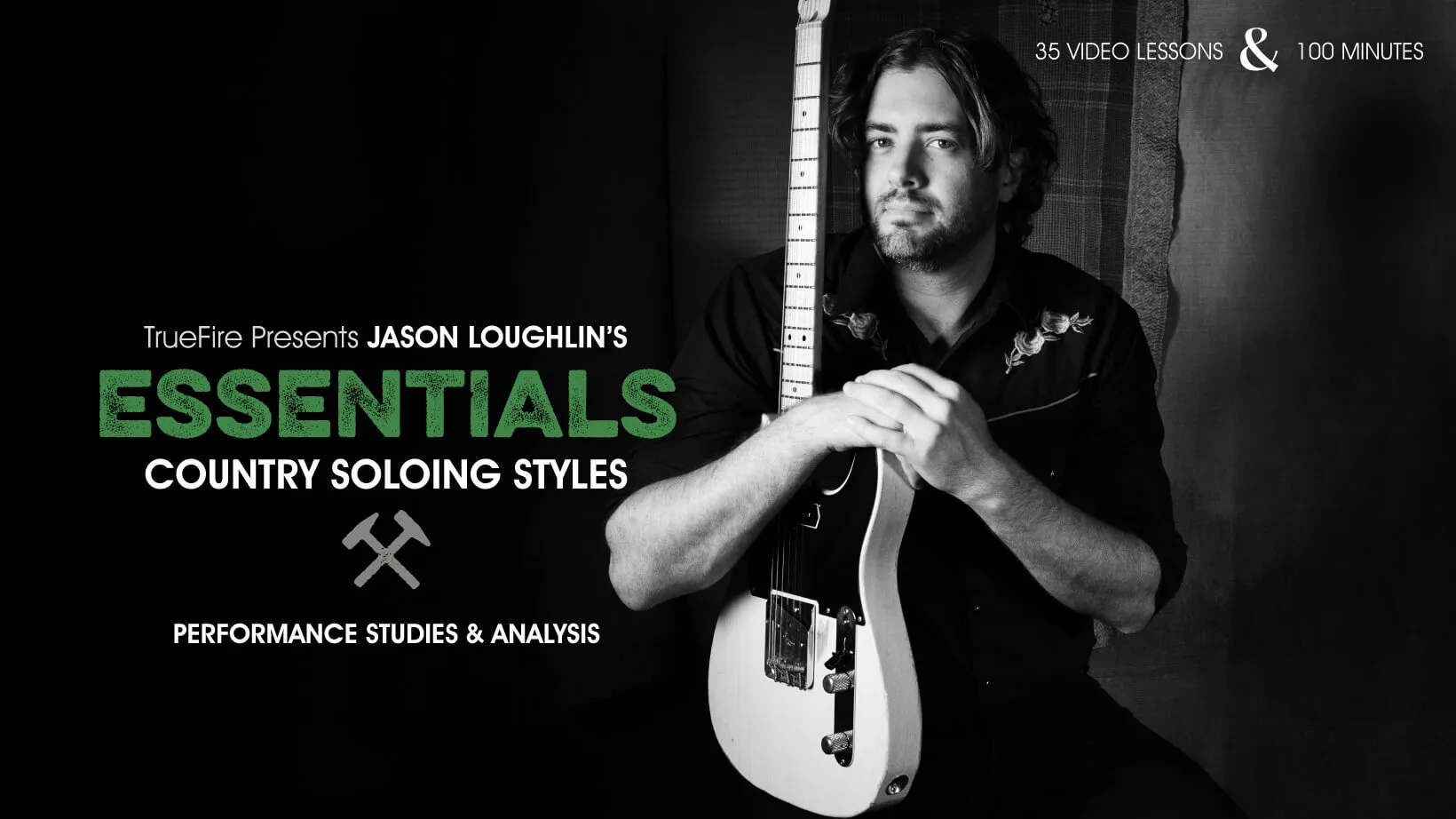
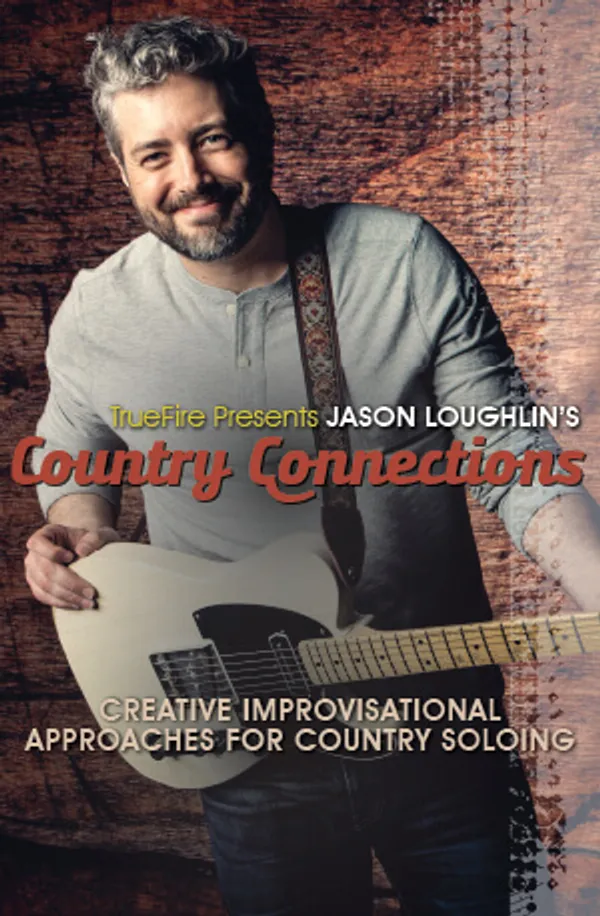
Jason Loughlin’s Country Soloing Styles edition of Essentials is designed to help you identify each of these sub-genres, grasp their underlying concepts, and learn how to solo over each so that you can accurately capture the mood, and honor the history, for how guitarists have played over these styles in the past.
”We’ll be covering how to solo in 11 common country styles. We’ll kick off with a Western Swing solo in G, a Bluegrass solo, followed by a solo in the Rockabilly style. Next, we’ll learn a Country Shuffle solo in C, a two-beat, country train style solo, and then an Outlaw Country style solo. The Country Rock sound can be thought of as ‘countrifying’ the blues, and we’ll do just that with the next solo, and then wind up the course with four more solos, in four additional styles; Tex Mex, Country Boogie, Americana, and Country Waltz.”
Jason will guide you through 11 Soloing Performance Studies that cover the range of techniques, licks, guitar tones, effects, and harmonic approaches for 11 country styles. For each study, Jason will demonstrate the performance and then break it down for you emphasizing key concepts and techniques
All of the performance studies are tabbed and notated for your practice, reference and study purposes. You’ll also get Guitar Pro files so that you can play, loop and/or slow down the tab and notation as you work through the lessons. Plus, Jason includes all of the backing tracks for you to work with on your own.
Grab your guitar and let’s expand our country palette with Jason Loughlin!
What you'll learn
Navigate chord changes using appropriate scale choices and chord tones
Create rhythmic interest with 16th note patterns and shifted accents
Mix major and minor pentatonic scales fluidly within a solo
Understand the harmonic approaches specific to each sub-genre
Develop and repeat melodic motifs throughout a solo
Hi, I'm Jason Loughlin, and welcome to my Country Soloing edition of Essentials. Country music has many sub genres, each of which has its own distinct techniques, licks, guitar tones, effects, harmonic approaches, and rhythmic clichés associated with it.
This course is designed to help you identify these sub genres, grasp the underlying concepts, and learn how to solo over these styles so that you can accurately capture the mood and honor the history of how guitarists have played over these styles in the past.
We'll be covering how to solo in 11 common country styles, from Western Swing and Bluegrass to Country Rock and Americana. I'll first play each solo for you and then I'll break it down note for note so that you can get it under your fingers. Everything is tabbed and notated, and you'll have the rhythm tracks to work with on your own. Grab your guitar, and let's get started!
We're gonna kick things off with western swing. We'll be playing over a progression in G that includes a secondary dominant cycle for a turnaround. The use of secondary dominants remains a common device right up through the 90's.
Solo considerations: We'll be using the G major scale in a few positions and across single strings. We'll be outlining major, diminished, and augmented arpeggios and embellishing them with half step approach notes and using chromatic passing tones to connect chord tones.
Keep an eye on how I outline the arpeggios, connect chord tones and use the G major scale for passing tones. I'm mostly flatpicking, but there are occasional legato passages.
There are three approaches I'm using when playing over the G chord: I'm connecting and embellishing chord tones, outlining arpeggios, and using the G major scale or major pentatonic scale as passing tones. For the rest of the changes, I'm not really using any scales, I'm just outlining and embellishing chord tones. The first substitution is a G augmented leading into the IV chord. For the raised ivdim, I'm just outlining the arpeggio and chromatically connecting the 3rd to the 5th of the G chord. The rest of the cycle of secondary dominants is almost all arpeggio notes.
The second chorus of the solo uses a descending scale pattern down a G major scale. Our next substitution uses an Ab diminished arpeggio to access the b9, b7, 5th, and 3rd of our G chord. This leads nicely into the IV chord. We use a substitution again over the E7. We're going to split the bar into two beats of Bm and two beat of E7. This is called a ii-V. Bm being the ii of the next chord A and E7 being the V of A.
Leading from the D7 back to the I chord, we imply the tri-tone substitution. A tritone sub is a dominant chord three whole steps away from the root of the V chord. In this case, that would make the sub an Ab7 chord. The Ab and Eb at the end of our solo come from the Ab7 chord.
Soloing over bluegrass usually embellishes or adds variations to the melody of the tune. Since we're not using a classic bluegrass tune, I'm going to show a few ways I get into the language of this style. One thing I do is try to copy the sound of a fiddle playing legato. I do this by using hammer-ons, pull-offs, and slides. Four note scale patterns that leap up or down a 3rd are very common in bluegrass. Another scale pattern that is used is to do an eighth note run starting on any chord tone. You can connect these together and sustain a long run of ascending and descending eighth notes that always seem to set up a chord change.
A common way to embellish arpeggios in bluegrass is to use a lower neighbor. We can do this for each chord tone and connect them with chord tones. There are common phrases or template licks that set up a chord change. I've nicknamed these licks "tails". You can add endless variations but I'll throw in a couple of standard ones to show you where they're used. Using a secondary IV chord as a substitution works great over the I chord. This helps us impose harmonic movement when we're hanging on a chord. Last, we'll throw in some bluesy licks by using the b5 as a passing tone.
The progression is a simple I-IV-V in G. All of the concepts I'm using have the same purpose - to lead you into the next chord change. Because bluegrass solos are largely subdivided into eighth notes, we have to use melody and anticipation to create motion. Nearly everything is flatpicked with the exception of a few passages where we're trying to imitate fiddle legato.
We start with a fiddle legato that leads us into the major scale pattern over the G chord. I'm using a two measure tail outlining and embellishing the D7 arpeggio to lead back to the G chord. When I land on the G I begin a scale pattern that embellishes each chord tone with a half step approach.
Next use our IV sub over the G. This means I'm outlining a C triad over a G chord and then resolving it. A one measure tail leads us into the IV chord, where we'll do scale runs descending and ascending from the root. I'll anticipate that change back to G by using a G blues lick before the chord changes. Over the D7, I'm using half step approaches to the 5th and 3rd and ending with a bluesy lick over the I chord.
I deeply enjoy the "essentials" format, a straightforward package of grab and go material. And then you go to the breakdown and get inside the thought process and how things came to be. Jason is careful with his choices of tone, gear, articulation, space, phrasing and obviously the notes themselves. All that to make sure it's as legit as possible within each "sub style" of whatever genre he's approaching.
S
Starglazer
Verified buyer
09/05/22
Good Tittle
Good soloing styles excellent teacher worthwhile lessons.thanks.
S
SoniaMyLove
10/04/21
Jason Loughlin's Essentials: Country Soloing Styles
For someone like me that plays outside of the genre, I found this course to be great for helping me be more well rounded and opened my ears to great sounds.
Thank you for this course!
A
Asari61
Verified buyer
05/30/21
Good and and well organized lessons to learn and understand possibilities of country music styles.
H
hansjohn
Verified buyer
04/12/21
Varied country styles great
Lot's of different styles with great teaching instructions well recommended.