Virtually every style of popular music today features rhythm guitar work inspired by legendary guitarists such as Steve Cropper, Spanky Alford, Curtis Mayfield, Jimmy Johnson, Cornell Dupree, Leo Nocentelli, Eddie "Chank" Willis, Marv Tarplin, and Reggie Young. Their ‘soulful’ contributions to literally hundreds of hit songs have influenced every generation of guitar players to come.
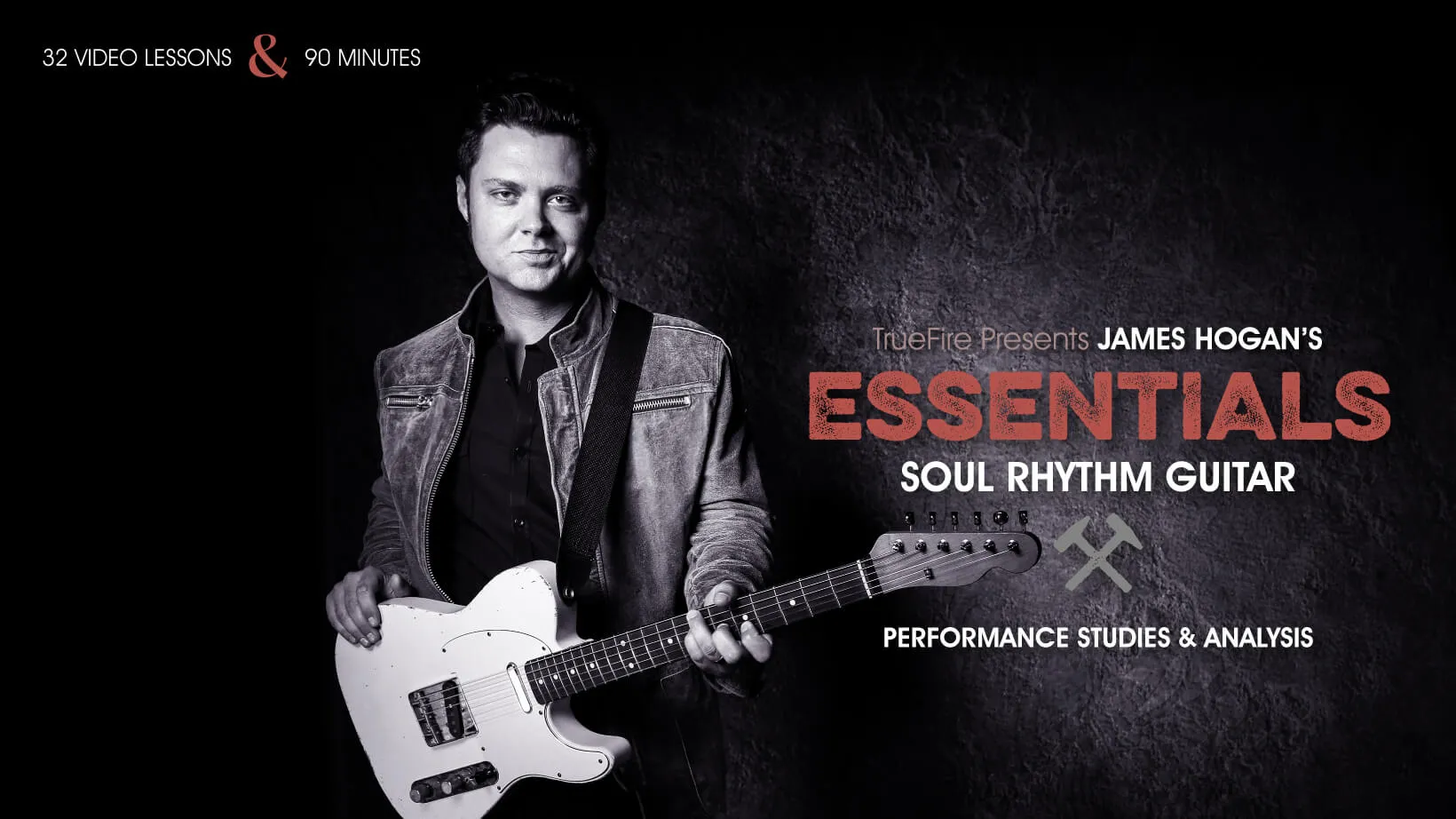
Rock, Pop, Blues, R&B, or even Singer-Songwriter — whatever your preferred style happens to be, inject a little ‘soul’ into your rhythm guitar work to majorly spice up your originals, covers, and jams. There’s no better, or quicker way to learn how to do that than jumping on the bus with James Hogan as he guides you through his Soul Rhythm Guitar edition of Essentials.
”We'll start the course with some killer riff-based ideas from Motown legends Eddie "Chank" Willis and Marv Tarplin. From there, we'll head down to "Soulsville, U.S.A." to Memphis' Stax Records where we'll check out some funky 6th intervals and fat chord grooves inspired by Steve Cropper of Booker T. & The MG's and Reggie Young from American Sound Studios Memphis Boys.
We'll cruise up to Chicago for some gospel inspired, chordal brilliance from Curtis Mayfield and then work our way back down south down to Muscle Shoals, Alabama for some greasy soul grooves in the style of Jimmy Johnson and The Swampers! We'll head over to New Orleans and jam to a bluesy piano inspired riff from legendary pianist Allen Toussaint and a funky guitar groove from The Meters' legendary guitarist Leo Nocentelli.
We'll then head to Philadelphia to investigate a smooth Philly soul styled groove and finally, we’ll dig into some gospel infused Neo-soul guitar that pays tribute to the late great Spanky Alford!”
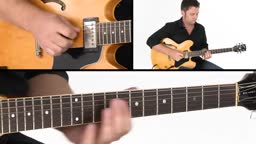
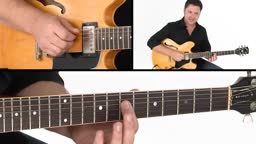
James presents 10 Soul Rhythm Guitar performance studies to cover the definitive range of soul guitar grooves. He’ll perform every groove over a rhythm track, and then break it down for you measure-by-measure.
All of the performance studies are tabbed and notated for your practice, reference and study purposes. You’ll also get Guitar Pro files so that you can play, loop and/or slow down the tab and notation as you work through the lessons. Plus, James includes all of the backing tracks for you to work with on your own.
Grab your guitar and let’s get soulful with James Hogan!
Hi, I'm James Hogan and welcome to Essentials: Soul Rhythm Guitar. This course covers 10 essential soul and R&B grooves for rhythm guitarists. We'll start the course with some killer riff-based ideas from Motown legends Eddie "Chank" Willis and Marv Tarplin. From there, we'll head down to "Soulsville, U.S.A." to Memphis' Stax Records where we'll check out some funky 6th intervals and fat chord grooves inspired by Steve Cropper of Booker T. & The MG's and Reggie Young from American Sound Studios "Memphis Boys".
We'll then cruise up to Chicago for some gospel inspired, chordal brilliance from Curtis Mayfield before we work our way back down south down to Muscle Shoals, Alabama for some greasy soul grooves in the style of Jimmy Johnson and The Swampers! While in the south, we'll head over to New Orleans where we'll jam to a bluesy piano inspired riff from legendary pianist Allen Toussaint and a funky guitar groove from The Meters' legendary guitarist Leo Nocentelli. Along with these greats, we'll also head to Philadelphia to investigate a smooth Philly soul styled groove before we dig into some gospel infused Neo-soul guitar that pays tribute to the late great Spanky Alford!
Whether you're an intermediate player in need of some new ideas or a seasoned pro just looking for a refresher, I think you'll get a lot out of the material I'll be presenting here in Essentials: Soul Rhythm Guitar. All of the examples are laid out for you in both tablature and standard notation, and I've included some really nice backing tracks for you to jam along with at home! Keep in mind, these examples cover a wide variety of soul styles and showcase multiple techniques, with varying levels of difficulty. Let's get to it!
By the mid 1960's, Berry Gordy's Motown Records in Detroit was one of the most successful record labels in the music business. The Supremes, The Four Tops, Marvin Gaye, The Temptations, The Miracles, Stevie Wonder, and The Jackson 5 are just a handful of the incredible soul and R&B artists signed to the 1960's Motown roster.
Due to Gordy's carefully controlled production methods, most Motown artists were backed by the label's in-house rhythm section affectionately known as "The Funk Brothers": Eddie "Chank" Willis, Joe Messina, and Robert White were three of the go to guitarists in Motown's Hitsville, U.S.A. studio. Typically, all three of them would record direct to the board and were then summed together onto the same track! Willis typically played a Gibson 335, Messina usually played a Fender Telecaster, and White preferred a Gibson L5. None of them used amps in the studio!
"Buckshot" is reminiscent of a groove from the hit record "Shotgun" by Junior Walker & The Allstars from 1965. The rhythm guitar part is in the style of Eddie "Chank" Willis and features a one chord vamp with some funky little fills mixed in. Eddie played a Gibson Firebird in his early years but started using a 335 by the late 1960's. This riff is a one chord vamp on Ab7. Have fun with this one and be sure to stay "in the pocket" when jamming to the backing track. Note: the timing can be deceptively tricky due to the counter line with the bass. You'll get it!
By the mid 1960's, Berry Gordy's Motown Records in Detroit was one of the most successful record labels in the music business. The Supremes, The Four Tops, Marvin Gaye, The Temptations, The Miracles, Stevie Wonder, and The Jackson 5 are just a handful of the incredible soul and R&B artists signed to the 1960's Motown roster.
Due to Gordy's carefully controlled production methods, most Motown artists were backed by the label's in-house rhythm section affectionately known as "The Funk Brothers": Eddie "Chank" Willis, Joe Messina, and Robert White were three of the go to guitarists in Motown's Hitsville, U.S.A. studio. Typically, all three of them would record direct to the board and were then summed together onto the same track! Willis typically played a Gibson 335, Messina usually played a Fender Telecaster, and White preferred a Gibson L5. None of them used amps in the studio!
"Buckshot" is reminiscent of a groove from the hit record "Shotgun" by Junior Walker & The Allstars from 1965. The rhythm guitar part is in the style of Eddie "Chank" Willis and features a one chord vamp with some funky little fills mixed in. Eddie played a Gibson Firebird in his early years but started using a 335 by the late 1960's. This riff is a one chord vamp on Ab7. Have fun with this one and be sure to stay "in the pocket" when jamming to the backing track. Note: the timing can be deceptively tricky due to the counter line with the bass. You'll get it!
By the mid 1960's, Berry Gordy's Motown Records in Detroit was one of the most successful record labels in the music business. The Supremes, The Four Tops, Marvin Gaye, The Temptations, The Miracles, Stevie Wonder, and The Jackson 5 are just a handful of the incredible soul and R&B artists signed to the 1960's Motown roster.
Due to Gordy's carefully controlled production methods, most Motown artists were backed by the label's in-house rhythm section affectionately known as "The Funk Brothers": Eddie "Chank" Willis, Joe Messina, and Robert White were three of the go to guitarists in Motown's Hitsville, U.S.A. studio. Typically, all three of them would record direct to the board and were then summed together onto the same track! Willis typically played a Gibson 335, Messina usually played a Fender Telecaster, and White preferred a Gibson L5. None of them used amps in the studio!
"Buckshot" is reminiscent of a groove from the hit record "Shotgun" by Junior Walker & The Allstars from 1965. The rhythm guitar part is in the style of Eddie "Chank" Willis and features a one chord vamp with some funky little fills mixed in. Eddie played a Gibson Firebird in his early years but started using a 335 by the late 1960's. This riff is a one chord vamp on Ab7. Have fun with this one and be sure to stay "in the pocket" when jamming to the backing track. Note: the timing can be deceptively tricky due to the counter line with the bass. You'll get it!
"Marv's Thang" is inspired by the phenomenal Marv Tarplin. Marv was a fantastic guitarist and writer who spent most of his career playing his black Les Paul Custom alongside the great Smokey Robinson. Marv and Smokey started out on the Motown label with their group The Miracles in 1958 and are now both members of the Rock & Roll Hall of Fame. Though Marv Tarplin is typically known for his understated chordal work, this example is from a killer riff he played on the 1965 Marvin Gaye hit "Ain't That Peculiar" (Tarplin also co-wrote the tune).
For this one, we'll be using a bit of hybrid picking with a clean tone. Although, if you add a bit of dirt to your tone, you'll hear how Marv's piano styled chords influenced the next generation of rock guitarists! Also, there's some syncopation here so we'll need to be aware of that. If you need to slow the riff down to get the timing on point, you can always jam along to the Guitar Pro file I've included with the course, in addition to the backing track.
"Marv's Thang" is inspired by the phenomenal Marv Tarplin. Marv was a fantastic guitarist and writer who spent most of his career playing his black Les Paul Custom alongside the great Smokey Robinson. Marv and Smokey started out on the Motown label with their group The Miracles in 1958 and are now both members of the Rock & Roll Hall of Fame. Though Marv Tarplin is typically known for his understated chordal work, this example is from a killer riff he played on the 1965 Marvin Gaye hit "Ain't That Peculiar" (Tarplin also co-wrote the tune).
For this one, we'll be using a bit of hybrid picking with a clean tone. Although, if you add a bit of dirt to your tone, you'll hear how Marv's piano styled chords influenced the next generation of rock guitarists! Also, there's some syncopation here so we'll need to be aware of that. If you need to slow the riff down to get the timing on point, you can always jam along to the Guitar Pro file I've included with the course, in addition to the backing track.
"Marv's Thang" is inspired by the phenomenal Marv Tarplin. Marv was a fantastic guitarist and writer who spent most of his career playing his black Les Paul Custom alongside the great Smokey Robinson. Marv and Smokey started out on the Motown label with their group The Miracles in 1958 and are now both members of the Rock & Roll Hall of Fame. Though Marv Tarplin is typically known for his understated chordal work, this example is from a killer riff he played on the 1965 Marvin Gaye hit "Ain't That Peculiar" (Tarplin also co-wrote the tune).
For this one, we'll be using a bit of hybrid picking with a clean tone. Although, if you add a bit of dirt to your tone, you'll hear how Marv's piano styled chords influenced the next generation of rock guitarists! Also, there's some syncopation here so we'll need to be aware of that. If you need to slow the riff down to get the timing on point, you can always jam along to the Guitar Pro file I've included with the course, in addition to the backing track.