Play Jazz Guitar 6: Soloing Approaches

Energize Your Jazz Guitar Solos with this Jazz Learning Path Core Course

Marty FriedmanTommy EmmanuelSteve VaiEric GalesEric Johnson

Get this course and 1,000+ more with All Access

Try 14 days free. Cancel any time.

Purchase Individual Course for $5.00
Play Jazz Guitar 6: Soloing Approaches

About this course

Welcome to Play Jazz Guitar 6: Soloing Approaches for intermediate to late Intermediate students of Jazz guitar.

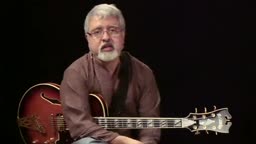
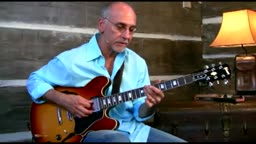
This Jazz Learning Path core course is presented by 4 top TrueFire educators: Larry Carlton, Frank Vignola, Fareed Haque, and Mimi Fox.

The Soloing Approaches curriculum is comprised of select Jazz guitar lessons from the educators’ existing TrueFire course libraries.

Solid rhythm chops may get you the gig but it's your soloing chops that gets you the spotlight and the opportunity to electrify the audience with your musicality. Creativity, technique, and vocabulary are the essential skills you’ll need to master the art of improvisation and develop into a great soloist. The video guitar lessons in this core course will equip you with the requisite tools and guidance to take your soloing skills to the next level.

Play Jazz Guitar 6: Soloing Approaches is organized into 5 sections. In the first 3 sections, Fareed Haque introduces you to modal improvisation approaches with a series of demonstrations, playalongs and workouts. In Section 4, Larry Carlton shares a collection of very versatile and insightful soloing approaches. In the final section, you’ll unleash all of your new found soloing approaches over a series of performance studies from Larry Carlton, Mimi Fox and Frank Vignola.

When you’ve completed the lessons here in Soloing Approaches, you’ll find more lessons focused on soloing in Soloing Principles, also a Play Jazz Guitar 6 core course.

The educators demonstrate all of the key examples over jam tracks (where and when applicable) to simulate a real-world application, in a musical context. All of the key examples are also tabbed and notated for your practice, reference and study purposes.

You’ll also get Guitar Pro files so that you can play, loop or slow down the tab and notation as you work through the lessons. Plus, you’ll have all of the available jam tracks to work with on your own.

Take as much time as you need to work through each video guitar lesson before moving on to the next lesson. If you want to dig deeper or wider into any of the topics covered in this core course, check out the recommended supplementary courses in your learning path where you’ll find more examples, techniques and insight from top TrueFire educators.

Grab your guitar and let’s get started!

What you'll learn

  • Comprehensive fretboard navigation
  • Compare bebop and modal soloing techniques
  • Understand how to build chords from modal scales
  • Understand modal scale application in jazz improvisation
  • Learn chord characteristics for each mode
Release date: 09/14/2016 • 2h 43m runtime
Start Course
Sample lessons
Modes of the Major Scale
Overview
Soloing Example 3
Soloing Example 3
Modal Style
Fretboard Mastery System
Overview
Breaking Down Triads
Lesson 1:5

What's included

51 lessons • 29 charts • 10 Jam Tracks

Play Jazz Guitar 6: Soloing Approaches
Welcome to Play Jazz Guitar 6: Soloing Approaches for intermediate to late Intermediate students of Jazz guitar.

This Jazz Learning Path core course is presented by 4 top TrueFire educators: Larry Carlton, Frank Vignola, Fareed Haque, and Mimi Fox.

The Soloing Approaches curriculum is comprised of select Jazz guitar lessons from the educators' existing TrueFire course libraries.

Solid rhythm chops may get you the gig but it's your soloing chops that gets you the spotlight and the opportunity to electrify the audience with your musicality. Creativity, technique, and vocabulary are the essential skills you'll need to master the art of improvisation and develop into a great soloist. The video guitar lessons in this core course will equip you with the requisite tools and guidance to take your soloing skills to the next level.

Play Jazz Guitar 6: Soloing Approaches is organized into 5 sections. In the first 3 sections, Fareed Haque introduces you to modal improvisation approaches with a series of demonstrations, playalongs and workouts. In Section 4, Larry Carlton shares a collection of very versatile and insightful soloing approaches. In the final section, you'll unleash all of your new found soloing approaches over a series of performance studies from Larry Carlton, Mimi Fox and Frank Vignola.

When you've completed the lessons here in Soloing Approaches, you'll find more lessons focused on soloing in Soloing Principles, also a Play Jazz Guitar 6 core course.

The educators demonstrate all of the key examples over jam tracks (where and when applicable) to simulate a real-world application, in a musical context. All of the key examples are also tabbed and notated for your practice, reference and study purposes.

You'll also get Guitar Pro files so that you can play, loop or slow down the tab and notation as you work through the lessons. Plus, you'll have all of the available jam tracks to work with on your own.

Take as much time as you need to work through each video guitar lesson before moving on to the next lesson. If you want to dig deeper or wider into any of the topics covered in this core course, check out the recommended supplementary courses in your learning path where you'll find more examples, techniques and insight from top TrueFire educators.

Grab your guitar and let's get started!
What Are Modes?
In this section, Fareed defines modes and presents the modes of the major scale. You'll also learn how to build chords from the modes of the major scale. If you haven't yet explored modes, this section will impart an important foundational understanding, while also preparing you for the following modal soloing sections.

TIP! Soloing is more than just licks. You need to understand the correlation between phrasing, melody and harmony. Becoming a good soloist is as much if not more mental than physical.

When you are working on various soloing concepts, ask yourself questions like - What chords will this approach work over? What groove or feel does this solo fit best over? What is the best note choice for this part? How can I get from here to there in the solo? Are there other scale options? Does my solo have a beginning, a middle and an end? - Or am I just rambling on.

Asking yourself these questions as you are beginning to build up your soloing chops will help make sure you are really thinking about what you are playing and working on. If you put in the time on this now, it will eventually lead you to the ultimate place for soloists where you won't have to think about any of it at all - you just play!
What Are Modes?
What Are Modes? - SECTION 1 is a video guitar lesson presented by Fareed Haque and is sourced from Modal Improv Survival Guide.

What are modes? Any note in a scale can be treated as a root note. Each note thus becomes the root note of its own 'Mode' of the parent scale. Each scale has as many modes as it has notes. A 5 note scale has 5 modes, a 7 note scale has 7 modes. A C Scale from D to D is teh 2nd mode of C major, a c major scale from E to E is the third mode of C major. D is the root note of the 2nd mode, and E is the root note of the 3rd mode of C major. We use the notes in each mode to build chords and melodies that reflect the sound of each mode.

When you think of mode also think of MOOD. Each mode has a certain sound or feeling, and we like to use each Mode to create a certain Mood....this is a big part of what happened to jazz in the 60s. Modes were originally used as a way of describing the types of scales used in different folk musics from around the world. Flamenco music from Spain often uses the 3rd mode of major, while Carnatic music from India often uses the 5th mode of major. Chinese music often uses different modes of the pentatonic scale. Composers such as Debussy, Ravel, Bartok, Stravinsky and others used a modal approach to write music that sounded more folky, earthy and not so classical. Similarly jazz musicians in the late 50s and 60s became more and more interested in folk music - blues, African and Indian music. As they wanted to get away from a jazzy style based on songs from popular - and often corny - musicals, they searched for roots music, and found modes. Whereas early jazz and bebop players used a chromatic, arpeggio based approach to build melodies, modern modal players used modes and often LIMITED their note choice to create moods; they might use only 5 or 7 notes in a scale - ans stick to just those notes - rather than embellishing with all 12 notes of the chromatic scale, as did more traditional jazz players.

Important note:
Since modes evolved in jazz from a desire to get away from the Be Bop sound, DONT USE MODES TO PLAY BEBOP! It does not work. Using modes to play Bebop is like using a screwdriver to hammer in a nail. You can sort of do it, and the nail and screwdriver both get messed up in the process. If you wanna play Bebop go to the Bebop Survival Guide RIGHT NOW. Hurry! One last thng: You may notice that in this entire course there is not one Greek mode name, no toga wearing jazz musicians, no Phrygian, Myxolydian, Lydian #6, Macrobiotic b2. Why?? 'Cuz as far as I know NO ANCIENT GREEKS EVER PLAYED JAZZ! Listen, we got enough to work on without having to memorize silly ancient Greek terms that have nothing whatsoever to do with jazz. The 1st mode of major is best called...hmmmm " The 1st mode of major". You down with that?? Works for me, and i hope we can purge jazz theory of all this extra clumsy and cumbersome terminology RIGHT NOW and forever more. Sorry Berklee, Greek mode names are great for ancient Greek music, suck for Jazz.

Modes of the Major Scale
Modes of the Major Scale - Overview is a video guitar lesson presented by Fareed Haque and is sourced from Modal Improv Survival Guide.

Practice jamming on each mode of the major scale so you can get an idea of how each mode sounds and feel, and to get an idea of the MOOD each mode creates. Find some way to get a bass drone happening on each root note, so you can just run up and down the scale and hear how each note changes from mode to mode. Each note changes its relationship to the new root note and that changes its sound. So for ex a D in 1st mode is the 9th...sweet! but a D in 3rd mode is the 7th - tough! and a D in 6th mode is an 11th - cool! so the same note changes function and mood as you change the modal root.
Building Chords
Building Chords - Modes of the Major Scale is a video guitar lesson presented by Fareed Haque and is sourced from Modal Improv Survival Guide.

One of the nice things about the modal approach is the way it can help us build unique chords and chord voicings. Typically jazz chords are built by stacking thirds, and we can do this to build very typical sounding jazz chords. However, unlike an arpeggio based Bebop approach we can also easily stack notes in a mode using any other interval we like...so we can create chords by stacking 4ths or stacking 5ths. Also we can simply find an interval formula that we like - say a 4th and a 2nd ( C, F and G ) and move that thru a mode: C,F,G becomes D,G,A becomes E,A,B.

Keep in mind that we will stack intervals DIATONICALLY, that is we will always stay in the scale to build our chords. So a 4th in the key of C can be C to F, D to G, E to A, AND F to B. Even tho this is an augmented 4th it still is part of the C scale so its one of the diatonic 4ths in C.
Modal Playing Examples
In this section, Fareed demonstrates how to craft a modal rhythm track to practice soloing over. He presents a series of soloing examples to demonstrate both traditional and modern modal soloing approaches. Fareed will also perform a bebop soloing example to help you recognize the difference in modal versus bebop soloing approaches.

TIP! There is nothing like playing with other musicians! But the next best thing is playing with a recording of a band!

Always work with the jam tracks provided with your lessons. They are not only there because it is more fun to play with jam tracks, but most of the time provide you with important information like rhythmic feel and harmonic content that help you make sense out of what you are working on. Number one thing - always listen to what everyone else in your band is doing! It is so important to play WITH the band and not just OVER the band - and in order to do that you have to get used to listening. Playing with Jam Tracks is a great way to practice this!
Modal Playing Examples
Modal Playing Examples - SECTION 2 is a video guitar lesson presented by Fareed Haque and is sourced from Modal Improv Survival Guide.

In this section we will build a fun, funky track using the chords to the Herbie Hancock classic Maiden Voyage. Once we've built the track I'll play over the Maiden Voyage Changes in a BeBop style and then in a few different modal styles so you can check out how the different approaches sound.

+ 44 more lessons

Start Course

Reviews

1 result

sindibad

08/11/22

Play Jazz Guitar 6: Soloing Approaches

Another very good educational tool to improve your knowledge. Then it takes time to work.

Stop searching. Start improving with All Access.

Try 14 days free. Cancel any time.