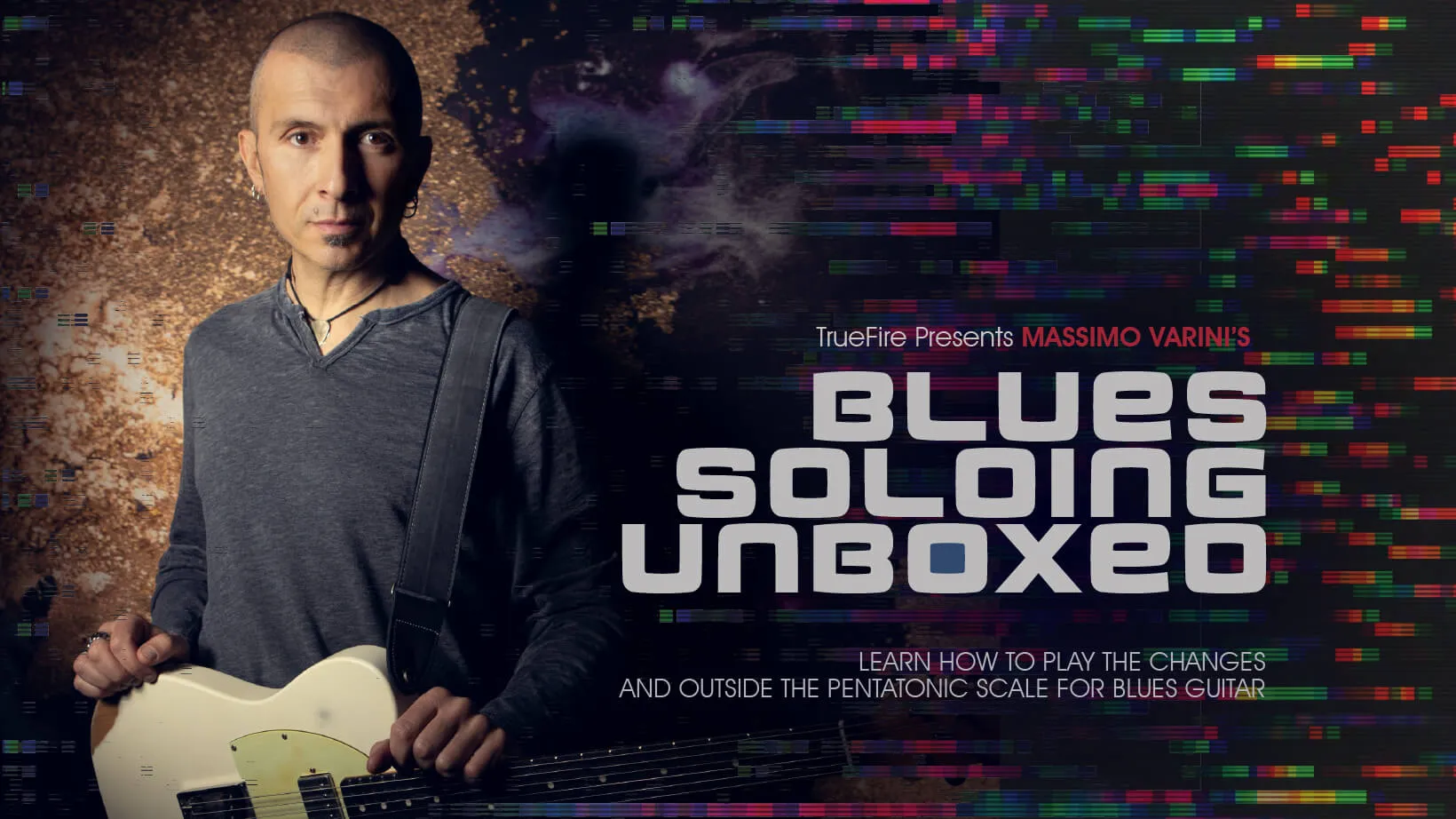

Blues Soloing Unboxed

Interactive Video Masterclass for Blues Guitar Improvisation

Marty FriedmanTommy EmmanuelSteve VaiEric GalesEric Johnson

Get this course and 1,000+ more with All Access

Try 14 days free. Cancel any time.

Purchase Individual Course for $9.99
Blues Soloing Unboxed

About this course

The pentatonic scale is a great way to get your blues improvisation and soloing up and running. But eventually, you’ll find yourself locked in that pentatonic box and unable to create the sounds you hear in your head and on the fretboards of the blues players you admire.

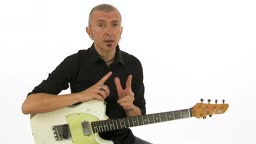
Massimo Varini’s Blues Soloing Unboxed introduces you to dozens of powerful harmonic concepts — outside of the pentatonic box — that will lift your blues solos to a whole new melodic level.

”The masters are playing the changes and inserting many other notes in their solos that are outside the pentatonic scale like diminished, Mixolydian, Dorian, and chromatic sounds, all to create tension and release. We’ll play our way through twenty individual skill-building practice sessions, over backing tracks, to broaden your blues vocabulary and unbox your solos and improvisations.“

Massimo will explain and demonstrate all of the key concepts and approaches along the way. You’ll get standard notation and tabs for all of the performance studies. Plus, you’ll be able to use TrueFire’s learning tools to sync the tab and notation to the video lesson. You can also loop or slow down the videos so that you can work with the lessons at your own pace. All of the backing tracks are included to work with on your own as well.

Grab your guitar and let’s get unboxed with Massimo Varini!

What you'll learn

  • Play chromatic approach notes to target each chord tone of dominant 7th arpeggios
  • Use top note of double stop as primary chord tone for smooth harmonic movement
  • Apply double stops over a backing track with chord changes
  • Vary rhythmic patterns when playing double stops
  • Understand the difference between diatonic and chromatic approach notes
Release date: 03/30/2020 • 2h 51m runtime
Start Course
Sample lessons
Three Chords & Three Keys
Demonstration
Mixing Up Notes of Your Scales
Practice Session: Swing Feel
Improvising with Mixolydian
Practice Session: Lead Tones
Dominant 7th Arpeggios
Demonstration

What's included

41 lessons • 33 charts • 5 Jam Tracks

Blues Soloing Unboxed
Ciao! I'm Massimo Varini. Welcome to Blues Soloing Unboxed.

The pentatonic scale is a great way to get your blues improvisation and soloing up and running. But eventually, you'll find yourself locked in that pentatonic box and unable to create the sounds you hear in your head and on the fretboards of the blues players you admire.

The masters are playing the changes and inserting many other notes in their solos that are outside the pentatonic scale like diminished, Mixolydian, Dorian, and chromatic sounds, all to create tension and release.

In this course, I'll introduce you to dozens of powerful harmonic concepts and we'll play our way through twenty individual skill-building practice sessions over backing tracks to broaden your blues vocabulary and unbox your solos and improvisations.

All of the performances are transcribed and you'll be able to sync the tab and notation to the video using TrueFire's learning tools. The backing tracks are included, and you can also loop or slow down the videos so that you can work with the lessons at your own pace...

Ready to go? Grab your guitar, and let's get started!
Three Chords & Three Keys
It's very important to think before we play. So, if you're trying to play a blues without using the pentatonic, you need to know how each chord relates to the key. This progression is in the key of G, and it's a bit strange as we're starting out with a dominant chord, the G7. Let's run through the chords here, and identify ahead of time how they relate to the key.
Mixolydian Structure & Fingerings
Let's talk about the Mixolydian - it's the fifth mode of a major scale. It goes: Ionian, Dorian, Phrygian, Lydian and Mixolydian. So, what does Mixolydian mean? If we start on the fifth note of a major scale and play 7 notes from there, we'll discover that the 7th degree is now minor. Let's put this to practice using the chords from our G blues progression.
Three Scales in One Position
So, let's take a look at our three scales in one position. We are playing three different Mixolydian scales within the same four frets - the G, C and D Mixolydian scales. You'll see that the notes in the scales aren't that different; there are only three different notes between the three scales! Let's take a look at how they're related.
The Importance of Accents
Now that we have a good handle on our Mixolydian scales, let's check out how adding in accents. This creates swing that'll make it sound like we're really playing a blues over our backing track.
Mixing Up Notes of Your Scales
A big mistake that we often make is instead of mixing things up with the scale, just playing it from the root to the top, and then back down. Here we'll take the scales we've learned here with the accents added in, and mix up the notes within the scale to make it more interesting.
Playing the Changes
The next exercise can be a bit challenging. So, we have three scales and three chords. Over a blues progression, we have to change the scale when the chord changes! Let's go through the scales together, playing them with swing through the chord changes over the backing track.

+ 34 more lessons

Start Course

Reviews

24 results

Massimo B.

07/24/25

A new world inside 3 chords

Amazing course!!! A lot of informations, diagrams, and intresting flavours to add to your blues knowledge. Perfect balance between theory explanation and practical lessons.


rmctelus

Verified buyer

12/19/24

I wish I’d found Massimo’s class sooner

If you want to understand important blues soloing theory that will help improve your solos, Massimo Varini delivers. Newbies to theory like me will want to play some of the lessons over again, but that’s very much worth doing.

Wessel07

Verified buyer

07/20/23

Superb Massimo!

Massimo's course is good. He is very relaxed and you do not feel the pressure of getting the knowledge but what you get is the feeling of the blues and a clever way of learning it in an almost boxed area / scale position. He is a professional. Start to love Mixolydian... I started a whole song just after completing a few lessons!

AdrianJWhite

Verified buyer

05/03/23

Could be better

You need some background theory to get the most out of this course. Some of the concepts are covered quickly with little or no explanation behind them. That said, the course can still be helpful to someone stuck using the minor pentatonic to solo over every chord.

webdust

Verified buyer

04/22/23

Italians do it better

Cool guitarist!

Stop searching. Start improving with All Access.

Try 14 days free. Cancel any time.