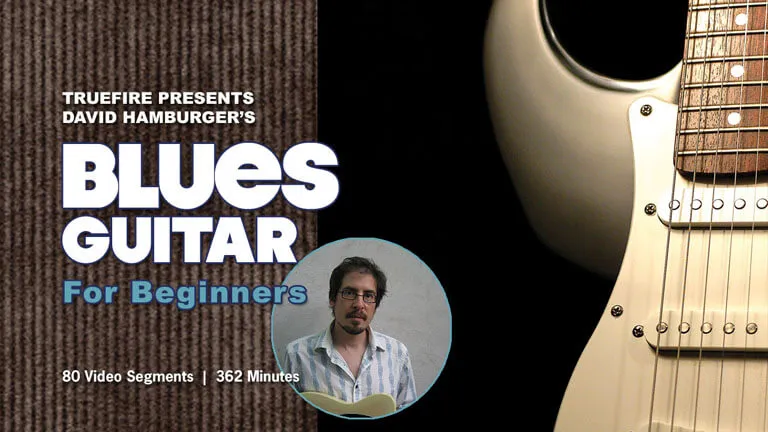

Blues Guitar For Beginners

Learn to play electric blues riffs, chord and rhythms

Marty FriedmanTommy EmmanuelSteve VaiEric GalesEric Johnson

Get this course and 1,000+ more with All Access

Try 14 days free. Cancel any time.

Purchase Individual Course for $14.99
Blues Guitar For Beginners

About this course

If you've always wanted to learn how to play electric blues guitar - or even started once or twice in the past only to put it down in frustration - this series of beginner blues guitar lessons is likely the perfect approach for you. Blues Guitar for Beginners is a jump-start method designed to get you up and strumming quickly without having to work through tedious theory, scales and exercises. In fact, you'll be playing your first batch of cool blues moves in your very first week of working with the course.

Blues Guitar for Beginners is tailored specifically for adults who don't have the time or desire for formal training. To get you on the fast track, we've deliberately steered clear of music theory, reading notation, exercises and scales (there's plenty of time for all that good stuff later). Instead, you'll dig in immediately learning how to play blues chords, strums, keeping time and build a vocabulary of bluesy licks.

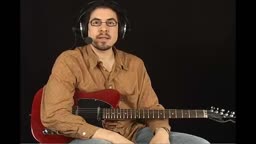
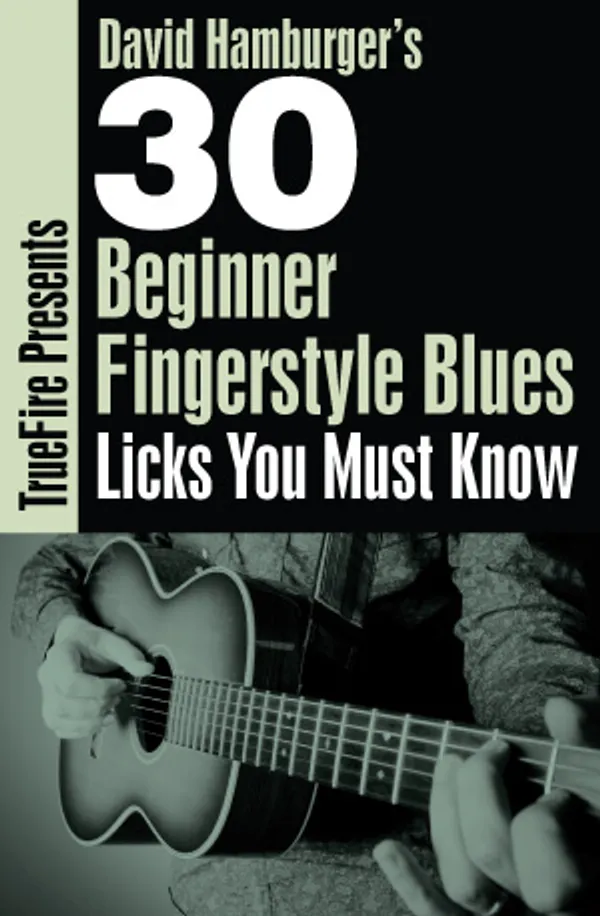
Longtime TrueFire instructor and blues maven David Hamburger is your extremely capable guide to blues guitar. Hamburger has appeared at Merle Fest and countless other festivals and has performed with Joan Baez, Duke Robillard, and many others. David is a contributing editor to Acoustic Guitar, author of a dozen books, including the award-winning "Beginning Blues Guitar" and has authored many TrueFire courses.

Hamburger starts from scratch, teaching you how to tune, how to hold the pick and how to play your first bluesy notes. David explains every step and breaks each example down so you know exactly what to play and how to play it. He shows you how to strum with downstrokes and upstrokes, how to pick in time and how to get your chords to sound clean, while teaching you a variety of chord progressions and blues-based single-note riffs. On-screen chord diagrams and beat counters help you to stay on track, and jam tracks for each lesson make practicing fun - just play along with David and the practice rhythm tracks. By the end of the course you'll be learn how to play rhythm and lead blues guitar parts for the Chicago shuffle, Texas shuffle, eight-bar blues, shuffle boogie and even a little 50s R&B.

What you'll learn

  • Execute both downstrokes and upstrokes with proper technique
  • Play along with backing tracks at slow and fast tempos
  • Understand pick angle and grip for upstrokes
  • Learn the musical alphabet consists of only 7 letters (A-G)
  • Understand how to count beats in groups of four
Release date: 03/10/2008 • 6h 02m runtime
Start Course
Sample lessons
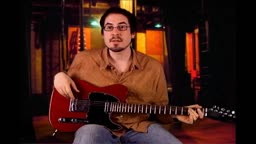
Tuning Guitar
Tuning Guitar
Lesson 1: Part 2
Freting the Strings
Freting the Strings
Lesson 2: Part 1
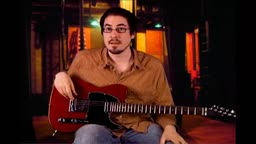
Beats & Measures
Beats & Measures
Lesson 2: Part 2
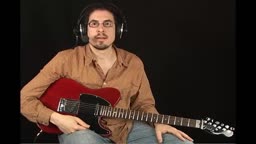
Using the Pick
Using the Pick
Lesson 3: Part 1

What's included

80 lessons • 36 charts • 18 Jam Tracks

Parts of the Guitar
It doesn't matter what kind of guitar you use to work your way through this course. The main thing is that the guitar feels comfortable to you when you pick it up, and that it doesn't take a ridiculous amount of effort to fret the notes and chords I'll be showing you as we go along. If you can, ask a friend or a guitar repair tech to check out the setup on your guitar. >>Guitar Set Up Tips
Tuning Guitar
It doesn't matter what kind of guitar you use to work your way through this course. The main thing is that the guitar feels comfortable to you when you pick it up, and that it doesn't take a ridiculous amount of effort to fret the notes and chords I'll be showing you as we go along. If you can, ask a friend or a guitar repair tech to check out the setup on your guitar. >>Guitar Set Up Tips
Freting the Strings
Yes, it's true - most of the great bluesmen of the past probably didn't read written notation or talk about their music in terms of sharps and flats or whole notes and half notes. And ultimately you're going to have to learn the most important nuances of how to play the same way they did - by watching other people play and listening closely to records of your favorite musicians. Meanwhile, it won't hurt to soak up a little book learnin'. >>How To Read Sheet Music
Beats & Measures
Yes, it's true - most of the great bluesmen of the past probably didn't read written notation or talk about their music in terms of sharps and flats or whole notes and half notes. And ultimately you're going to have to learn the most important nuances of how to play the same way they did - by watching other people play and listening closely to records of your favorite musicians. Meanwhile, it won't hurt to soak up a little book learnin'. >>How To Read Sheet Music
Using the Pick
You'll notice different guitar players have different ways of doing things, from how high or low they strap on their guitar to how they hold their pick or strum the strings (all wrist? all arm and shoulder?). There's often more than one way to finger a chord as well, depending on either the musical circumstances, the individual player's preference, or both. The A fingering here makes switching between A and D easier. >>Basic Open Position Guitar Chords
Down Strokes
You'll notice different guitar players have different ways of doing things, from how high or low they strap on their guitar to how they hold their pick or strum the strings (all wrist? all arm and shoulder?). There's often more than one way to finger a chord as well, depending on either the musical circumstances, the individual player's preference, or both. The A fingering here makes switching between A and D easier. >>Basic Open Position Guitar Chords
Holding the Pick
If you get deep into your practicing, you may not realize how long you've been hunched over in one position, using the same set of muscles over and over. Be careful! Try to unhunch slowly, rolling back your shoulders and gradually stretching out your arms to the side and loosening up your neck. Otherwise, you might tweak those muscles by moving too quickly and end up with a week's worth of Penguin Neck. >>Breathed

+ 73 more lessons

Start Course

Reviews

15 results

Chuck E.

12/14/22

Chord changes

I had problems learning how to easily and efficiently change between the A, D, and E chords. I almost gave up until I found David's Blues Guitar For Beginners course. He takes the time (when many other do not) to show you a great way to do this. Thanks, David!!!

Toonces

Verified buyer

06/23/22

Great for a beginner

Great lesson so far. David starts with the basics. It does look like there are a lot of lessons included. Looking forward to the next one.

duggerh

Verified buyer

01/14/22

Very clear and precise, easy to understand.

arnzanch

Verified buyer

07/21/21

Clear and concise, great for the less experienced

geelinus

Verified buyer

06/28/21

Good video!

Useful information dispense in a clear manner.

Stop searching. Start improving with All Access.

Try 14 days free. Cancel any time.