
Rhythm Makeover: Massimo Varini

3 Creative Strategies for Crafting Interesting Acoustic Rhythms

Marty FriedmanTommy EmmanuelSteve VaiEric GalesEric Johnson

Get this course and 1,000+ more with All Access

Try 14 days free. Cancel any time.

Purchase Individual Course for $14.99
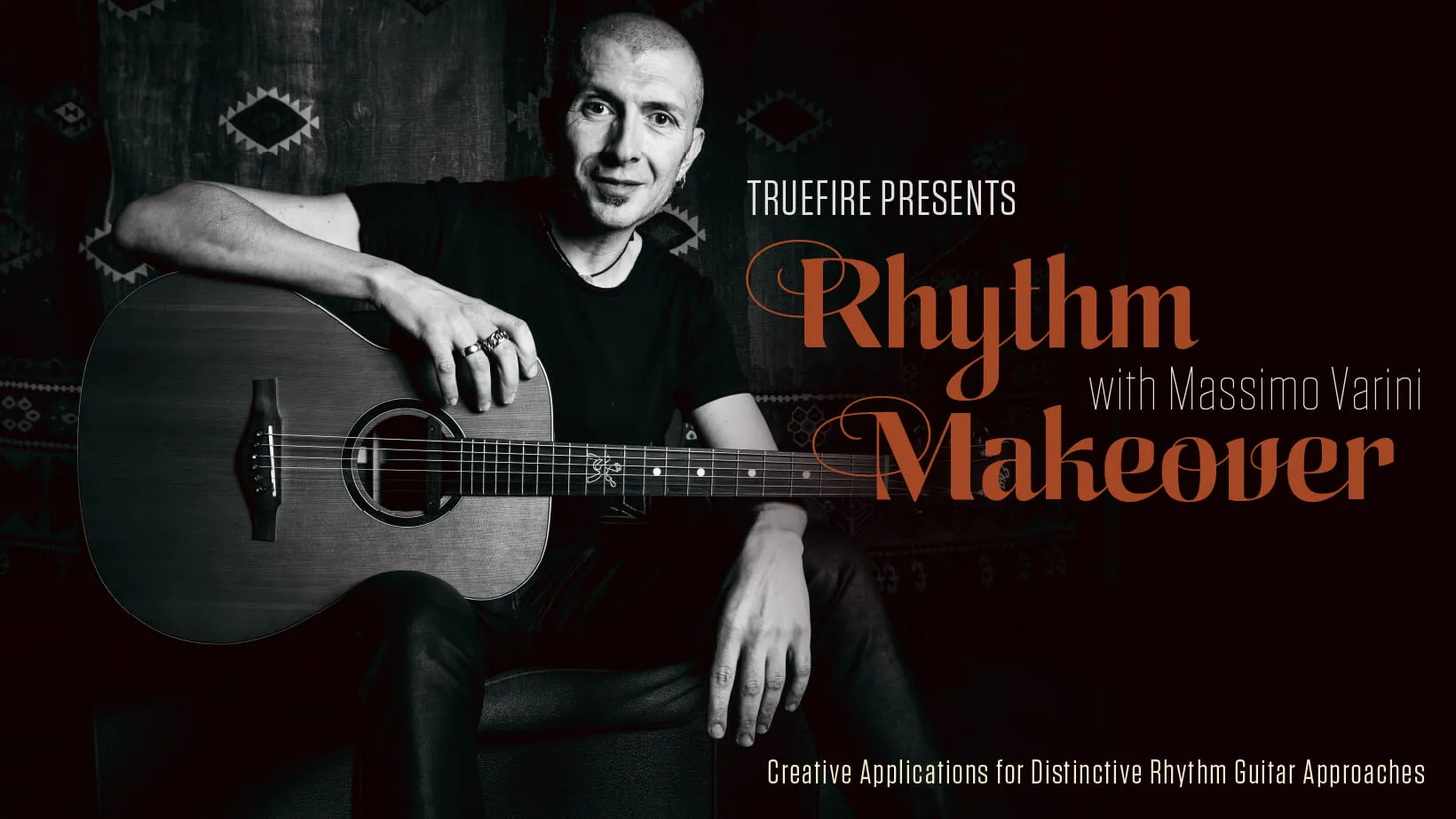
Rhythm Makeover: Massimo Varini

About this course

Thousands of hit songs, across almost every style of popular music, use the same handful of chord progressions. So, what makes those songs so distinctive from one another? Melody, lyrics, and production values are all very important, of course, but its rhythm, chord voicings, and right-hand techniques that set the groove and distinguishes one song from another using the very same chord progression.

In Massimo Varini ’s Rhythm Makeover, Massimo will show you 15 creative approaches for making any chord progression distinctive and engaging. Massimo will demonstrate 3 approaches for each of 5 very popular chord progressions. The approaches are interchangeable across not just these 5 but any chord progression you might encounter in the popular songbook, or even in your own compositions.

”We’ll begin with three ways to approach the mother of all pop progressions, the one five six four. Next, we’ll work with a non-diatonic one, five, two major, six major progressions. We’ll work on three rhythm approaches for a jazz-influenced one, six, two five progressions.

I’ll show you three stackable rhythm parts you can put together with a friend or your band over a six four two five progression. And finally, I will show you three different approaches to three unique flavors of a two, four, five progressions.”


Massimo will explain and demonstrate all of the key concepts and approaches along the way. You’ll get standard notation and tabs for all of the performance studies. Plus, you’ll be able to use TrueFire’s learning tools to sync the tab and notation to the video lesson. You can also loop or slow down the videos so that you can work with the lessons at your own pace. All of the backing tracks are included to work with on your own as well.

Grab your guitar and let’s dig in with Massimo Varini!

What you'll learn

  • Play chord progressions using inversions for smoother voice leading
  • Execute funky single-note lines with proper muting technique
  • Create synth-like arpeggiated patterns on guitar
  • Adapt playing approach to different tempos and grooves
  • Develop soft, accent-free strumming for textural parts
Release date: 06/29/2020 • 1h 36m runtime
Start Course
Sample lessons
The I V vi IV Progression
Progression 1: Overview
Approach 1: Performance
The I V vi IV Progression
Approach 1: Breakdown
The I V vi IV Progression
Approach 2: Performance
The I V vi IV Progression

What's included

37 lessons • 15 charts • 15 Jam Tracks

Rhythm Makeover: Massimo Varini
Ciao! I'm Massimo Varini. Welcome to Rhythm Makeover.

Thousands of hit songs, across almost every style of popular music, use the same handful of chord progressions. So, what makes those songs so distinctive from one another?

Melody, lyrics, and production values are all very important, of course, but its rhythm, chord voicings, and right-hand techniques that set the groove and distinguishes one song from another using the very same chord progression.

In this course, I'll show you 15 creative approaches for making any chord progression distinctive and engaging. We'll work with 5 very popular chord progressions, and I'll demonstrate 3 approaches for each. The approaches are interchangeable across not just these 5 but any chord progression you might encounter in the popular songbook, or even in your own compositions.

All of the performances are transcribed and you'll be able to sync the tab and notation to the video using TrueFire's learning tools.

The backing tracks are included, and you can also loop or slow down the videos so that you can work with the lessons at your own pace.

Ready to go? Grab your guitar, and let's get started!
The I V vi IV Progression
Our first progression is a famous one, the I V vi IV. Maybe 30% of all music made in the world uses this progression. A viral video came out years ago by The Axis of Awesome showing off all the different songs made from this progression.

In the first example, I'll show you how to use open ringing strings to connect the chords easily. Then, we'll put a capo on the 4th fret and check out a funky acoustic rhythm. Finally, I'll put the capo on the 2nd fret, playing a mix of arpeggios and strummed chords. With all these approaches, we'll explore a few variations of each style as well. Grab your guitar and play with me!
Approach 1: Performance
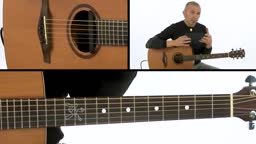
Here's our first approach for the I V vi IV progression. We'll take a look at using chords with open strings ringing out here, and I'll try out a few rhythm variations out as well.
Approach 1: Breakdown
Let's break down our first approach over the I V vi IV progression. I'll break down the left and right hand techniques you'll need to play through the chords. Then, we'll talk a bit about some of the different rhythms you can use to change it up.
Approach 2: Performance
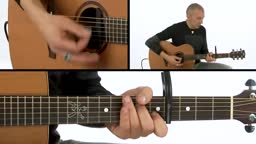
Here's our second approach for the I V vi IV progression. We'll take a look at using a capo on the 4th fret, playing a funky acoustic version of the chords. I'll also try out a few variations you can use, too.
Approach 2: Breakdown
Let's break down our second approach over the I V vi IV progression. I'll break down the left and right hand techniques you'll need to play through the chords. Then, we'll talk a bit about some of the different approaches you can use to switch it up.
Approach 3: Performance
Here's our third approach for the I V vi IV progression. We'll take a look at using a capo on the 2nd fret, playing a mix of arpeggios and strumming. I'll also try out a few variations you can use, too.

+ 30 more lessons

Start Course

Reviews

No reviews yet

Complete this course and be the first to share your experience.

Stop searching. Start improving with All Access.

Try 14 days free. Cancel any time.