
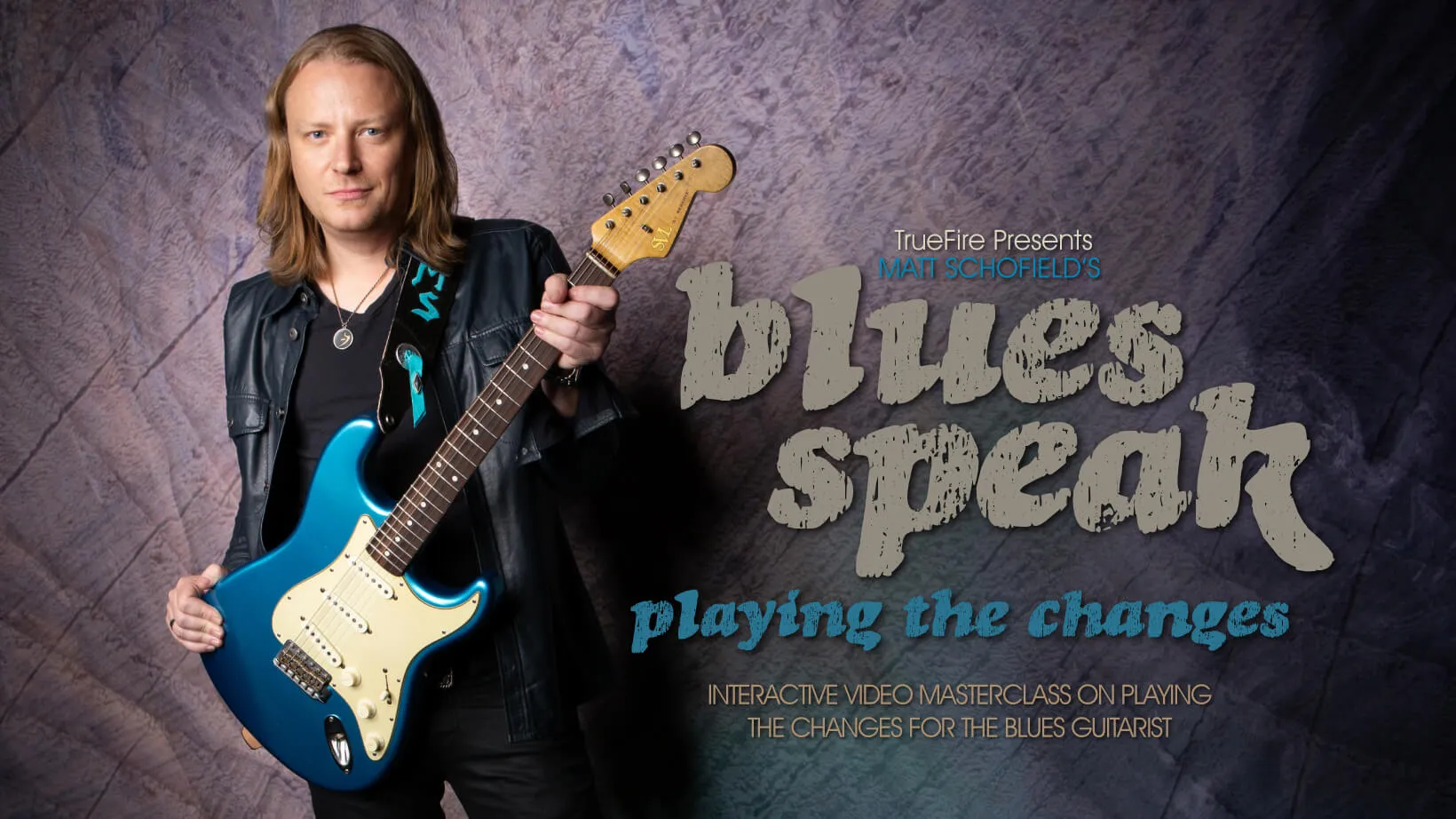
Blues Speak: Playing the Changes

Interactive Video Blues Guitar Masterclass on Playing the Changes

Marty FriedmanTommy EmmanuelSteve VaiEric GalesEric Johnson

Get this course and 1,000+ more with All Access

Try 14 days free. Cancel any time.

Purchase Individual Course for $24.99
Blues Speak: Playing the Changes

About this course

Most blues players learn how to solo using the minor pentatonic scale over the entire progression. Thankfully that scale gets players up and running quickly and initially sounds great. But at some point, our ear tells us that there’s something missing from our solos. Something that all of the great blues players are doing that we’re not. Ultimately we discover the missing link… playing the changes!

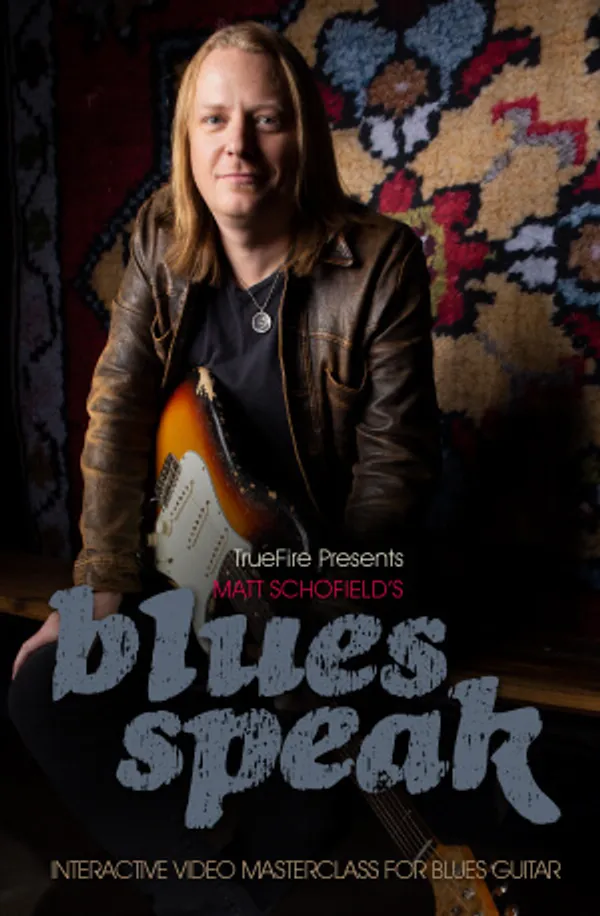
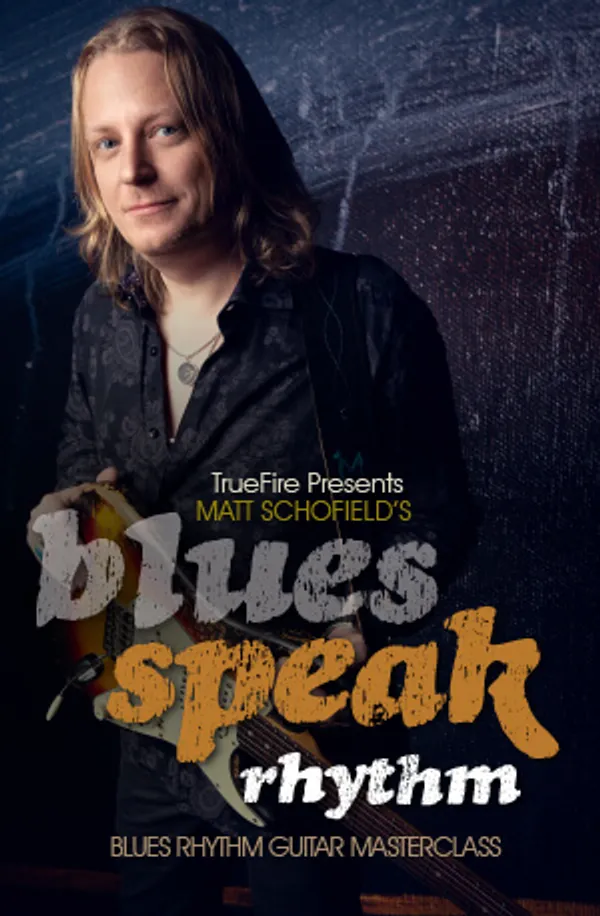
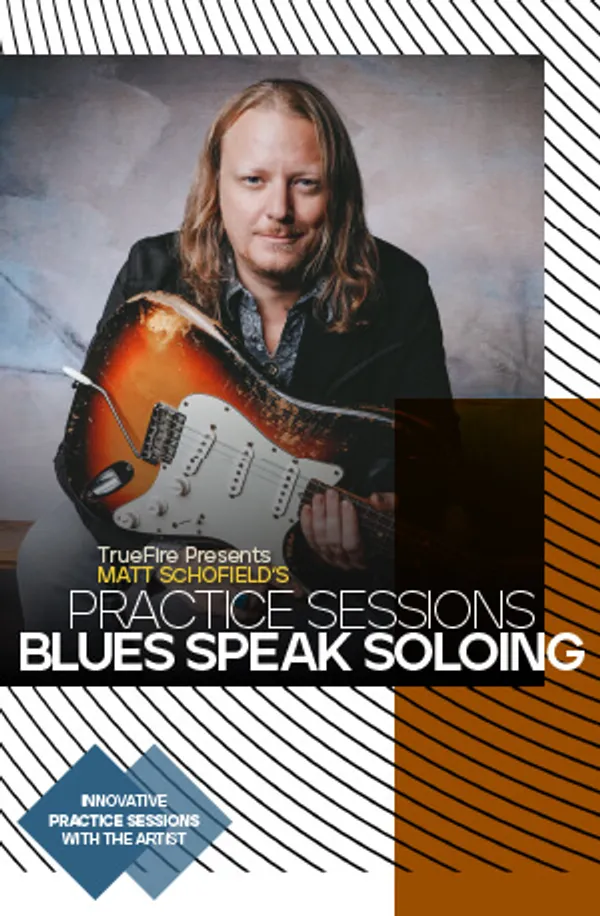
Matt Schofield’s Playing the Changes edition of BluesSpeak is your fast track and rite of passage into the melodic, ear-pleasing world of ‘playing the changes’ when soloing over the blues!

”Of course, phrasing, rhythm, and technique are all important -- and all that will come in time with practice -- but the one thing that can really make a difference, and make it immediately, is learning how to “play the changes.” While learning the scales and harmony behind the blues are vital, it comes down to playing the right note, at the right time. And that's what we’ll focus here in this edition of Blues Speak.”

Matt organized this course into 5 sections, each stocked with lessons and performance studies. You’ll play your way through the course applying all of the approaches covered in each section. You’ll wrap up the course with six full-length performance studies in a variety of common blues feels and keys by which time… you will confidently be playing the changes!

Matt will explain and demonstrate all of the key concepts and approaches along the way. You’ll get standard notation and tabs for all of the key examples and performances. Plus, you’ll be able to use TrueFire’s learning tool to sync the tab and notation to the video and can also loop or slow down the videos so that you can work with the lessons at your own pace. All of the backing tracks are included to work with on your own as well.

Grab your guitar and let's play the changes with Matt Schofield!

What you'll learn

  • Apply previously learned scales, chords, and approaches to real musical situations
  • Understand multiple scale choices for each chord in a blues progression
  • Develop ability to play scales in all keys across the entire neck
  • Develop melodic awareness over chord changes
  • Develop ability to play musically over different groove styles
Release date: 08/12/2019 • 2h 32m runtime
Start Course
Sample lessons
Albert Collins
Albert Collins
Concept & Approach
Albert Collins
Albert Collins
Performance: Demo
Albert Collins
Albert Collins
Playalong Exercise
The Diminished Device
Concept & Approach

What's included

63 lessons • 25 charts • 8 Jam Tracks

Blues Speak | Playing the Changes
Hello, I'm Matt Schofield and welcome to this "Playing the Changes" edition of Blues Speak.

Most of us start soloing over a blues using the minor pentatonic scale over the entire progression. Thankfully that scale gets us up and running quickly. But at some point, our ear tells us that there's something missing from our solos. Something that all of the great blues players are doing that we're not.

Of course, phrasing, rhythm, and technique are all important - and all that will come in time with practice - but the one thing that can really make a difference, and make it immediately, is learning how to "play the changes."

While learning the scales and harmony behind the blues are vital, it comes down to playing the right note, at the right time.

And that's what we'll focus here in this edition of Blues Speak.

I've organized this course into five sections. I'll start by taking you through three of my own influences that pioneered unique approaches to playing the changes - BB King, Albert Collins & Albert King.

In the second section, we'll explore a selection of go-to scales and modes for soloing and improvising over each chord in a common blues progression. We'll talk about the importance of focusing on the third degree of the scale, the power of the major pentatonic, and some ways I utilize diminished sounds over the changes.

The third section looks at the changes from another perspective, this time as clusters of chord tones - melodic material to draw from - so you can easily morph between chordal and single note lines, in the moment, anywhere on the neck...

The fourth section explores combining these two approaches while simultaneously expanding into more sophisticated changes to include six-two-fives, raised fives, diminished, and minor chords...

We'll wrap up the course with six full-length performance studies in a variety of common blues feels and keys. I'll first perform each solo and then break down the approaches I used to "play the changes."

All of the key examples are tabbed and notated and you'll have all of the backing tracks to work with. You can loop or slow down any of the videos so that you can work with the lessons at your own pace.

Grab your guitar and let's speak some more blues.
SECTION 1: Back to the Source
To play the blues expressively and convincingly, it's vital to study the early pioneers. Not only did they invent the vocabulary and melodic path for all blues playing that followed, they each offer a very singular and distinct sound that we can draw upon. Their deceptively simple styles can endlessly inspire and inform our own musical ideas, and offer a route to fresh sounds and techniques that we might not already utilize.

In this section, we're going to look at 3 of my favourite players. These guys have influenced me massively, and just about anyone else who has played blues and rock guitar since! Their music and playing still provides a wealth of inspiration and ideas to draw from.
Albert Collins
One of my earliest and biggest inspirations, from Texas: The Iceman – Albert Collins! Albert's unique, inventive and exciting playing contains so much to be inspired by. In this lesson, we're going to focus on how his use of a unique tuning brought out the sound of the blues scale with the added 6th degree. This can lead us to a fresh sound in our own playing, and melodically tie the first two changes in the blues scale together very nicely, and start to bring out the sound of the IV chord.
Albert Collins
Let's take a funky blues groove in the key of D and have go playing with the minor pentatonic with the 6th degree instead of the dominant 7th. We'll keep it simple to help our ears learn the sound of the scale, and where that 6th really really fits. We should always be following our ears and not just our fingers!
Albert Collins
Now we're going to trade back and forth using this sound of the pentatonic with the 6th. I'll play a "Collins-ish" line and try and play it back to me. We're keeping it simple and focusing on phrasing, timing, and subtle variations to develop a theme. And making sure we land that 6th in the right spot!
B.B. King
B.B. King – the one and only King of the Blues! Blues guitar, rock guitar and anything related wouldn't sound the same if it wasn't for B.B. He was the first electric player to really make it "sing!" You can't study B.B's playing too much! He was influenced by a combination of early acoustic delta bluesmen and (very!) early electric blues players, such as T-Bone Walker, and jazz guitarists such as Charlie Christian and Django Reinhardt. B.B. put it all together in the most beautiful way. As his playing evolved through the years, his sound and approach came to rely heavily upon the use of the major pentatonic and Mixolydian sounds. This lends a sweetness and sophistication, and leads us away from the same old minor pentatonic to the "B.B. box" position, which immediately grants us access to a much more melodic and colourful approach, and highlights the sound of the IV chord in the blues.
B.B. King
Here's a swinging mid-tempo shuffle where we can get stuck into making the guitar "sing" like the King! We not going to use too many notes. Our focus here is saying something with the notes we choose, and trying to bring out the sound of the changes with simple moves, bends and phrasing.

+ 56 more lessons

Start Course

Reviews

70 results

Inmobob

Verified buyer

06/23/26

Excellent quality and content.

danman917

Verified buyer

05/26/26

Fun class

This was a fun course that helped me get better at jamming and soling by really being able to lock on the chord changes. Plenty of fun lessons where you learn licks in the styles of the blue masters while you learn music theory behind what you’re doing.

JimmyWilliams

Verified buyer

03/01/26

It’s great!

Stevethewebb

Verified buyer

01/07/26

Great Insights

Love this course, has some great insights. Matt provides no nonsense information about getting the best out of blues playing options.

grattonjoel1

Verified buyer

09/16/25

Hear what you want to play

Blues is easy to play, but difficult to play well. This course helps you play blues well. It's more on the advanced side in terms of thinking your way through phrasing. It teaching you not to look for a note but to "hear" what you want to play.

Stop searching. Start improving with All Access.

Try 14 days free. Cancel any time.