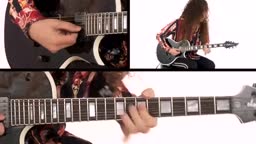
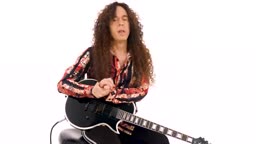
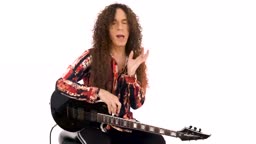
Okay, in this particular solo, I'd like to show you several things that I think of as weapons in the arsenal of making a solo exciting. These are things I would do, and I don't know if others think of these things in the same way. First, if you're the one controlling the song, whether you're writing it or deciding the solo section, it's beneficial to start with a key modulation. A key modulation gives that extra lift.
Usually, this happens in a song in the last chorus, where it's brought up by a half step, a whole step, or more. There are many ways to modulate the key, but if you can introduce your solo with a key modulation, it's like signaling the guitar player's entrance, making it shine even more.
In this case, the song is in G minor. Then there's a short break, and the solo starts in A minor. Right from the start of the solo, you have a whole step lift. This approach ensures your entrance stands out instead of just continuing in the original key. The beginning of a solo is essential; it's your primary opportunity to grab the audience's attention.
So, with a key modulation at the beginning, what else can we add? Well, there's also a break at the start of this solo. Listening to the rhythm, you can hear the pause, allowing the guitar solo to take the spotlight. So, you've got a break and a key modulation setting up the solo, stacking the odds in your favor. Now, to make the entrance even more captivating, let's consider the chord the song is based on.