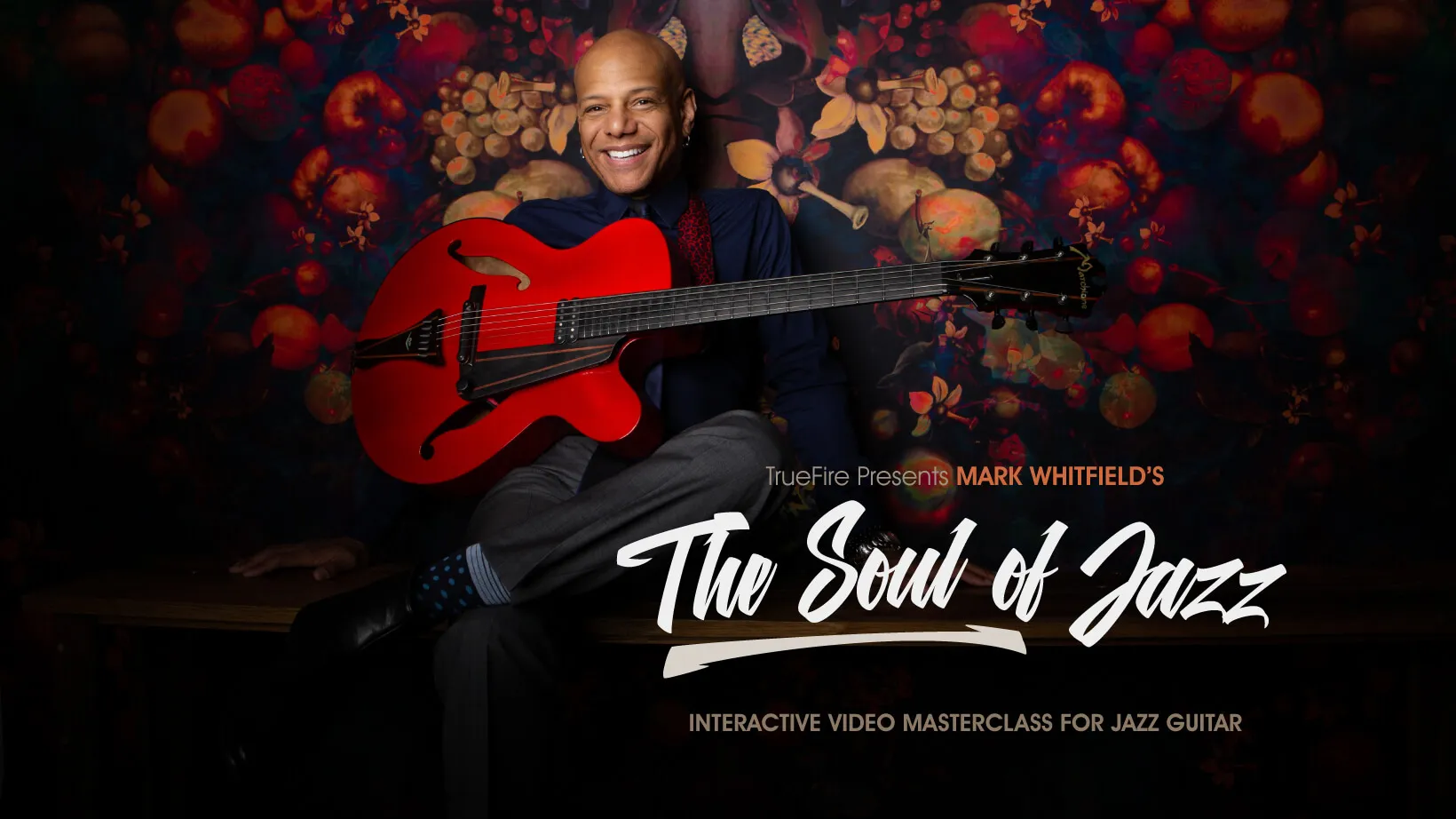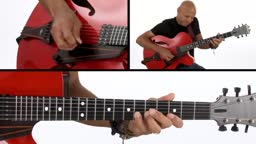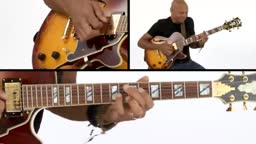
The Soul of Jazz

Interactive Video Masterclass on Soul Jazz Guitar

Marty FriedmanTommy EmmanuelSteve VaiEric GalesEric Johnson

Get this course and 1,000+ more with All Access

Try 14 days free. Cancel any time.

Purchase Individual Course for $9.99
The Soul of Jazz

About this course

The “soul” of jazz is a common thread that runs through virtually every style of contemporary music -- from neo-soul and modern funk to urban-driven-pop and R&B. While Mark Whitfield's roots and influences stem from what's considered straight-ahead traditional jazz, his interests lie in combining his early jazz influences with the innovations of today’s music.

In this course, you'll explore 10 musical “situations” that players may encounter today in a jam or in the studio on a recording project. Mark covers a variety of styles, tempos, and keys. For each situation, you'll start with just a rhythm track or particular groove that Mark has encountered himself in a performing or recording scenario.

Mark will explain what he's hearing and how that might trigger a creative approach. He’ll then demonstrate how he might complement that groove with a rhythm guitar part and solo -- both of which embrace what he calls the ‘soul’ of jazz. After the rhythm and soloing performances, Mark breaks them down emphasizing the techniques and creative approaches in play.

You'll play through situations incorporating minor one-six-two-five changes, Joe Henderson inspired major seven reharmonizations, a funky Curtis Mayfield inspired groove, summertime changes, bebop infused bossa nova, laid back ballads, and hip-hop inspired beats layered with arpeggiated motion and staccato straight/swing hybrids.

Mark will explain and demonstrate all of the key concepts and approaches along the way. You’ll get standard notation and tabs for all of the performance studies. Plus, you’ll be able to use TrueFire’s learning tools to sync the tab and notation to the video lesson. You can also loop or slow down the videos so that you can work with the lessons at your own pace. All of the backing tracks are included to work with on your own as well.

Grab your guitar and get into The Soul of Jazz with Mark Whitfield!

What you'll learn

  • Master the neo-soul approach to rhythm guitar pioneered by D'Angelo and collaborators
  • Apply these techniques to end songs, sets, or entire concerts
  • Improvise quiet outros that feel complete and satisfying
  • Develop the discipline to play sparse, interlocking rhythm parts
  • Develop soft playing technique that creates goosebumps
Release date: 11/21/2019 • 4h 56m runtime
Start Course
Sample lessons
Maximize the Changes
Improvisation: Performance
Maximize the Changes
Conceptual Analysis & Approach
Joe Hen's Major Seven Reharm
Situation Study 2
Creating Track Motion in Vamps
Comping: Performance

What's included

53 lessons • 20 charts • 8 Jam Tracks

The Soul of Jazz
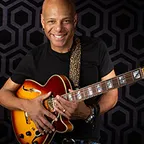
Hi, I'm Mark Whitfield. Welcome to The Soul of Jazz.

The "soul" of jazz is a common thread that runs through virtually every style of contemporary music -- from neo-soul and modern funk to urban-driven-pop and R&B.

While my roots and influences stem from what's considered straight-ahead traditional jazz, my interests lie in combining my early jazz influences with the innovations of today's music.

In this course, we'll explore 10 musical "situations" that players may encounter today in a jam or in the studio on a recording project. We'll cover a variety of styles, tempos, and keys.

For each ‘situation', we'll start with just a rhythm track or particular groove that I've encountered myself in a performing or recording scenario.

I'll explain what I'm hearing and how that might trigger a creative approach for me. I'll then demonstrate how I might compliment that groove with a rhythm guitar part and solo - both of which embrace what I call the ‘soul' of jazz.

After the rhythm and soloing performances, I'll break them down emphasizing the techniques and creative approaches in play.

We'll play through situations incorporating minor one-six-two-five changes, joe henderson inspired major seven reharmonizations, a funky Curtis Mayfield-inspired groove, summertime changes, a bebop infused bossa nova, laid back ballads, and hip-hop inspired beats layered with arpeggiated motion and staccato straight/swing hybrids.

All of the performances are tabbed and notated and you'll be able to sync the tab and notation to the video using TrueFire's learning tools. I also include the backing tracks and you'll be able to loop or slow down the videos so you can work with the lessons at your own pace.

Grab your guitar and let's get started.
Minor 1625 Sugar
In my experience, the study of classic jazz chord progressions has proven to be invaluable both as a compositional tool and more importantly as a harmonic guide to lead me through melodic creation and harmonic-based improvisations.

Here, in "Situation #1", I demonstrate how the use of the classic "minor 1-6-2-5" progression allows me to accomplish all of these tasks.

You see that I chose the key of G minor because it's timbre matches that of the drum loop sound. Then follow along as I create a companion melody and construct a solo pulling all these elements together.
Miss It When Its Gone
It's easy to see right away that I like to employ the use of motifs in my comping approach. These additional melodic elements can turn ordinary comping into an essential part of the performance of a song that will absolutely be "missed when it's gone"!
Miss It When Its Gone
It's easy to see right away that I like to employ the use of motifs in my comping approach. These additional melodic elements can turn ordinary comping into an essential part of the performance of a song that will absolutely be "missed when it's gone"!
Maximize the Changes
I "jump right in" to the track with a quick melodic statement. I repeat the first part of the melody then I allow the chord progression to lead me through an improvisational exploration that builds in intensity with every 4 bar section. This is a great formula to employ because I want my guitar solo to be interesting & exciting whether it's 8 bars or something much longer without becoming repetitive or anticlimactic.
Maximize the Changes
I "jump right in" to the track with a quick melodic statement. I repeat the first part of the melody then I allow the chord progression to lead me through an improvisational exploration that builds in intensity with every 4 bar section. This is a great formula to employ because I want my guitar solo to be interesting & exciting whether it's 8 bars or something much longer without becoming repetitive or anticlimactic.
Joe Hen's Major Seven Reharm
Here I illustrate how the use of a short chord progression can enhance the impact of a simpler rhythm track and how emphasizing the bass note of each can fill the space left by a missing bass drum creating and filling space in a cool and innovative way.

+ 46 more lessons

Start Course

Reviews

7 results

Ziocesco

Verified buyer

12/15/21

Just amazing!!!
Dave58

Verified buyer

09/06/21

Amazing

What do we have here. I already follow the Marksman from his first album from 1990. I think his melodic playing style is fabulous. I was just curious if this could also be replayed in retrospect, but it isn't yet. I did learn a lot of theory from this course and learning the complicated fingerings. But he has a very fast technique. He is amazing. This takes a lot of time to master.

sambapati

Verified buyer

06/27/21

fantastic approach

This course does not only give you insight into how Mark is playing but it analysis his way of playing in a meticulous way. Especially liked the chordal approach when improvising. A must have for any Jazz guitarist.

Joël J.

05/29/21

Very inspiring

Of course Mark is a great jazz player but he also can teach you how to play very convincing rhythm as well as melodic soloing in a very practical way.

5peter5000

Verified buyer

05/24/21

Ears candy! Mark's feeling for rhythm and groove is nothing but great inspiration for me!

Stop searching. Start improving with All Access.

Try 14 days free. Cancel any time.