Art of the Jazz Duo: Blues

Performance & Arrangement Strategies for Jazz Guitar Duets

Marty FriedmanTommy EmmanuelSteve VaiEric GalesEric Johnson

Get this course and 1,000+ more with All Access

Try 14 days free. Cancel any time.

Purchase Individual Course for $19.99
Art of the Jazz Duo: Blues

About this course

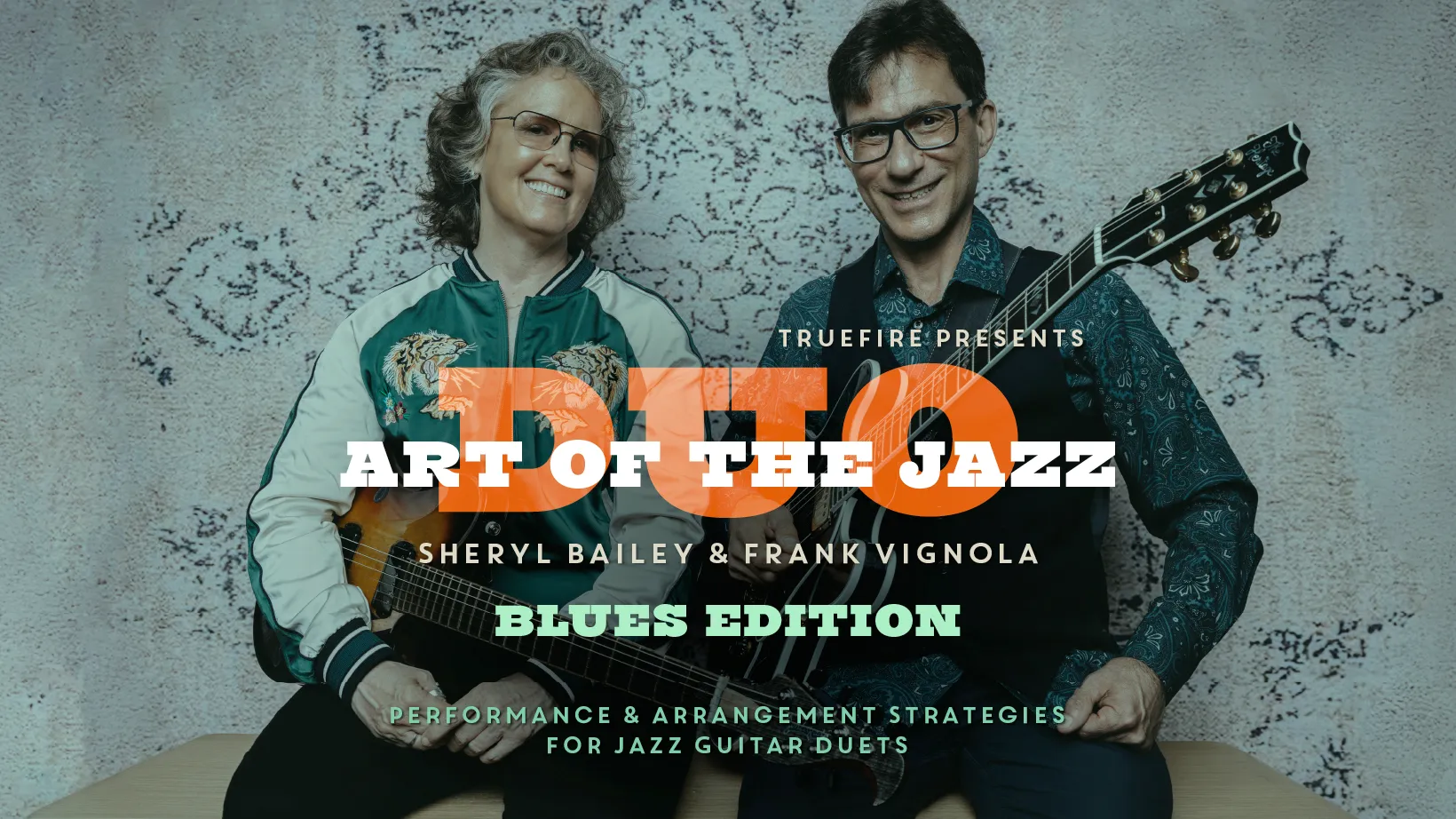
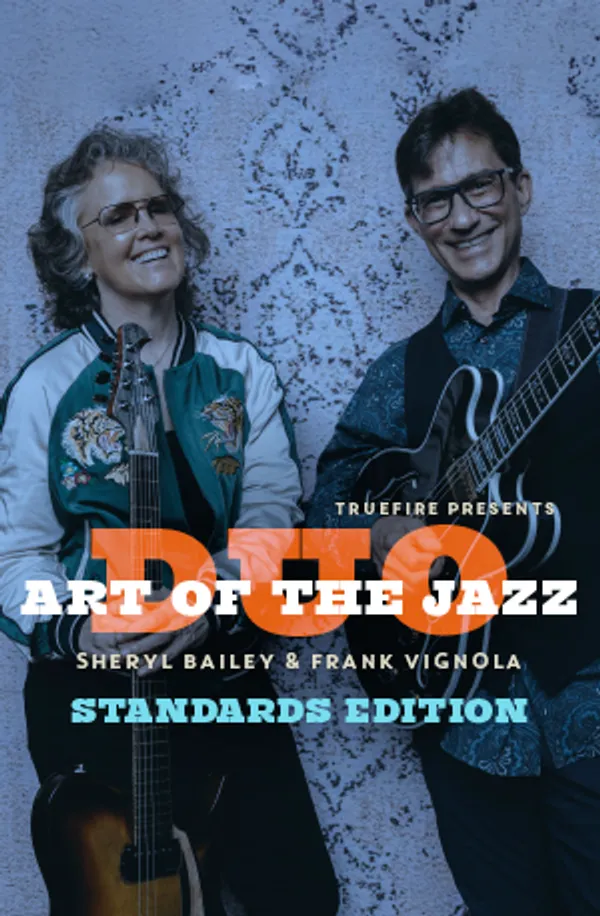
Playing in a jazz duo is a unique craft—one that calls for its own set of skills, techniques, and chemistry. In Art of the Jazz Duo: Blues Edition, jazz masters Sheryl Bailey and Frank Vignola take you inside the world of jazz blues duets, showing you how to create rich, dynamic performances with just two guitars.

Whether you’re comping, soloing, or trading lines, you’ll learn how to lock in with another guitarist and build a full, bluesy sound that makes every jam come alive.

First, Sheryl and Frank will break down how they play and improvise classic jazz blues song forms with a rhythm section. Then, they’ll strip it down to just two guitars, revealing the arrangement, interaction, and groove that make a duo performance feel complete.

You’ll explore:

  • How to create textures—weaving lines and comping chords seamlessly
  • Keeping solos fresh, fluid, and interactive
  • Feeling the beat together—groove, dynamics, and timing in a duo setting
  • Listening, reacting, and playing off each other
  • The art of duo arrangement and practice strategies
Every section ends with a play-along session featuring both Sheryl and Frank, so you can jam along and internalize the feel. With TrueFire’s interactive tools—tab-sync, slow-mo, looping, and fretboard animations—you’ll have everything you need to play at your own pace and lock in every concept.

"Playing in a duo is different from playing with a rhythm section," says Frank Vignola.

"So when the rhythm section goes home and it’s just you and your guitar buddy, the same fundamentals still apply," adds Sheryl.
"We’re going to show you how to take those fundamentals and make them your own."

So grab your guitar and get ready to learn, jam, and elevate your duo chops with Sheryl and Frank. Let’s get started!


What you'll learn

  • Apply melodic comping techniques instead of block chord accompaniment
  • Understand how to interact with a rhythm section
  • Learn to play as part of a jazz guitar duo
  • Develop listening skills for ensemble playing
  • Gain confidence and flexibility in various jazz playing situations
Release date: 03/13/2025 • 2h 46m runtime
Start Course
Sample lessons
A Blues for Birdland
Overview
A Blues for Birdland
Performance
Comping | Breakdown Pt. 1
A Blues for Birdland
Soloing | Breakdown Pt. 2
A Blues for Birdland

What's included

42 lessons • 10 charts • 2 Jam Tracks

Art of the Jazz Duo: Blues Edition
Hi, I'm Frank Vignola. And I'm Sheryl Bailey. Welcome to the Blues Edition of The Art of the Duo. There are some differences when you play with a rhythm section as opposed to a duo. So after the rhythm section has gone home and you're left with your buddy to play some tunes, those same concepts that you used playing with the rhythm section apply to the duo, but in a different way.

In this course, how it works is we give you an overview of what we're going to play, go over the basic song form, some of the key elements, what to listen for, and then some background on each concept of how we approached improvisation, how we approach comping, how we approach the arrangement, and how to practice. And we're also going to cover something that isn't covered too often: how to feel the beat when playing in a duo.

Okay, so grab your guitar, tune it up, and let's get started learning about the art of the duo.
SECTION 1: Playing with a Rhythm Section
In this lesson series, we’ll explore essential jazz guitar concepts like listening, time, and interaction to help you feel more confident, fluid, and flexible in various musical settings. We’ll start by working with a rhythm section—playing with a bassist and drummer—to develop a strong sense of groove, comping, and feel. Then, we’ll apply these ideas in a guitar duo, digging into how to listen, support each other, and create space in the music. Learning to truly feel the beat and interact musically is something that can't be taught from a book, and above all, we emphasize the importance of listening—it shapes your playing, encourages restraint, and ultimately makes the music stronger. We’ll start things off with a performance and then break it all down in detail.
Let's Be Frank with Rhythm Section
In this lesson series, we’ll be exploring the tune Let's Be Frank, a minor blues in A-flat minor that Sheryl wrote for me—thank you, it’s a great tune. I love that it’s in A-flat minor because it pushes us beyond the usual keys and brings a whole different vibe compared to something like G minor, even though it’s just a fret away. This 12-bar minor blues follows a classic structure with the I minor, IV minor, and a raised fifth that resolves back down, giving it a strong blues feel. It even throws in an A7 at the end, which I love for its unexpected twist leading into the solo. So check it out—we’ll start things off with a performance and then break it all down in detail.
Let's Be Frank with Rhythm Section
In this lesson series, we’ll be exploring the tune Let's Be Frank, a minor blues in A-flat minor that Sheryl wrote for me—thank you, it’s a great tune. I love that it’s in A-flat minor because it pushes us beyond the usual keys and brings a whole different vibe compared to something like G minor, even though it’s just a fret away. This 12-bar minor blues follows a classic structure with the I minor, IV minor, and a raised fifth that resolves back down, giving it a strong blues feel. It even throws in an A7 at the end, which I love for its unexpected twist leading into the solo. So check it out—we’ll start things off with a performance and then break it all down in detail.
Let's Be Frank with Rhythm Section
In this lesson series, we’ll be exploring the tune Let's Be Frank, a minor blues in A-flat minor that Sheryl wrote for me—thank you, it’s a great tune. I love that it’s in A-flat minor because it pushes us beyond the usual keys and brings a whole different vibe compared to something like G minor, even though it’s just a fret away. This 12-bar minor blues follows a classic structure with the I minor, IV minor, and a raised fifth that resolves back down, giving it a strong blues feel. It even throws in an A7 at the end, which I love for its unexpected twist leading into the solo. So check it out—we’ll start things off with a performance and then break it all down in detail.
A Blues for Birdland with Rhythm Section
In this lesson series, we’ll be exploring Blues for Birdland, a three-quarter-time blues written by Sheryl, inspired by the great Pat Martino’s waltz-like tunes. It’s a 12-bar blues, but not your typical one—it features some unexpected movement, like a shift down to G7, then G-flat7 with a D-flat minor seven, followed by C minor seven, F7, and a smooth downward motion into the final turnaround. It’s a swinging three-four blues with a great progression that you can apply to other tunes, whether in three-four or four-four. So enjoy—we’ll start things off with a performance and then break it all down in detail.
A Blues for Birdland with Rhythm Section
In this lesson series, we’ll be exploring Blues for Birdland, a three-quarter-time blues written by Sheryl, inspired by the great Pat Martino’s waltz-like tunes. It’s a 12-bar blues, but not your typical one—it features some unexpected movement, like a shift down to G7, then G-flat7 with a D-flat minor seven, followed by C minor seven, F7, and a smooth downward motion into the final turnaround. It’s a swinging three-four blues with a great progression that you can apply to other tunes, whether in three-four or four-four. So enjoy—we’ll start things off with a performance and then break it all down in detail.

+ 35 more lessons

Start Course

Reviews

2 results

bernard13t

Verified buyer

06/07/25

Meany things to learn

I often go to Parisian bars to listen to two guitars and a double bass band. This course addresses this topic well. The most interesting thing is that during a concert I can't talk to the musician and ask him what he thinks when he plays. Here I have access to this fundamental aspect.

Sindibad

04/04/25

Art of the Jazz Duo: Blues

This lesson develops musical ear with the partner who allows you to hang on.

Stop searching. Start improving with All Access.

Try 14 days free. Cancel any time.