
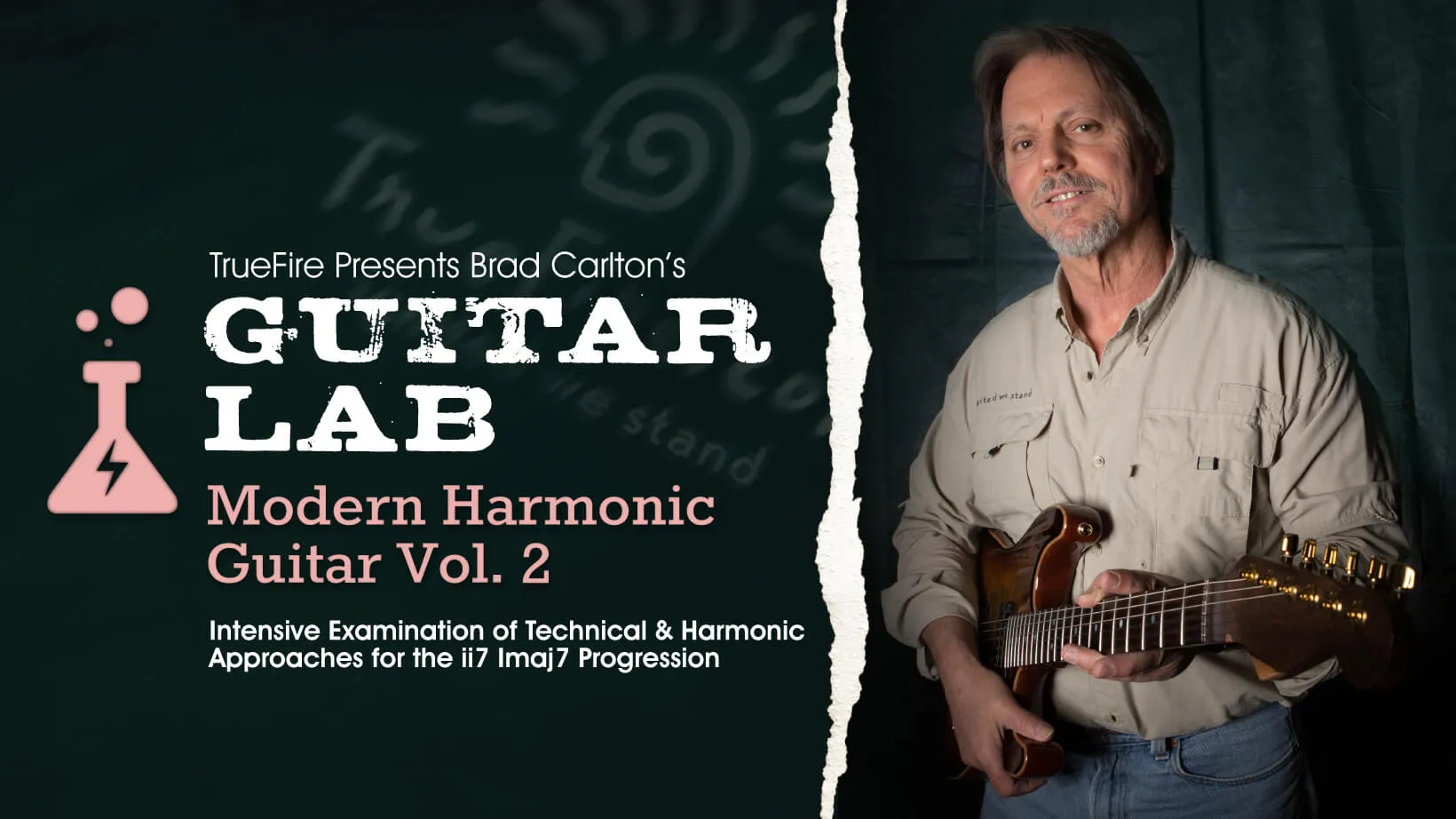
Guitar Lab: Modern Harmonic Guitar Vol. 2
Intensive Examination of Technical & Harmonic Approaches for the ii7 - Imaj7 vamp in D Major




Get this course and 1,000+ more with All Access
Try 7 days free. Cancel any time.
About this course
Hi, I'm Brad Carlton. In this second volume of Guitar Lab: Modern Harmonic Guitar, we'll be exploring different approaches for comping and soloing over a ii7 - Imaj7 vamp in D major. Some of the topics discussed are close voicings, drop 2 voicings, open strings, thinking off the third of the chord, intervals, and modal options.
What you'll learn
- Target thirds and fifths in harmonic soloing
- Prepare for exploring various chord voicings over a Latin groove
- Convert close voicings to drop-2 voicings by dropping the second voice down an octave
- Review foundational concepts from Volume 1 including guide tones and voice leading
- Expand harmonic vocabulary for contemporary soloing
Release date: 03/01/2019 • 1h 36m runtime
Sample lessons
Volume 1 Review
Track Analysis

Voicings Pt. 1
Close Voicings
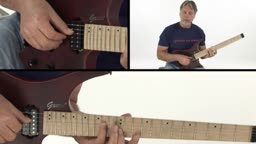
Voicings Pt. 2
Drop 2 Voicings
What's included
12 lessons • 10 charts • 1 Jam Tracks
Hi, I'm Brad Carlton. In this second volume of Guitar Lab: Modern Harmonic Guitar, we'll be exploring different approaches for comping and soloing over a ii7 - Imaj7 vamp in D major. Some of the topics discussed are close voicings, drop 2 voicings, open strings, thinking off the thrid of the chord, intervals, and modal options.
This lesson will review the Em7 - Dmaj7 jam tracks in terms of rhythm and harmonic implications.
Close voicings are worthy of study as they provide a keyboard type sound and they are also aligned with the theoretical formulas for chords.
This lesson will explain and demonstrate drop 2 voicings which are a basic tool for the modern harmonic guitarist.
Open strings can provide notes in chord voicings which would not ordinarily be available. This lesson will provide several examples of this technique.
Because of the tertiary nature of harmony, it's efficient to think off of the third of a chord when extending the harmony.
This lesson will demonstrate several voicings and how they are constructed.
+ 5 more lessons
Reviews
No reviews yet
Complete this course and be the first to share your experience.
Stop searching. Start improving with All Access.
Try 14 days free. Cancel any time.
