Closer Look: Creating a Rock Guitar Instrumental (JamPlay)
Dive into Rock Instrumentals with Prashant Aswani: Create, Play, Conquer!





Get this course and 1,000+ more with All Access
Try 7 days free. Cancel any time.

About this course
In the electrifying world of rock music, creating a instrumental requires an understanding of melodic structure, harmony, and the ability to craft unforgettable, expressive guitar solos. Guitarists must develop a keen sense of how to build and resolve their solos within the context of an instrumental track.
Prashant Aswani’s "Closer Look: Creating a Rock Guitar Instrumental" is your ticket to mastering this art. Known for his intense and soulful style, Prashant breaks down the structure of an instrumental track, explains how to approach constructing each section, demonstrates cutting-edge techniques, and guides you through practice sessions and playalongs.
“We're going to take a closer look at building a rock guitar instrumental. Writing music has been something that has been near and dear to me since I first started playing guitar. As I sat in my room for hours and hours and hours, days upon days, and I started just kind of making my own sounds with the guitar.
And fast forward, you know, I started writing my first songs. You know, once I got a little bit of facility on the guitar. So I've written a guitar rock instrumental that encompasses a verse, a chorus, and an intro, and I use it as an intro. Now, I developed it to that extent because those are going to be the core features of the song.
I'm looking forward to showing you guys these techniques and practicing with you on this course and journey to rock instrumental guitar.”
With TrueFire’s interactive learning tools at your disposal, you can personalize your workspace and learn at your own pace. The demonstrations and performances are tabbed, notated, and synced to videos with controls for looping, slow motion, fretboard animation, and many other tools designed to accelerate the learning process.
You’ll also get tab and standard notation files to print out, Guitar Pro files, and all of the backing tracks to practice with.
Grab your guitar, and let’s take a closer look at creating a rock guitar instrumentals with Prashant Aswani!
Prashant Aswani’s "Closer Look: Creating a Rock Guitar Instrumental" is your ticket to mastering this art. Known for his intense and soulful style, Prashant breaks down the structure of an instrumental track, explains how to approach constructing each section, demonstrates cutting-edge techniques, and guides you through practice sessions and playalongs.
“We're going to take a closer look at building a rock guitar instrumental. Writing music has been something that has been near and dear to me since I first started playing guitar. As I sat in my room for hours and hours and hours, days upon days, and I started just kind of making my own sounds with the guitar.
And fast forward, you know, I started writing my first songs. You know, once I got a little bit of facility on the guitar. So I've written a guitar rock instrumental that encompasses a verse, a chorus, and an intro, and I use it as an intro. Now, I developed it to that extent because those are going to be the core features of the song.
I'm looking forward to showing you guys these techniques and practicing with you on this course and journey to rock instrumental guitar.”
With TrueFire’s interactive learning tools at your disposal, you can personalize your workspace and learn at your own pace. The demonstrations and performances are tabbed, notated, and synced to videos with controls for looping, slow motion, fretboard animation, and many other tools designed to accelerate the learning process.
You’ll also get tab and standard notation files to print out, Guitar Pro files, and all of the backing tracks to practice with.
Grab your guitar, and let’s take a closer look at creating a rock guitar instrumentals with Prashant Aswani!
What you'll learn
- Understand how to adapt vocal song structures for instrumental compositions
- Understand the process of creating a complete rock guitar instrumental
- Learn arrangement techniques to maintain listener interest without lyrics
- Learn when and how to use modulation as a transitional tool
- Understand multi-guitar arrangement strategies (doubling vs separate parts)
Release date: 07/03/2024 • 1h 08m runtime
Sample lessons
Full Song Performance
Reference Video of All Guitar Parts
The A Section | Rhythm Left Channel
Concept & Demonstration
What's included
13 lessons • 10 charts • 2 Jam Tracks
Hey everyone, this is Prashant Aswani, and we're going to take a closer look at building a rock guitar instrumental. Writing music has been near and dear to me since I first started playing guitar. I used to sit in my room for hours, day after day, creating my own sounds with the guitar.
Fast forward to when I started writing my first songs pretty quickly once I got a bit of proficiency on the guitar. I've written a rock guitar instrumental that includes a verse, a chorus, and an intro, which I now use as an introduction. I developed it to this extent because these are the core features of the song.
I'm looking forward to showing you these techniques and practicing with you on this course and journey to rock instrumental guitar.
Fast forward to when I started writing my first songs pretty quickly once I got a bit of proficiency on the guitar. I've written a rock guitar instrumental that includes a verse, a chorus, and an intro, which I now use as an introduction. I developed it to this extent because these are the core features of the song.
I'm looking forward to showing you these techniques and practicing with you on this course and journey to rock instrumental guitar.
Let's take a look at the full performance of the tune!
In this lesson, we'll dive into creating a rock instrumental guitar track. Making an instrumental is much like making a vocal track, minus the lyrics. Without lyrics, connecting with your audience can be tricky, but I’ll show you techniques to bridge that gap. We’ll focus on form, using structures common in pop songs—like verses, choruses, and bridges—and adapt them for instrumental music. We’ll also discuss arrangement, ensuring your track remains interesting and engaging through familiar yet varied sections. I'll guide you through an instrumental piece I composed, explaining my use of musical hooks, key modulation, and panning effects to maintain listener interest. As we learn each part of the song, I'll share conceptual insights and philosophies to keep your compositions exciting. Grab your guitars, and let’s get started!
Alright, let's dive into the intro of our song. First things first, tune your guitar to drop D. This means taking your low E string and tuning it down a whole step to D, giving you D, A, D, G, B, and E. This creates a bar chord with an open string, lending to unique fingerings and a deeper, darker vibe. For the intro, we'll use the open D string to create a drone, inspired by Indian classical music, where a drone sets a tone under a soloist. I'll guide you through the notes and rhythms, emphasizing the importance of maintaining a groove with precise picking. We'll discuss the interplay between the left and right hands, and how even simple, complementary parts can accentuate a track. Composing distinct parts, whether simple or complex, is crucial to creating hooks that draw listeners in. Next up, we'll break down the left channel of the A section.
Okay, so let's get into the meat of the tune. In the A section, which I consider a riff or hook, we're going to cover some cool techniques that might take a bit of practice, but they’re really fun and versatile once you get the hang of them. We start with a drop D tuning and begin on the one, playing a series of plucked and muted notes to create a balanced sound between the chord and the open D string. I'll show you how to sustain the D while highlighting the chord, and then we'll move through a series of changes, including a shift to a B flat and a turnaround lick. We’ll explore how changing root notes keeps the riff dynamic and interesting. Plus, I’ll share some tricks for capturing the listener's attention, like cutting the turnaround to create impact. We’ll also cover modulation to set up the chorus, making it feel like home. The goal is to apply these techniques to create memorable melodies and hooks in your instrumental compositions, just like in a vocal tune. Stick with it, and I'll see you in the next lesson where we’ll dive even deeper!
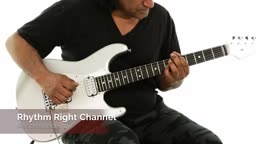
Alright, let's tackle the right channel of the A section. This part might sound simple, but it’s actually quite complex because there's a lot of space to manage. The reason I chose to play a different part on the right side, rather than doubling the left side, was to enhance the rhythm of the left channel without making it too busy. The left channel is very rhythmic and stop-time heavy, so keeping the right channel simpler helps the melody shine through. Remember, there’s no right or wrong here—if you feel good about what you write, it’s probably great.
In this lesson, we're diving into the chorus of a tune, aiming for something impactful by incorporating stop-time and harmony, especially in the Drop D tuning which I love. You'll notice the fingerings may differ slightly, but embrace the process. We'll explore a tricky technique involving three-note chords with a crucial top note to enhance the melody. Focus on muting the strings correctly to avoid hitting unwanted notes. The chorus features a driving 16th note bass line paired with the rhythmic stop-time to create impact. Double the rhythm on the track to let the melody shine. Practice transitioning smoothly between sections, and don’t forget to write and experiment with new parts. Keep writing regularly, it’s a muscle that keeps your creativity flowing. Enjoy the journey and have fun with the track!
+ 6 more lessons
Reviews
No reviews yet
Complete this course and be the first to share your experience.
Stop searching. Start improving with All Access.
Try 14 days free. Cancel any time.