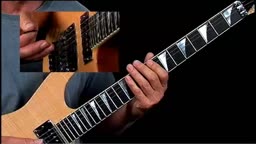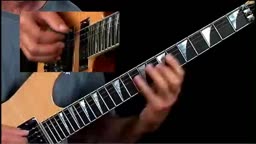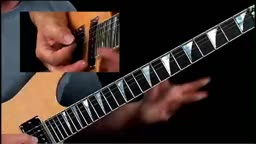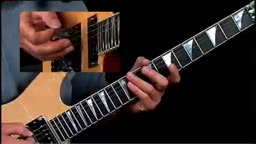
Guitar Lab: The Golden Arp

Exploring Add 9 Harmonic and Melodic Applications

Marty FriedmanTommy EmmanuelSteve VaiEric GalesEric Johnson

Get this course and 1,000+ more with All Access

Try 14 days free. Cancel any time.

Purchase Individual Course for $5.00
Guitar Lab: The Golden Arp

About this course

Add 9 voicings and arpeggios (root, third, fifth and ninth steps of the major scale) are beautiful sounding and highly useful musical devices. As a chord voicing, the add 9 presents a transparent and rich sonority that enhances the harmonic textures in a diverse range of styles. When applied as an arpeggio, the Add 9 formula forms the basis of countless melodies and serves extraordinarily well as a foundation for motivic development.

The Golden Arp is a comprehensive examination of Add 9 voicings and arpeggio applications. TrueFire's educational guru, Brad Carlton pulls out all of the stops in this intensive study program. The course thoroughly covers all of the fretboard options for voicing and fingering Add 9 chords, inversions and arpeggios. Carlton also illustrates how to choose and apply a particular position or voicing when composing and improvising.
All in all, everything you need to know about the Golden Arp is covered extensively across the following sections and video segments:

Golden Arp Theory
4 Notes-Per-String Forms
> Root Position
> 1st Inversion
> 2nd Inversion
> 3rd Inversion

Three-One Forms
> Root Position
> 1st Inversion
> 2nd Inversion
> 3rd Inversion

Two-Two Forms
> Root Position
> 1st Inversion
> 2nd Inversion
> 3rd Inversion One-Three Forms
> Root Position
> 1st Inversion
> 2nd Inversion
> 3rd Inversion

One-Two-One Forms
> Root Position
> 1st Inversion
> 2nd Inversion
> 3rd Inversion

One Note-Per-String Forms
> Root Position
> 1st Inversion
> 2nd Inversion
> 3rd Inversion

CAGED Forms
Two-One-One Forms
> Root Position
> 1st Inversion
> 2nd Inversion
> 3rd Inversion

One-One-Two Forms
> Root Position
> 1st Inversion
> 2nd Inversion
> 3rd Inversion

Permutations of Root
> 1st Inversion
> 2nd Inversion
> 3rd Inversion

Close Voicings
> Root Position
> 1st Inversion
> 2nd Inversion
> 3rd Inversion

Drop 2 Voicings
> Root Position
> 1st Inversion
> 2nd Inversion
> 3rd Inversion

Drop 3 Voicings
> Root Position
> 1st Inversion
> 2nd Inversion
> 3rd Inversion Drop 2, 3 Voicings
> Root Position
> 1st Inversion
> 2nd Inversion
> 3rd Inversion

Drop 3, 4 Voicings
> Root Position
> 1st Inversion
> 2nd Inversion
> 3rd Inversion

Drop 2, 4 Voicings
> Root Position
> 1st Inversion
> 2nd Inversion
> 3rd Inversion

Drop 4 Voicings
> Root Position
> 1st Inversion
> 2nd Inversion
> 3rd Inversion

Drop 2, 3, 4 Voicing
> Root Position
> 1st Inversion
> 2nd Inversion
> 3rd Inversion

Root as First Voice
> 9th as First Voice
> 3rd as First Voice
> 5th as First Voice

E add 9, C add 9 Vamp

What you'll learn

  • Navigate between close and drop voicings with the same melody note
  • Construct drop 2 voicings in all inversions (root, first, second, third)
  • Construct drop 3-4 voicings in all four inversions
  • Understand interval structures within each inversion
  • Recognize embedded triads within add 9 voicings
Release date: 11/25/2009 • 4h 54m runtime
Start Course
Sample lessons
Theory
Theory
Lesson
Two - Two Forms
Two - Two Forms
2nd. Inversion
One - Three Forms
One - Three Forms
1st. Inversion
One - Two - One Forms
Root Position

What's included

87 lessons • 74 charts • 3 Jam Tracks

Golden Arp
A common problem that students encounter is "note option anxiety". By that I mean they learn scales and become overwhelmed with note choices or they try to play so many different notes that they disregard phrasing and miss chord changes.

This lesson involves an in-depth study of Add 9 arpeggios which will deal with this "note option anxiety". The Add 9 arpeggio is a wonderful melodic tool consisting of the root, third, fifth and ninth steps of the major scale. It is the skeletal framework for playing lyrical melodies and it's transparent harmonic qualities are very appealing. The fact that you are dealing with a four note entity instead of a seven note scale further enhances your phrasing and note permutation accessibility.

This lesson will thoroughly cover the Add 9 arpeggio in an organized fashion based on layouts involving note-per-string forms. This will help you "see" the information on the fingerboard in a variety of ways thus helping you develop your own sound. Some of these arpeggios will be quite demanding because of the stretching that is required, so take your time and choose whatever is comfortable for you at this time.
Theory
The Add 9 arpeggio consists of four notes: the root, third, fifth and ninth steps of the major scale. The ninth is the octave of the second scale degree so we will think in terms of a condensed arpeggio, ie 1 2 3 5. This places all four notes within one octave.

Consult example one to see which scales the Add 9 arpeggio is a subset of. As you can see, 1 2 3 5 is a subset of four different scales. The Ionian 1 2 3 4 5 6 7 , the Lydian 1 2 3 #4 5 6 7, the mixolydian 1 2 3 4 5 6 b7. What this means is that everything you learn in this group of lessons can be used when dealing with these four scales. You may add other notes from the prevailing tonality to color the Add 9 arpeggio to convey the harmonic color of your choice.

By thinking in terms of note subsets, you can then thoroughly research all applications of note groups. Be sure to apply this principle to everything you learn.

4 Notes-Per-String Forms
This lesson deals with four notes-per-string forms of the Add 9 arpeggio. Example two shows this in both tab and diagram form. The advantage of laying out an arpeggio along the string axis is that you can see the intervals quite clearly. Let's look at the first measure of example two, the open 6th string is the root, the F# in the second fret is the 9, the G# in the fourth fret is the 3 and the B in the seventh fret is the 5. Your fretting hand is stretched out to cover the 9 with your first finger, the 2 with your second finger and the 5 with your fourth finger. You may then tap the octave E (12th fret 6th string) if you so desire.

Let's observe the intervals: between the root and 2nd (9th) there will always be a major second interval (one whole step, 2 frets); between the 2 and 3 there will always be another major second interval; between the 3 and 5 there will always be a minor third interval (one and a half steps, 3 frets) and between the 5 and root there will always be a perfect fourth interval (2 and a half steps, 5 frets). Memorize these intervals as you will be able to apply them in all the various string layouts of the add 9 arpeggio.

This is a layout of a root position Add 9 arpeggio where the root is an open string and the form is 4 notes-per-string.

Example two shows all six arpeggios where the open string is the root. Not only can you play this 4 notes-per-string form with slurs and tapping but you will see demonstrations of how to apply legato slides and bending to this arpeggio form.

4 Notes-Per-String Forms
This lesson demonstrates the Add 9 arpeggio in a four notes-per-string form where the open string is the 9(2). Look at example three. You can see how the layout of the arpeggio is 2 3 5 1 and then the octave 2.

In traditional theory, a major triad is said to be in 1st inversion if the 3rd of the chord is the lowest voice. I will be changing that definition to accommodate the condensed Add 9 arpeggio formula 1 2 3 5. 1 2 3 5 is root position, 2 3 5 1 is 1st inv, 3 5 1 2 is 2nd inversion and 5 1 2 3 will be 3rd inversion.

You will see in example 3 that the intervals remain consistent as described in lesson 2. You are just starting on the 2nd instead of the root. Try to "see" the entire Add 9 arpeggio along the string axis.

4 Notes-Per-String Forms
Example 4 will show you the tab and diagram layouts of Add 9 arpeggios in 2nd inversion. This means the open string will function as the third. An easy way to determine the root of these forms is to remember the root will always be in the 8th fret. The available arpeggios from 6th string through 1st string would then be CAdd 9, FAdd 9, BbAdd 9, EbAdd 9, GAdd 9 and CAdd 9.

This 4 notes-per-string layout of the 2nd inversion Add 9 arpeggio will always be as follows: The open string will be the 3, the 5th fret will be the 5, the 8th fret will be the root and the 10th fret will be the 9(2). Again try to see the complete Add 9 arpeggio in terms of a shifting along the string axis of the original root pos. form.

4 Notes-Per-String Forms
Our final inversion of the Add 9 arpeggio is third inversion. Viewing it as a four notes-per-string form as shown in ex. 5 you will see that the open string will always be the 5, the 5th fret will always be the root, the 7th fret will always be the 9(2) and the 9th fret will always be the 3rd.

This form is very useful as the open string is the 5. The 5 is a great pickup note in a melodic line. Also from a technical standpoint, this form is less demanding on your fretting hand than the other three inversions.

I will demonstrate utilizing open drone strings to create textures when playing these 4 notes-per-string Add 9 arpeggios in 3rd inv. For example, if you are playing the arpeggio on the 3rd string, the chord is CAdd 9. You could use the 1st string open as a drone which would be functioning as the 3 of the chord. Be sure to explore this concept on your own.

Three - One Forms
Now we will change the layout of the Add 9 arpeggio to a "three-one" form. What this means is that there will be three notes on the lower string and one note on the next highest string. This will enable you to play the arpeggio with just your fretting hand (no tapping needed). It also reveals symmetrical fingerings.

Look at example 6. Measure one shows the root position EAdd 9 arpeggio on the 6th and 5th strings. Notice how all we have done is move the 5 (from example 2) over to the 5th string.

Measure two mirrors measure one because it is just one octave higher. Next notice measures 3 and 4 in example 6. The fingering never changes because you're always playing on strings tuned a perfect fourth apart (5 frets). That's because the 3rd and 2nd strings are tuned a major third apart. Keep this principle in mind as it will serve you in all your studies.

+ 80 more lessons

Start Course

Reviews

3 results

Ohio5665

Verified buyer

02/10/23

Great course by Brad Carlton! really opened up my thinking and showed me new ideas. Thank you!

JohnSmithers

Verified buyer

04/16/21

Interesting

I chose this course,as it gave me various insights into voicings and add 9s.The material is very interesting and well layed out.Having Brad Carlton as your teacher always helps and this course is to be recommended for all players looking to go that bit further.

Carsten

10/06/18

The Golden Chord

I got this course out of pure curiosity cause the add9 is probably my favorite chord apart from the sus2/4 chords. The course is quite intense but broken down in lots of segments so you can choose what to work on depending on your personal interest.I am still busy working on it and probably will be for a long time.Apart from getting lots of melodic ideas this course improves my fretboard knowledge a lot and there are some pretty wild stretches in some chord voicings so even advanced players might get a challenge playing these voicings with a clean tone.Highly recomended!

Stop searching. Start improving with All Access.

Try 14 days free. Cancel any time.