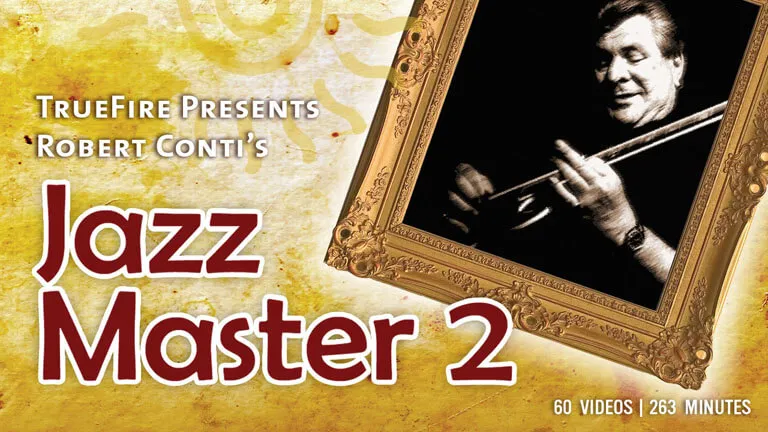
Jazz Master 2

Improvisational soloing over a Latin jazz guitar feel

Marty FriedmanTommy EmmanuelSteve VaiEric GalesEric Johnson

Get this course and 1,000+ more with All Access

Try 14 days free. Cancel any time.

Purchase Individual Course for $9.99
Jazz Master 2

About this course

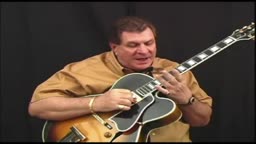
Conti's back with three more in-depth studies on improvisational jazz soloing. Jazz Master gives you a back seat view of the jazz guitar master's thought process as Conti navigates through jazz changes and blows sizzling improvised solos. Conti shares countless "off-the-sheet" techniques and ideas to help you quickly develop your own ideas and individual voice as a player.

"Conti's Jazz Master series is a breath of fresh air. Although his chops are nothing short of phenomenal, there's none of the "watch how good I can play" attitude so often found in instructional videos. Instead, the accent is on high-quality valuable information, all delivered in a very effective down-to-earth manner. Highly recommended." - Mark Stefani, Vision Music

Fortunately for we mere mortal students of jazz guitar, Conti has an innovative way of presenting jazz instruction. He gets you up and running quickly — no tedious theory, exercises or methodology to master before getting some solid lines under your belt. Spend just fifteen minutes with Jazz Master and you'll already have something new to pull out of your bag at the next gig or jam.

This volume focuses on improvisational soloing over a Latin jazz feel. Conti breaks it all down note-for-note and provides critical guidance along the way following his proven teaching system. Conti's reputation for blazing speed and sophisticated lines is well substantiated in all of the course's solos but fear not, all of the material is demonstrated at slow tempos and the interactive tab player lets you slow the lines down without changing pitch.

This volume takes you back to the day with another smokin' bebop solo and there's no better guide than the master of bebop himself. Conti reveals his extraordinary fret board logic and technique for executing blazing lines with minimal effort (worth the price of admission alone!). The cross-platform (Windows and Mac) interactive lesson player also includes jam tracks so you can work out your lines and have a little fun in the process.

This volume addresses the classic jazz blues groove. Conti is adamant that students need to first develop a versatile vocabulary of jazz lines and understand how to twist, turn and connect them to one another over chord changes. Conti performs a jazz blues solo and then patiently breaks it down note-for-note to help build your vocabulary and understanding of jazz blues lines and improvisation.

What you'll learn

  • Navigate between 9th and 10th positions smoothly
  • Use ghost notes and string snaps for rhythmic texture
  • Execute a complex bebop/blues line through measures 9-12
  • Understand how to phrase bebop lines with proper nuance
  • Develop improvisational thinking by learning variations beyond the transcription
Release date: 04/07/2005 • 4h 23m runtime
Start Course
Sample lessons
Measures 1-2
Measures 1-2
Satin Doll
Measures 5-6
Measures 5-6
Satin Doll
Measures 11-12
Measures 11-12
Satin Doll
Measures 13-14
Measures 13-14
Satin Doll

What's included

52 lessons • 28 charts • 3 Jam Tracks

Satin Doll
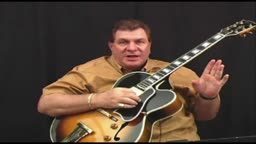
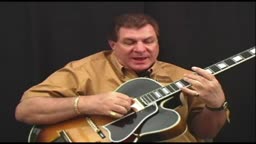
This volume examines an improvised solo over the chord progression for Satin Doll. The progression was chosen for its learning value of line application over a subject chord progression. The course format will first present the solo played in its entirety against a backing track. The solo is then broken down into bite-size chunks of measures where Robert steps you through the fingerings, theory and techniques employed. This TrueFire instructional player offers you several useful learning elements: 2 video lessons for each segment, a jam track to practice your lines over, a PDF of the notation and tab, and a PowerTab file which allows you to "hear" and "see" the tab played out at any speed without changing pitch. Just start digging in and exploring the various elements and player controls - you'll get the hang of it quickly and the learning process will be greatly accelerated. Enjoy, play hard and practice smart! And check out www.robertconti.com.
Measures 1-2
The chord progression presented here is the most widely used basic version of those changes. I also included a section of insights on the usage of substitution chords. Please note that the transcribed solo will also function well over nearly any substitution chords that you choose, as alternates or simply derivatives of the original chords. I urge you to experiment continuously with the lines presented, as that activity will cause many unexpected discoveries and greatly enhance your understanding of advanced jazz improvisation.
Measures 5-6
The chord progression presented here is the most widely used basic version of those changes. I also included a section of insights on the usage of substitution chords. Please note that the transcribed solo will also function well over nearly any substitution chords that you choose, as alternates or simply derivatives of the original chords. I urge you to experiment continuously with the lines presented, as that activity will cause many unexpected discoveries and greatly enhance your understanding of advanced jazz improvisation.
Measures 7-8
To facilitate the learning process, I always direct the thrust of my courses toward playing the instrument rather than requiring the student to devote unnecessary time trying to decipher complex notation. Specifically, my goal is to transfer the knowledge comfortably under your fingers as quickly as possible. Notation and tablature are necessary to convey information. However, as a routine practice, I attempt to make the notation very easy to read by removing as many rests, ties, dotted notes and other symbols as possible. I adopted this practice for a specific reason. Throughout my teaching experience, I have always been amazed how the same line presented to various students will always be interpreted with varying articulation or rhythmic emphasis. And that's the nature of jazz and goal of all of my courses - to help you develop your own voice and style.
Measures 9-10
To facilitate the learning process, I always direct the thrust of my courses toward playing the instrument rather than requiring the student to devote unnecessary time trying to decipher complex notation. Specifically, my goal is to transfer the knowledge comfortably under your fingers as quickly as possible. Notation and tablature are necessary to convey information. However, as a routine practice, I attempt to make the notation very easy to read by removing as many rests, ties, dotted notes and other symbols as possible. I adopted this practice for a specific reason. Throughout my teaching experience, I have always been amazed how the same line presented to various students will always be interpreted with varying articulation or rhythmic emphasis. And that's the nature of jazz and goal of all of my courses - to help you develop your own voice and style.
Measures 11-12
Since each player will almost always interpret the same line differently, I believe it is far more important to present a raw written version of a line, without emphasis on rhythmic or phrasing aspects. For ease of reading, the transcription herein was not intended to replicate every rhythmic nuance of the lesson solo. However, the notation will provide an accurate roadmap of the notes comprising the improvised solo. Wherever possible, the majority of the notes that I played are beamed into extended groups for easier visual assimilation. In essence, by making the reading aspect of this project as easy as possible, your energy is directed toward playing the lines rather than spending numerous wasted hours trying to read the lines.
Measures 13-14
Since each player will almost always interpret the same line differently, I believe it is far more important to present a raw written version of a line, without emphasis on rhythmic or phrasing aspects. For ease of reading, the transcription herein was not intended to replicate every rhythmic nuance of the lesson solo. However, the notation will provide an accurate roadmap of the notes comprising the improvised solo. Wherever possible, the majority of the notes that I played are beamed into extended groups for easier visual assimilation. In essence, by making the reading aspect of this project as easy as possible, your energy is directed toward playing the lines rather than spending numerous wasted hours trying to read the lines.

+ 45 more lessons

Start Course

Reviews

6 results

Mitch

05/23/23

What a master!

This course may be old - but the information within is timeless!

cyclerob

Verified buyer

01/09/23

Great course by a jazz master and wouldn't hesitate to recommend it :)

gwcannon

Verified buyer

08/10/22

Great course

Everything is explained in great detail which makes learning easy.

gear1152

08/31/20

A little gem

This course is a little gem among the many Truefire course. At first, you might be thrown by the old-timey production, but actually there's a ton of great information. Conti, a real master of jazz, take you measure by measure of solos for three different types of jazz tunes. However, it's not a just a play-this-note, play-that-note course. Conti tells you the substitutions he's thinking of when playing the line and there are some great comping ideas too. By the end of the course, you'll have a lot of great moves to add to your vocabulary. Definitely worth the time and money for this course.

ldrayrainey

Verified buyer

11/06/19

A real master!

I have quite a few Conti courses and I think he is a great nuts-and-bolts teacher, especially be-bop soloing. I haven't found anyone who offers so many chord substitutions. He shows how to play a tune that has maybe 6 - 8 chords and use maybe 40 - 50 choices. Mind boggling at first but when you figure him out, he's WOW!

Stop searching. Start improving with All Access.

Try 14 days free. Cancel any time.