






Bluesology 2

Intensive theoretical and harmonic studies for electric blues

Marty FriedmanTommy EmmanuelSteve VaiEric GalesEric Johnson

Get this course and 1,000+ more with All Access

Try 14 days free. Cancel any time.

Purchase Individual Course for $9.99
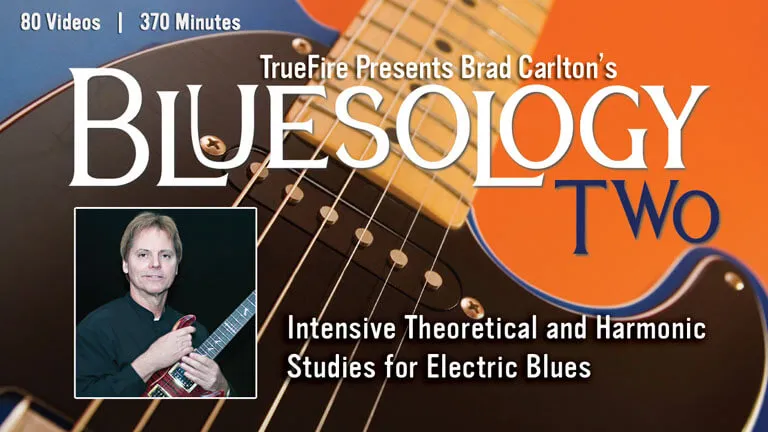
Bluesology 2

About this course

Bluesology thoroughly examines the theory and harmony behind performing, composing and improvising the blues. Rhythmic patterns, progressions, solo development and essential techniques for electric blues guitar are covered extensively across 80 full-length interactive video lessons in both Bluesology Volume 1 and 2 (160 video lessons total).

Bluesology presents in-depth examinations of the blues from a theoretical and harmonic perspective. Students are introduced to concepts in in bite-size chunks and can then apply them over supporting practice rhythm tracks.

Bluesology is presented in 2 volumes and covers Dominant Blues Progressions, Dominant Blues Solos 1, Dominant Blues Solos 2, Turnarounds, Minor Blues Progressions, Minor Blues Solos, Blues Techniques and Jazz Blues. Each section includes 20 full-length interactive video lessons, charts, practice rhythm tracks and text guides.

Combined, Bluesology Volumes 1 & 2 are an intensive 8-month study program at TrueFire University. Realistically, it would take much longer to fully digest all of the material presented in the course. Bluesology’s practical intent however, is to provide the student with a comprehensive resource that they can work through at their own pace, cherry-picking sections and lessons as needed.

Bluesology is not a "licks," "solos" or "style" course, rather Bluesology is an intensive study that drills down on the theoretical and harmonic building blocks that apply to all styles of electric blues guitar.

What you'll learn

  • Master drawing tone off strings rather than attacking through them
  • Apply altered dominant chords to blues progressions
  • Develop ability to produce warm tone on treble strings using neck-side picking
  • Develop relaxed hand position for tonal control
  • Understand how to extend basic blues harmonies with jazz concepts
Release date: 11/25/2009 • 6h 10m runtime
Start Course
Sample lessons
Minor Blues 11
Minor Blues 11
Minor Blues 12
Minor Blues 12
Minor Soloing 1
Minor Soloing 1
Minor Soloing 2
Minor Soloing 2

What's included

80 lessons • 10 charts • 30 Jam Tracks

Minor Blues 1
In our Dominant blues series we covered not only the most basic and traditional blues progressions but moved you through a transformation of those simple progressions to more complex harmonic movement. Re-harmonizing the blues in this way created more interest for the listener and a greater challenge for the improvising blues player. In this series, the Minor blues, we will once again take you step-by-step from the simple to the complex. Hip voicings for the minor blues will be introduced with an emphasis on voice leading thus creating smooth connections and engaging melodic movement. Ten jam tracks in the key of A minor corresponding to each lesson are provided for practice. In the first lesson the chords with the roots on the 6th and 5th strings will be introduced followed by some comping, stressing the back beat (the 2nd and 4th beats of the measures). The Dorian mode with the extensions for minor chords derived from this scale will be demonstrated as well. NOTE: We've prepared ten jam tracks for you to practice with. See the charts for the listing of jam tracks and their structure. Each lesson bank features one of the ten tracks, although the jam track may not necessarily correspond with the video.
Minor Blues 2
In our Dominant blues series we covered not only the most basic and traditional blues progressions but moved you through a transformation of those simple progressions to more complex harmonic movement. Re-harmonizing the blues in this way created more interest for the listener and a greater challenge for the improvising blues player. In this series, the Minor blues, we will once again take you step-by-step from the simple to the complex. Hip voicings for the minor blues will be introduced with an emphasis on voice leading thus creating smooth connections and engaging melodic movement. Ten jam tracks in the key of A minor corresponding to each lesson are provided for practice. In the first lesson the chords with the roots on the 6th and 5th strings will be introduced followed by some comping, stressing the back beat (the 2nd and 4th beats of the measures). The Dorian mode with the extensions for minor chords derived from this scale will be demonstrated as well. NOTE: We've prepared ten jam tracks for you to practice with. See the charts for the listing of jam tracks and their structure. Each lesson bank features one of the ten tracks, although the jam track may not necessarily correspond with the video.
Minor Blues 3
This lesson will apply the same concepts of utilizing extensions to create more color to the I minor chord and apply them to the IV minor chord. However, the V minor chord will be treated with some advice on which extensions to avoid. More options for soloing will be introduced in this lesson by using a mixed modal technique - in this case, using the Aeolian mode and Dorian mode for the minor chord. Two and three note voicings culled from the minor pentatonic scale will be demonstrated while playing over progression 2.
Minor Blues 4
This lesson will apply the same concepts of utilizing extensions to create more color to the I minor chord and apply them to the IV minor chord. However, the V minor chord will be treated with some advice on which extensions to avoid. More options for soloing will be introduced in this lesson by using a mixed modal technique - in this case, using the Aeolian mode and Dorian mode for the minor chord. Two and three note voicings culled from the minor pentatonic scale will be demonstrated while playing over progression 2.
Minor Blues 5
A subtle variation to the previous progressions is played here in progression 3 while the V7 chord is added to bar 12 in progression 4 providing the tension and the anticipation of the return to the I minor chord at the top of blues form. The modes derived from the melodic minor scale are referenced here to provide the many alterations and extensions to the V7 altered chord.
Minor Blues 6
A subtle variation to the previous progressions is played here in progression 3 while the V7 chord is added to bar 12 in progression 4 providing the tension and the anticipation of the return to the I minor chord at the top of blues form. The modes derived from the melodic minor scale are referenced here to provide the many alterations and extensions to the V7 altered chord.
Minor Blues 7
Since we are learning and becoming more comfortable with altered chords, we now have the opportunity to use these over the progressions in this lesson. Here, in progression 5 the flat VI major 7th and other colorful possibilities for this chord are used in measure 9. Choices for chord substitutions are increasing adding to the palette of sound which will ensure interest and variety when comping.

+ 73 more lessons

Start Course

Reviews

15 results

hoo852963

Verified buyer

03/30/26

Great Courses

TrueFire courses are always enjoyable and inspiring. I like the way Brad Carlton teaches and demonstrates each lesson. He has a great way of bringing ideas out for soloing. I have been with TrueFire since back when we ordered DVDs, which I still have and use.

Uschmed

Verified buyer

01/22/22

bluesology 2

If you want a solid foundation for your blues playing then this course is a must, especially together with bluesology 1. Excellent content and clear, pragmatic presentation. Recommended.

simongarlick

Verified buyer

07/26/21

Great course

This course was $5.00, The information in this course is worth far more. Brad really knows his stuff and presents the course in a no nonsense way. I have learned so much for so little.

Sindibad

07/02/21

Brad Carlton's Bluesology 2

I'm happy to have this fundamental lesson to understand the Blues and music in general. It is a work of patience that I like.

MisterTwangy

Verified buyer

06/07/20

In-depth analysis of blues guitar theory

This course follows the format of part one, ie a very comprehensive analysis of guitar blues music from a theoretical perspective. In my opinion, not one for beginners or even early intermediates. I'm definitely getting my money's worth out of this course: many hours in, and still learning, still improving.

Stop searching. Start improving with All Access.

Try 14 days free. Cancel any time.