







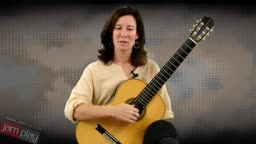

The origins of the classical guitar date back to the fifteenth century. The vihuela, lute, and baroque guitar are the early predecessors of the guitar. With its origins reaching deep into the past, the classical guitar repertoire spans over five hundred years worth of material. Pamela Goldsmith explains the techniques necessary to mastering this timeless art form.
What you'll learn
Execute PIMI arpeggio pattern with consistent rhythm and tone
Navigate complex chord changes while maintaining steady arpeggio
Apply alternating i-m plucking pattern to scale passages
Control unwanted string resonance through proper dampening
Understand and apply closed position scale patterns for transposition
Here we go JamPlay! A new instructor is joining the squad. Her name is Pamela Goldsmith, and she is here to teach us about classical guitar.
In lesson 2, Pamela provides more introductory information about playing classical guitar. You will learn about nail care and proper tone production.
Pamela demonstrates how to get your fingers warmed up while working in the key of C. Using The "PIMA" technique, this lesson will help open doors to classical style playing. Enjoy!
In lesson 4, Pamela continues from her last lesson by moving the C major scale to second position. She demonstrates a few new technical exercises in this position.