
Modern Rock Improv

10 Powerful Improvisational Approaches for Modern Rock Guitar

Marty FriedmanTommy EmmanuelSteve VaiEric GalesEric Johnson

Get this course and 1,000+ more with All Access

Try 14 days free. Cancel any time.

Purchase Individual Course for $14.99
Modern Rock Improv

About this course

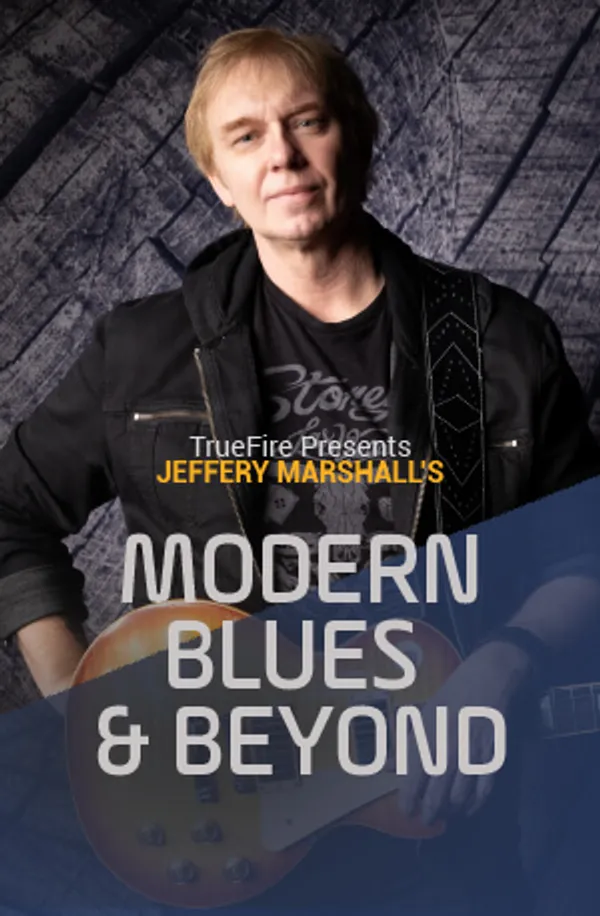
Whether you’re improvising solos on the fly or composing them note-for-note, having a pocketful of melodic, rhythmic and creative devices to draw on is the key to crafting compelling solos that grabs the ears of your audience.

Jeffrey Marshall’s Modern Rock Improv fills ALL of your pockets with 10 of the most powerful improvisational devices for Modern Rock guitar soloing.

”In my experience as both a teacher and a player, the 10 improvisational devices that I cover in this course produce the most impactful results.

I’ll breakdown all 10 of the devices and then we’ll apply each of them over a modern rock jam track. They’re all easy to learn and you’ll be able to put them to use immediately.

We’ll explore ways to improvise more melodically with chord tones, build motifs and give your solos more shape. We’ll cover odd rhythmic groupings, superimposed arpeggios, creative scale patterns, and many other creative strategies to take your modern rock improvisation to the next level.”

Play your way through the course, and learn 10 Modern Rock improvisational approaches: Improvising Melodically with Chord Tones, Giving Your Rock Solos More Shape, Creating Motifs, Odd Rhythmic Groupings & Phrasing, Using Triads, Superimposing Arpeggios, Intervallic Applications, 3 Note Per String Ideas, Creative Scale Patterns for Improvisation, and Alternate Scales for Rock Improv.

You’ll have all of TrueFire’s advanced learning tools at your finger tips to personalize your workspace and learn at your own pace.

You can loop, slow down, or speed up any section of a lesson. Plus, all of the tab and notation is synced to the videos for the optimal learning experience. You’ll also get tab and standard notation files to print out, Guitar Pro files, and all of the backing tracks to practice with.

Grab your guitar, and let’s dig in with Jeffrey Marshall!

What you'll learn

  • How to target chord tones while soloing over chord changes
  • How to incorporate harmonic minor scale over major V chords
  • How to blend multiple techniques (sequences, arpeggios, bends, slides) into cohesive solos
  • Learn to connect Em7b5, Fmaj7, Bbmaj, and Am7 arpeggios over G Dorian
  • How to develop and repeat melodic themes without becoming repetitive
Release date: 10/04/2022 • 3h 05m runtime
Start Course
Sample lessons
The Power of Three in G
Performance
You Superimposed Me!
Performance
Intervallic Applications for Rock Improv
Lesson Demonstration
Steppin' Around Interval Improv
Overview

What's included

42 lessons • 20 charts • 5 Jam Tracks

Modern Rock Improv
Hey, it's Jeffery Marshall here. Whether you’re improvising solos on the fly or composing them note-for-note, having a pocketful of melodic, rhythmic and creative devices to draw on is the key to crafting compelling solos.

In my experience as both a teacher and a player, the 10 improvisational devices that I cover in this course produce the most impactful results. And they’re all easy to learn and put to use immediately.

We’ll explore ways to improvise more melodically with chord tones, build motifs and give your solos more shape. We’ll cover odd rhythmic groupings, superimposed arpeggios, creative scale patterns, and more, applying each approach over a modern rock jam track along the way.

Everything is tabbed and synced to the video. Using TrueFire’s learning tools, you can slow down or loop any of the video lessons to learn at your own pace.

Grab your guitar and let’s dig in.
Improvising Melodically with Chord Tones
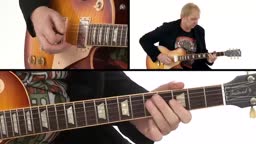
One surefire way to create melodies "on the fly" is to focus on the chord tones of the chord as the come in the progression. Using roots notes, 3rds and 5ths of the chords are a great place to start. Before you start improvising, you want to recognize what the chords are and when they're coming (1 measure, 2 measure etc...). There are different strategies for seeing chords along the neck or in a scale position. I think both ways are valid and both should be explored. I use the CAGED chord shapes to organize these. For example, I can move the same "A" chord shape around to different position (adjusting for chord type, maj, min, etc...) to render a new chord or I can mix different shapes within a single position on the neck. Once I've visualize the chord shape, I can physically see my target notes to create melodies. For strategic purposes, you may want to start with root notes, then move to the 3rds and the 5ths. Once you have realized where these are you'll then want to connect them using the next nearest note (up or down). Once you feel confident you have a grasp on where the target notes are, you can "fill in the gaps" with other tones from the scale or key. The next step I look at is trying to create some themes. A strategy to keep in mind might be to repeat a lick through the chord changes and change the ending note to meet the chord tone of the next chord. Finally, I'll want to add some expression to my lines by adding personal touches like bends, slides, hammer-ons, pull-off etc...
Em Melodic Rock Improv
One surefire way to create melodies "on the fly" is to focus on the chord tones of the chord as the come in the progression. Using roots notes, 3rds and 5ths of the chords are a great place to start. Before you start improvising, you want to recognize what the chords are and when they're coming (1 measure, 2 measure etc...). There are different strategies for seeing chords along the neck or in a scale position. I think both ways are valid and both should be explored. I use the CAGED chord shapes to organize these. For example, I can move the same "A" chord shape around to different position (adjusting for chord type, maj, min, etc...) to render a new chord or I can mix different shapes within a single position on the neck. Once I've visualize the chord shape, I can physically see my target notes to create melodies. For strategic purposes, you may want to start with root notes, then move to the 3rds and the 5ths. Once you have realized where these are you'll then want to connect them using the next nearest note (up or down). Once you feel confident you have a grasp on where the target notes are, you can "fill in the gaps" with other tones from the scale or key. The next step I look at is trying to create some themes. A strategy to keep in mind might be to repeat a lick through the chord changes and change the ending note to meet the chord tone of the next chord. Finally, I'll want to add some expression to my lines by adding personal touches like bends, slides, hammer-ons, pull-off etc...
Em Melodic Rock Improv
One surefire way to create melodies "on the fly" is to focus on the chord tones of the chord as the come in the progression. Using roots notes, 3rds and 5ths of the chords are a great place to start. Before you start improvising, you want to recognize what the chords are and when they're coming (1 measure, 2 measure etc...). There are different strategies for seeing chords along the neck or in a scale position. I think both ways are valid and both should be explored. I use the CAGED chord shapes to organize these. For example, I can move the same "A" chord shape around to different position (adjusting for chord type, maj, min, etc...) to render a new chord or I can mix different shapes within a single position on the neck. Once I've visualize the chord shape, I can physically see my target notes to create melodies. For strategic purposes, you may want to start with root notes, then move to the 3rds and the 5ths. Once you have realized where these are you'll then want to connect them using the next nearest note (up or down). Once you feel confident you have a grasp on where the target notes are, you can "fill in the gaps" with other tones from the scale or key. The next step I look at is trying to create some themes. A strategy to keep in mind might be to repeat a lick through the chord changes and change the ending note to meet the chord tone of the next chord. Finally, I'll want to add some expression to my lines by adding personal touches like bends, slides, hammer-ons, pull-off etc...
Em Melodic Rock Improv
One surefire way to create melodies "on the fly" is to focus on the chord tones of the chord as the come in the progression. Using roots notes, 3rds and 5ths of the chords are a great place to start. Before you start improvising, you want to recognize what the chords are and when they're coming (1 measure, 2 measure etc...). There are different strategies for seeing chords along the neck or in a scale position. I think both ways are valid and both should be explored. I use the CAGED chord shapes to organize these. For example, I can move the same "A" chord shape around to different position (adjusting for chord type, maj, min, etc...) to render a new chord or I can mix different shapes within a single position on the neck. Once I've visualize the chord shape, I can physically see my target notes to create melodies. For strategic purposes, you may want to start with root notes, then move to the 3rds and the 5ths. Once you have realized where these are you'll then want to connect them using the next nearest note (up or down). Once you feel confident you have a grasp on where the target notes are, you can "fill in the gaps" with other tones from the scale or key. The next step I look at is trying to create some themes. A strategy to keep in mind might be to repeat a lick through the chord changes and change the ending note to meet the chord tone of the next chord. Finally, I'll want to add some expression to my lines by adding personal touches like bends, slides, hammer-ons, pull-off etc...
Giving Your Rock Solos More Shape
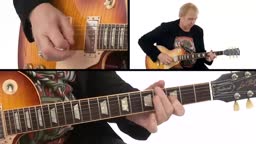
If you want to give some structure to your improv, you can think in broad strokes to give your solo a form or shape. Things like starting low and ending high, starting slow and ending fast, or starting simple and ending more complex are some good starting points. This a great way to give your solo a crescendo and also a possible exit strategy. Of course these ideas can be mixed, matched, and or combined. For example, starting low and slow and ending high and fast. Although nothing is really set in stone, you may want to practice with some of these things in mind. Practice each of the concepts individually and then combine them together.
Rock Improv In Shape
If you want to give some structure to your improv, you can think in broad strokes to give your solo a form or shape. Things like starting low and ending high, starting slow and ending fast, or starting simple and ending more complex are some good starting points. This a great way to give your solo a crescendo and also a possible exit strategy. Of course these ideas can be mixed, matched, and or combined. For example, starting low and slow and ending high and fast. Although nothing is really set in stone, you may want to practice with some of these things in mind. Practice each of the concepts individually and then combine them together.

+ 35 more lessons

Start Course

Reviews

4 results

Hayden

Verified buyer

11/06/25

Killer

This is great. Helps you think about applying concepts a different way. Highly recommend
FreewayJam

Verified buyer

08/03/24

Modern Rock Improv

I'm only about 20% into the course but, I really like what I have seen so far. If you want to get out of just playing the typical pentatonic pattern stuff,I believe this is a good course if you are on that Journey of more advanced rock guitar then this course should really help you to get there.

GuitarPeppe

Verified buyer

01/30/23

FingerSUPERstyle

Great teacher and great techniques!

Klaus D.

10/07/22

Powerful concepts

Jeffery Marshal is a great player and a great teacher. The course covers some of the most powerful concepts for rock guitar improvisation. If you engage intensively with this course and invest the necessary time to integrate the taught content into your playing, you will be a significantly better guitarist!

Stop searching. Start improving with All Access.

Try 14 days free. Cancel any time.