




Guitar Lab: Fretboard Visualization Vol. 1

Intensive Study on Fretboard Visualization

Marty FriedmanTommy EmmanuelSteve VaiEric GalesEric Johnson

Get this course and 1,000+ more with All Access

Try 14 days free. Cancel any time.

Purchase Individual Course for $5.00
Guitar Lab: Fretboard Visualization Vol. 1

About this course

Hi, I'm Brad Carlton. Welcome to Guitar Lab: Fretboard Visualization Vol. 1.

This course will show you how to study the neck without the limitations of your existing fingering protocol. Most guitarists play the same old tired licks, chord voicings, and melodic architecture because they let their fingers run the show

I'll show you how to plot out information on blank diagrams and then demonstrate how to develop music through the use of different fingerings and techniques. Not only will this approach serve you in your playing, but it will enable you to apply music theory to the fingerboard thus enabling you to achieve the ultimate goal of every serious musician: to know where to find the sounds in your head on your instrument.

What you'll learn

  • Execute all possible fingering combinations for adjacent scale tones
  • Apply music theory concepts directly to the fingerboard
  • Visualize fretboard information without relying on finger patterns
  • Connect visual fretboard knowledge to musical application
  • Understand and hear the relationship between scale degrees and chord tones
Release date: 07/01/2019 • 1h 40m runtime
Start Course
Sample lessons
Octaves and Unisons Pt. 1
Visualization
Csus2 Pt. 2
Csus2 Pt. 2
Playing
Cadd9 Pt. 1
Cadd9 Pt. 1
Visualization

What's included

15 lessons • 14 charts • 4 Jam Tracks

Fretboard Visualization Vol. 1
Hi, I'm Brad Carlton. Welcome to Guitar Lab: Fretboard Visualization Vol. 1.

This course will show you how to study the neck without the limitations of your existing fingering protocol. Most guitarists play the same old tired licks, chord voicings and melodic architecture because they let their fingers "run the show".

I'll show you how to plot out information on blank diagrams, and then demonstrate how to develop music through the use of different fingerings and techniques. Not only will this approach serve you in your playing, but it will enable you to apply music theory to the fingerboard thus enabling you to acheive the ultimate goal of every serious musician: to know where to find the sounds in your head on your instrument.
C Major Pt. 1
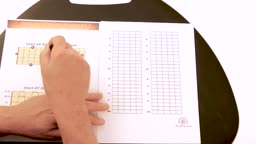
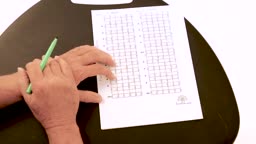
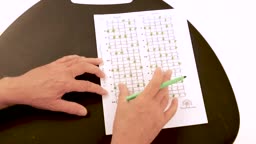
Many of you can already play the guitar. You have facility on the instrument, but as is frequently the case, your left hand ends up running the show (instead of your eyes and brain). I suggest a regimen of study away from the guitar which involves plotting out specific information on blank fretboard diagrams. The result will be total command and freedom in choosing any note(s) without the bondage of fingering driven visualization.

After you've done your reps with paper and pencil (later with pen), you'll then play the notes with a single finger. This will yield four fingering approaches. Your ultimate goal is to see layers of information on the neck: the chromatic scale, the major scale and its respective modes, pentatonic sub-scales, arpeggios, intervals, and altered scales. Your goal is to see the notes on the fretboard, not through a fingering.
C Major Pt. 2
There are four axes on the guitar fretboard: string axis, fret axis, low to high diagonal axis and high to low diagonal axis. Here I'll demonstrate each of these as a means of navigating through the C major scale.
Octaves and Unisons Pt. 1
It's important to know all of your octave formations. We'll apply Chart #6 to various notes in the C major scale.
Octaves and Unisons Pt. 2
I will demonstrate various ways to execute octaves.
C5 Pt. 1
The power chord is the foundation of all three chord families: Major, Minor, and Dominants. As a guitarist, you will frequently use power chords in both your rhythm and lead playing. If you have been doing your homework, you should be starting to see the key of C a little better. Here is part 2 of your homework: copy the charts you have done and use a highlighter to plot out all of the roots and fifths. You will now have a master map of the C5 (C power chord). Practice playing every combination of roots and fifths starting with two voice structures all the way up to six voice structures both as chords and as single note lines. These power chords are the skeletal foundation for all the chords built in the major scale modes with the exception of the Locrian mode (see attached charts). Notice that the power chords will involve either a perfect 5th or a perfect 4th interval when viewing adjacent strings. These interval shapes remain consistent except between strings 3 and 2.
C5 Pt. 2
I will demonstrate various voicings for the C5.

+ 8 more lessons

Start Course

Reviews

9 results

alan195473

Verified buyer

06/02/26

Not bad!

Still not sure about this course. It's better than nothing but I still keep thinking there's got to be a better, simpler way to approach this subject. Still, the teacher is knowledgeable and skilled. So, I would recommend it!

solinski

Verified buyer

04/29/21

Great theoretical and practical knowledge

This is one of the first courses I've taken with Brad, and it did not disappoint. The information is presented in a very well thought out order. First you learn how to map out notes on the fretboard conceptually, then you apply this knowledge to the actual fretboard. I learned a great deal with this course and have a much better grasp of where to find notes just looking at the fretboard.

wholmer

12/31/20

Thanks for making the map for me!

Being able to apply music theory to the fingerboard and then being able to play what I want and hear in my head on my guitar has long been a goal for me. Thanks’ Brad for making that a reality! I can finally close my eyes and go.

ldrayrainey

Verified buyer

10/19/19

I like this course but it is a bit deep for me. I will probably give it 5 stars when I get through it.

Stop searching. Start improving with All Access.

Try 14 days free. Cancel any time.