"Music makes pictures and often tells stories, all of them magic and all of them true." Easy for you to say, John -- you had lyrics to work with! We fingerstyle players don't have it so easy with our instrumental compositions. Then again, we do have polyphony and our listener's imagination. Nonetheless, there must be millions of partial fingerstyle compositions and untold stories on the fingertips of players just waiting for that last bit of inspiration. And if it's inspiration you seek, just close your eyes and say Gilewitz three times.
Richard Gilewitz brings plenty of inspiration to the table with Fingerstyle Narratives in the form of fresh technique, novel harmonic approaches, creative arranging and a bookshelf full of insight for finger-painting stories with your guitar.
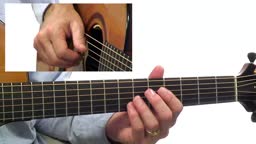
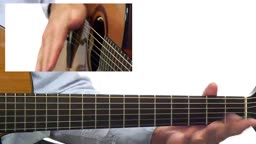
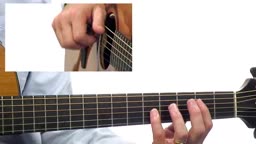
Richard walks you note-by-note through five of his original compositions, detailing his own compositional process while demonstrating all of the right- and left-hand fingerings and techniques.
You'll start with Bilingual Fantasy, learning how to establish the main motif of the piece. Richard walks you through all the hand positions, which are based on common chord shapes. You'll learn how to apply his "power attack" by adding another right-hand finger to the mix, along with other techniques such as vibrato, hammer-ons, and pull-offs, all of which are used for expressive purposes.
Richard shows you how to maintain a continuous sound using slides (glissandos) rather than letting notes die as you change position. There are other special effects you'll pick up such as rasgueado-like strums and finger rolls.
Rainbow at Night is next, a happy tune with variations, plus a contrasting middle section. Here Richard shows his style of varying a tune, even at the return of the theme to close, all for the effect of the narrative story. Effects used in this one include brush strokes, staccato, and palm muting to help create the 'sound of penguins.'
In it's opening theme, Wazamataz demonstrates an approach for avoiding predictability in a tune. During the demonstration and breakdown, Richard shows you how to create a blues feel by adding subtle bass note bends, and how to use feel and technique to keep each section clearly identifiable for the listener, even when varied.
Sarah Natasha serves up a priceless lesson on the use of harmonics for effect. Richard provides both advanced and intermediate instruction in this set of lessons. The song contains a unique type of call and response in the melody that helps to shape its narrative. Richard uses moveable shapes to get new chords by moving common shapes up the neck, often adding open strings to them, or pulling off to open strings.
For the last piece, Richard presents Gypsy Minor as an introduction to Dirt to Dust. You'll acquire some 12-string chops in open G minor tuning and learn how to use a slide for optimal effect. Additional techniques include slapping strings for effect, tapping, elaborating motifs, and Richard's own "punch strum" technique. The tapping techniques will create harmonics and rhythmic qualities to help set the mood. You'll learn how to create a dirty blues feel with an artificial harmonic sound, and how to use delay, reverb, and/or boost pedals to enhance the performance of the tune.
Fingerstyle Narratives has much to offer players whether you're just learning fingerstyle or already composing, arranging and performing fingerstyle music. All in all, you'll add five new show-stoppers to your repertoire, pick up dozens of fresh fingerstyle moves, and learn the secrets of writing mini-soundtracks for the stories you want to tell.
What you'll learn
Navigate position shifts from frets 7-12 while preserving melodic continuity
Perform punch drum, rasgueado, and harmonic techniques in musical context
Coordinate hammer-ons while sustaining bass notes
Maintain melody notes (third finger, second string) during position shifts
Understand and apply tension/release through dissonant notes
Welcome to Fingerstyle Narratives. Included are five original compositions created during my career. I hope that these selections, which span many tunings and moods may make for a nice addition to your repertoire.
This piece is one of the first tunes I composed while exploring a Dropped D tuning and working with a minor key to establish a particular mood. You will notice that mixed meter is utilized as a method of avoiding predictability. I also discovered that this tune works well on both 6 and 12 string guitars.
Bars 1-8 establish the main motif or theme of the tune where attention must be given to the picking attack utilizing the thumb or ‘p’ in an alternating bass fashion between strings 3 and 4. As a result the index finger goes on ‘vacation’ as the groove of the tune is established.
In bars 9-16, a more powerful attack is required to produce an explosive punch of notes accentuating the main theme. This approach produces the more passionate soul of the piece supporting the intended nature of the tune.
Bars 17-29 introduces a diminished chord to provide a somewhat angular depth to the tune as it simulates a call and response approach in the development of the tunes journey. Be sure to time your transfers with a metronome to avoid hiccups in the timing.
Bars 30-37 offer somewhat of a thematic variation to avoid predictability and repetition of a simple theme. Avoiding this predictability can often keep the tune alive in the listeners mind and prevent them from becoming bored. A vibrato and hammer-on/pull-off technique is first employed here to introduce a new nuance.
In Bars 38-44 a simple D minor shape is introduced up the neck along with a hammer on/pull off and rasqeaudo or strumming technique. Try to create an effective strumming technique with a confident performance here.
I have to be honest, this course it probably just beyond me, which means it's going to push me to another level. for me, hard work - but definitely worth it.
S
scrapy
10/17/20
Great songs but not easy to learn. More towards the advanced than the intermediate player.