Modern Mountain Banjo: Clawhammer & Up-Picking

Essential Techniques & Approaches for Modern Old Time Banjo

Marty FriedmanTommy EmmanuelSteve VaiEric GalesEric Johnson

Get this course and 1,000+ more with All Access

Try 14 days free. Cancel any time.

Purchase Individual Course for $9.99
Modern Mountain Banjo: Clawhammer & Up-Picking

About this course

Old time traditional banjo has become increasingly popular in the last two decades. Modern players like Clifton Hicks, Adam Hurt, Abigail Washburn, Rhiannon Giddens, Richie Stearns, Cathy Fink, David Eugene Edwards, Gillian Welch and Bob Carlin are all firmly rooted in the old time tradition. Each of them bringing their character to modern country and folk music.

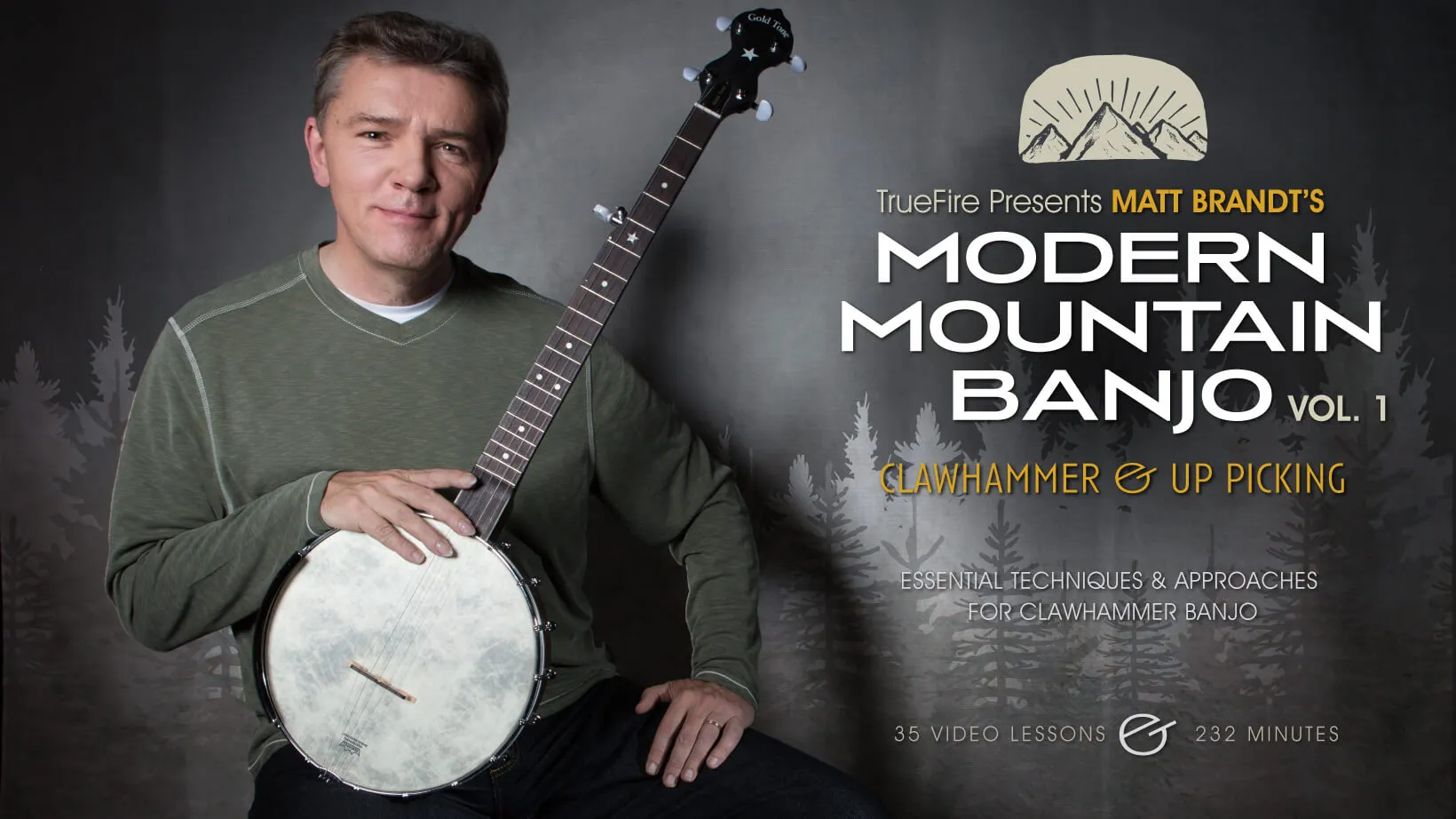
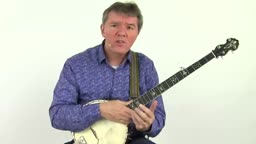
Matt Brandt’s Modern Mountain Banjo Vol. 1: Clawhammer & Up-Picking celebrates old-time banjo and explores the traditional and modern techniques fused by today’s modern artists.

”The focus of this course is learning how to combine two of the most powerful right-hand techniques that modern banjo players use. We’ll examine clawhammer, up-picking, index lead, thumb lead, and many of the other hybrid styles. We’ll work on combining Pete Seeger-style up-picking with Bum-Ditty clawhammer to play melodies that are out of reach using either of these techniques separately, and we’ll do so without losing the groove.

We'll also dig into other techniques like syncopation, strumming inspired by Walt Koken, right-hand triplets, left-hand triplets, playing blues with old-time techniques, open string pull-offs, and alternate string pull-offs, using double thumbing in higher tempos, and playing double-stops and chord melodies.”


Matt demonstrates all of these key concepts and techniques in the first section of the course. With these techniques at your disposal, you’ll be able to play traditional old-time repertoire and become a solid rhythmic player. You can also use these techniques to create banjo arrangements of modern pop, country, folk and or blues songs. But don’t stop there — compose your original material as well!

In the second section, Matt will guide you through 8 performance studies, which apply all of the key concepts and techniques, in a musical context. Matt will first perform the study and then break it down measure-by-measure, emphasizing the underlying techniques and harmonic concepts.

All of the key examples and performance studies are tabbed and notated for your practice, reference and study purposes. You’ll also get Guitar Pro files so that you can play, loop and slow down the tab and notation as you work through the lessons. Matt includes all of the backing tracks to work with on your own. Props to Marcello Briganti on bass and Jack Starkey, Matt's audio engineer!

Grab your banjo and let’s head to the mountains with Matt Brandt!

What you'll learn

  • Play syncopated rhythms beyond basic bum-deedee or Pete Seeger uppicking styles
  • Execute double thumbing technique at uptempo speeds with sixteenth note feel
  • How to build walking bass lines between chords
  • How to apply these principles to any chord progression
  • How to create bass-focused banjo backup parts
Release date: 01/24/2018 • 3h 52m runtime
Start Course
Sample lessons
Double Thumbing
Double Thumbing
Exercise 1-5
Pete Seeger Plus
Pete Seeger Plus
Exercise 1-4
Sequential Rain
Sequential Rain
Performance
Sequential Rain
Sequential Rain
Breakdown 1

What's included

35 lessons • 21 charts • 8 Jam Tracks

Modern Mountain Banjo: Clawhammer & Up Picking
Hi, I'm Matthieu Brandt! Welcome to Modern Mountain Banjo: Clawhammer and Up Picking. Old time traditional banjo has become increasingly popular in the last two decades. Modern players like Clifton Hicks, Adam Hurt, Abigail Washburn, Rihanna Gibbons, Richie Stearns, Cathy Fink, David Eugene Edwards, Gillian Welch, and Bob Carlin are all firmly rooted in the old time tradition, each of them bringing their own character to modern country and folk music. They all use a mixture of techniques, like clawhammer, up picking, index lead, thumb lead, and other hybrid styles.

Our focus in this course is on bringing together two of the most powerful right hand techniques that these modern banjo players use. By combining Pete Seeger style up picking and regular "bum ditty" clawhammer, you'll be able to play melodies that are out of reach with each of these techniques separately. And, you'll be doing so without losing the groove. We'll also dig into other techniques like syncopation, strumming inspired by Walt Koken, right hand triplets, left hand triplets, playing blues with old time techniques, open string pull-offs and alternate string pull-offs, using double thumbing in higher tempos, and playing double stops and chord melodies. All these tools can be used to play traditional old time repertoire and will make you a more solid rhythmic player. You can also use these techniques to arrange modern pop songs, country, folk, blues, or write your own!

The 8 original tunes in this course come with backing tracks and tabs. In the second volume of this course, we'll focus on fingerstyle techniques like index lead and thumb lead and how to mix all these styles up. Well enough talk, let's get busy!

Credits:
Bass Guitar - Marcello Briganti
Audio Engineer - Jack Starkey.
Syncopation
Syncopation is, as Wikipedia states, the placement of rhythmic stress and accents where you wouldn't expect it. A tune or a part of a song can sound offbeat or syncopated. Unlike any other instrument, the banjo is suited to mixing straight on beat rhythms with syncopated rhythms, especially when you're playing clawhammer styles or related styles like up picking. The reason for this is of course the short pedal string. In most common banjo tunings like open G, sawmill, double C, and open C, this pedal string is tuned to the root or the fifth of the key, meaning a strong note within the key. When you're playing a "bum ditty" clawhammer groove, that pedal string is played on the and of 2 and 4; literally on the off beats. The combination of the frail or strum on top off beats 1, 2, 3, and 4 and the syncopated strong notes played on the pedal string make for a funky foot tapping groove.

These next exercises will give you extra options when it comes to syncopating the beat. By doing this, you'll get a better grip on the sometimes complicated rhythms a tune can have. You can introduce rhythmic tension and release and you'll be able to play melodies that can't be played any other way. These exercises are all played in double C, so CGCD with the pedal tuned to G, the fifth of the key C. This tuning works well for songs in C major, C minor, C blues, and other mixed tuning.

Syncopation
Syncopation is, as Wikipedia states, the placement of rhythmic stress and accents where you wouldn't expect it. A tune or a part of a song can sound offbeat or syncopated. Unlike any other instrument, the banjo is suited to mixing straight on beat rhythms with syncopated rhythms, especially when you're playing clawhammer styles or related styles like up picking. The reason for this is of course the short pedal string. In most common banjo tunings like open G, sawmill, double C, and open C, this pedal string is tuned to the root or the fifth of the key, meaning a strong note within the key. When you're playing a "bum ditty" clawhammer groove, that pedal string is played on the and of 2 and 4; literally on the off beats. The combination of the frail or strum on top off beats 1, 2, 3, and 4 and the syncopated strong notes played on the pedal string make for a funky foot tapping groove.

These next exercises will give you extra options when it comes to syncopating the beat. By doing this, you'll get a better grip on the sometimes complicated rhythms a tune can have. You can introduce rhythmic tension and release and you'll be able to play melodies that can't be played any other way. These exercises are all played in double C, so CGCD with the pedal tuned to G, the fifth of the key C. This tuning works well for songs in C major, C minor, C blues, and other mixed tuning.
Beat Syncopation 1
In these exercises, we're going to work with a different form of syncopation by changing the overall "bum ditty" feel. This works well to create a form of rhythmic tension in a composition or an arrangement. Once you land back on the bum ditty feel, there is a release that feels like you're moving forward again. This will often mean that your right hand and arm motion is broken up. It's still very important to keep the groove going, so keep tapping your foot. Listen to Adam Hurt's "Ducks on the Millpond" for a great example.

We're also going to use Pete Seeger style up picking in some of these examples. If you're not familiar with this style of playing, please check out that segment first. We're in open G, so DGBD with the pedal G.
Beat Syncopation 1
In these exercises, we're going to work with a different form of syncopation by changing the overall "bum ditty" feel. This works well to create a form of rhythmic tension in a composition or an arrangement. Once you land back on the bum ditty feel, there is a release that feels like you're moving forward again. This will often mean that your right hand and arm motion is broken up. It's still very important to keep the groove going, so keep tapping your foot. Listen to Adam Hurt's "Ducks on the Millpond" for a great example.

We're also going to use Pete Seeger style up picking in some of these examples. If you're not familiar with this style of playing, please check out that segment first. We're in open G, so DGBD with the pedal G.
Beat Syncopation 2
In this short segment, we're going to look at exercises that use beat syncopation in a more melodic style. We're using a combination of a regular "bum ditty" technique with Pete Seeger style up picking. If you're not familiar with this combination, please check out the Pete Seeger Plus segments first. We're in open G, so DGBD with the pedal G.
Double Thumbing
In a regular "bum ditty" groove, you play the pedal string with your thumb and it sits on the off beat of 2 and 4. Double thumbing is the technique where you play that pedal string on every off beat. So also on the 1-and and the 3-and. This will give you more options in your grooves and works especially well in higher tempos. Mixing this up with drop thumbing and leaving out the expected pedal notes will give you a lot of new choices for your melodies too. We'll play these exercises in G sawmill tuning, meaning DGCD with a pedal G.

+ 28 more lessons

Start Course

Reviews

9 results

2canoe

Verified buyer

10/19/23

Matt Brant's Modern Mountain Banjo fits my needs. I repair instruments including banjos and I figured I should learn a bit more about playing it. Matt has many skills, I have a number of his guitar videos. He starts at the start and covers patterns hitting many banjo playing styles. As I move through this course I feel it meets my needs. Thanks Matt

jaypi

Verified buyer

12/22/21

Mixing Styles

Very helpful videos, well explained by Instructor Matt Brandt. I like the idea of mixing the styles, sounds very good and the songs of Matt Brandt are worth learning!

KevinBarnes

Verified buyer

11/09/21

Kev’s review.

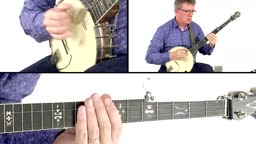
He teaches the skills and demonstrates them very well. Songs all have great arrangements that go further than the norm. I liked the split screens on the videos. I love his sound.

tompedersen

Verified buyer

09/14/21

Inspiring!

For songs that sound so smooth and relaxed, it's amazing how much goes into making it sound that way. Even though I can't play the songs yet, going through the material has helped me play what I can play more smooth and relaxed!

billyastro

Verified buyer

06/18/21

This is a great video with an awesome instructor that plays and demonstrates a style of banjo playing that I like .

Stop searching. Start improving with All Access.

Try 14 days free. Cancel any time.