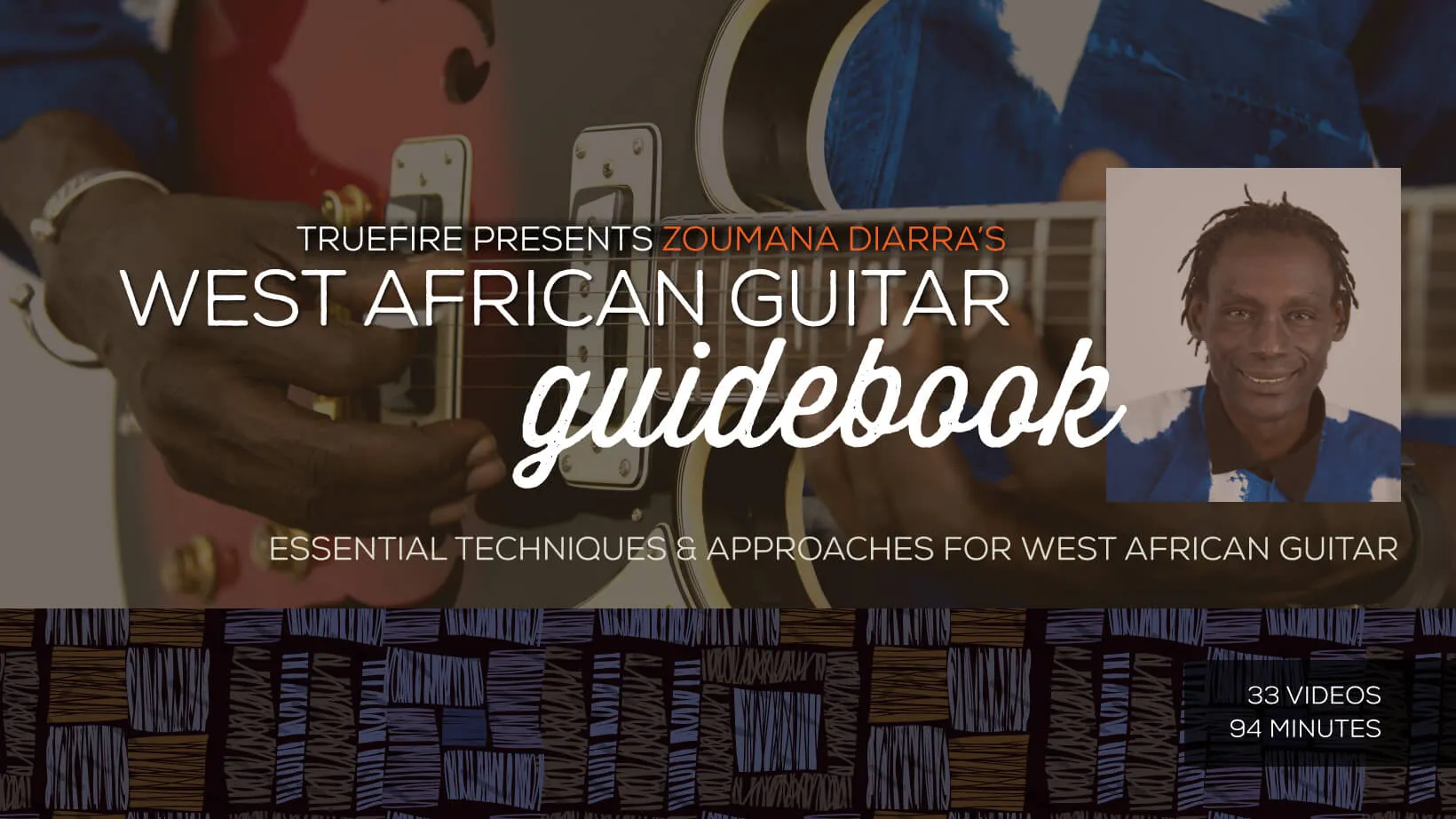
West African Guidebook

Essential Techniques & Approaches for West African Guitar

Marty FriedmanTommy EmmanuelSteve VaiEric GalesEric Johnson

Get this course and 1,000+ more with All Access

Try 14 days free. Cancel any time.

Purchase Individual Course for $14.99
West African Guidebook

About this course

The juxtaposed rhythmic patterns and simple, engaging melodies characteristic of traditional West African music has influenced many contemporary styles of music. Ethnomusicologist Gerhard Kubik traced the roots of the blues back to West Africa, calling it the "cradle of the blues.” Also rooted in West African music, Afro-Caribbean music eventually migrated to the USA to help shape jazz.

Paul Simon, Ry Cooder, Taj Mahal, Corey Harris and many other artists and guitarists have successfully explored African rhythms and melodies across pop, rock, blues, folk, and jazz genres. Now you can too! Grab a window seat on the tour bus and join Zoumana Diarra - a Griot from Mali in West Africa - as he leads you on a tour across the West African Guitar soundscape.

Zoumana Diarra is a Griot. Griots are a kind of Troubadour, a traveling musician or singer who knows the history of a local tribe or family and makes sure that stories are told, re-told and kept for posterity. The traditional instruments of a Griot are Kora, Balafon, Djembe, and Ngoni. Today guitar has an important role in the music a Griot plays. We’re very excited to welcome Zoumana to the family with his first TrueFire course, The West African Guitar Guidebook.

Zoumana demonstrates and guides you through eleven essential styles and grooves that originated from different West African Countries. You’ll learn how to play Bambara (Mali), African Rumba (Senegal/Congo), Minuit, Gumbe (Guinee Bissau), Highlife (Ghana), Manding (Senegal/Burkina Faso/Ivory Coast) , Soukous (Congo), Njaro (Sahara desert), Mali Blues, Gwe Gwe (Ivory Coast) and Methode Kora. Each of these West African styles has several melodies, which when played together form intricate, compelling grooves.

All of the West African style performances and their patterns are tabbed and notated for your practice, reference and study purposes. You’ll also get Guitar Pro files so that you can play, loop and slow down the tab and notation as you work through the lessons.

All of the jam tracks are also included, and as a bonus, we've added a Guitar Pro multitrack file for each style with all patterns, the percussion and bass parts included. This way you can hear the interaction between all instruments, a vital element in West African Music.

Grab your guitar and let’s tour the West African soundscape with Zoumana Diarra!

What you'll learn

  • Master 12-8 rhythmic pattern
  • Fingerpicking techniques
  • Executing West African blues techniques
  • Exploring African guitar techniques
  • Understanding Malian blues rhythmic structure
Release date: 08/30/2017 • 1h 33m runtime
Start Course
Sample lessons
Bambara
Bambara
Part 1
Bambara
Bambara
Part 2
Gumbe
Gumbe
Part 1
Gumbe
Gumbe
Part 2

What's included

33 lessons • 32 charts • 32 Jam Tracks

Guidebook West African Guitar Styles
Hi, I'm Zoumana Diarra from Mali in West Africa. Welcome to the West African Guitar Styles Guidebook. West Africa is where the blues was born. Blues guitar players like Taj Mahal, Corey Harris, and Ry Cooder have gone to West Africa to study music, playing and recording with local musicians like Ali Farka Toure.

West African melodies and rhythms are a huge influence on all pop, rock, folk, and jazz music. But, West African guitar is so much more, as you'll see in this course. Africa is a huge continent with many different styles of music and a very rich musical history, so here we're going to study eleven essential styles and grooves from different West African Countries: We'll look at the Bambara, African rhumba, minuit, gumbe, highlife, Manding, soukous, njaro, Mali blues, gwe gwe, and a guitar playing method taken from the kora.

Most of these styles can be played with your fingers or with a pick, each one having several melodies. When played together, you get intricate grooves that can be very complex. Each melodic pattern in West African music can be played by different instruments like the ngoni, kora, balafon, or guitar.

Here, we'll study these patterns on guitar, each style coming with a backing track and tabs. I hope you enjoy this collection of styles!
Note: Griots are a kind of troubadour, a traveling musician or singer who knows the history of a local tribe or family and makes sure that stories are told, retold, and kept for posterity. The traditional instruments of a Griot are kora, balafon, djembe, and ngoni. Zoumana is a Griot - a profession handed down from father to son. Even today, there are still Griots in Africa. Next to the traditional instruments, guitars now have an important place in the music a Griot plays. The basis of African music is fingerstyle playing. Most West African players don't know what chords are, introduced to this music through influences from Cuba in the 1920's. Because these styles are based on strong melodies, most patterns can also be played with a pick.

African Rhumba
Let's look at the first part of the African rhumba. The African rhumba is inspired by West African musicians from the French colonies who traveled to Cuba in the fifties. Musicians were paid by the local government to modernize their playing, bringing in modern instruments like the guitar. Before they went to Cuba, African musicians played melodies - they didn't know what a chord was.Soukous originated from the African rhumba, of which two famous players are Dr. Nico and Rochereau.
African Rhumba
Here's the second part of the African rhumba. The African rhumba is inspired by West African musicians from the French colonies who traveled to Cuba in the fifties. Musicians were paid by the local government to modernize their playing, bringing in modern instruments like the guitar. Before they went to Cuba, African musicians played melodies - they didn't know what a chord was.

Soukous originated from the African rhumba, of which two famous players are Dr. Nico and Rochereau.
African Rhumba
Now let's look at the final part of the African rhumba. The African rhumba is inspired by West African musicians from the French colonies who traveled to Cuba in the fifties. Musicians were paid by the local government to modernize their playing, bringing in modern instruments like the guitar. Before they went to Cuba, African musicians played melodies - they didn't know what a chord was.

Soukous originated from the African rhumba, of which two famous players are Dr. Nico and Rochereau.
Bambara
The Bambara is the original blues music. This example is a minor pentatonic guitar style from Segou in Mali. Major pentatonic blues originated in Sikasso, Mali.The first guitars in West Africa had one string, and the music played on this guitar was strictly pentatonic: they always played in the same key. Later, the Bambara was played on the ngoni. This is a six-string guitar for hunters with five strings tuned pentatonic. A Bambara does not have chords, only melodies.
Bambara
The Bambara is the original blues music. This example is a minor pentatonic guitar style from Segou in Mali. Major pentatonic blues originated in Sikasso, Mali.

The first guitars in West Africa had one string, and the music played on this guitar was strictly pentatonic: they always played in the same key. Later, the Bambara was played on the ngoni. This is a six-string guitar for hunters with five strings tuned pentatonic. A Bambara does not have chords, only melodies.
Gwe Gwe
Gwe gwe is a traditional rhythm from the Bete people from Ivory Coast. Like many other rhythms, it later developed into a guitar style. One of the most famous guitar players in this style was Amédée Pierre. In the 80's, Ernesto Djedje became the founder of the more modern gwe gwe guitar style.

+ 26 more lessons

Start Course

Reviews

14 results

simon

02/28/23

The lesson wich was missing

I've been searching so long for a resource on Mali guitar style. I. have learned a lot about it, guitar style and not only. Thanks to this course. Please, Mr. Zoumana Diarra, i would be glad to buy a second course. I f I may suggest, somerthing to go deeper into the Mali Blues style or Ali Farka Toure. Thanks a lot Mr. Diarra and warm greetings from Europe.

BK

12/01/21

Fun, challenging, melodic and so refreshing!

One of the most valuable and unique tutorials out there. Rest in Peace Mr Diarra, and thank you!

Pakret

Verified buyer

11/20/21

Danke

Ich habe schon seit längerem nach Noten für afrikanische Musik gesucht. Dies hier zu finden und gleich noch mit Videos ist einfach fantastisch. Ich bin begeistert, übe fleißig und es macht viel Spaß. Vielen Dank in memory...

balgarnie

Verified buyer

07/07/21

African guitar is the best!

This is an absolutely fantastic introduction to a variety of West African guitar styles. So happy to have stumbled across this at Truefire, been looking for something like this for a long time. A huge thank you to Zoumana Diarra, a unique and wonderful treat.

Jguitar70

Verified buyer

01/14/21

Amazing grooves for rhythm guitar

Happy to find instructional material on this amazing style of rhythm guitar. Various examples in different styles, for a greater overview of the electric guitar evolution in Africa. A must for any serious guitarist

Stop searching. Start improving with All Access.

Try 14 days free. Cancel any time.