Creative Slide Guidebook

Essential Techniques & Creative Approaches for Electric Slide Guitar

Marty FriedmanTommy EmmanuelSteve VaiEric GalesEric Johnson

Get this course and 1,000+ more with All Access

Try 14 days free. Cancel any time.

Purchase Individual Course for $9.99
Creative Slide Guidebook

About this course

Blues guitar players have been fascinated with the evocative, vocal-like qualities of slide guitar ever since Sylvester Weaver recorded Guitar Blues and Guitar Rag back in 1923. But today, thanks to artists like Derek Trucks, Sonny Landreth, George Harrison and Lowell George, slide guitar is adding color and depth to virtually all styles of music from country and pop, to rock, soul and jazz.

If you’re likewise fascinated with slide guitar, whatever your preferred style happens to be, BJ Baartmans’ Creative Slide Guidebook is your first-class express ticket for adding new colors and creative dimensions to your own melodies and improvisations.

Based in the Netherlands, BJ Baartmans has hundreds of albums to his credit as a recording artist, sideman, and/or producer. A member of the highly popular roots rock collective Hidden Agenda Deluxe and the latest version of Matthews Southern Comfort, a band formed around legendary singer Iain Matthews. BJ is also a gifted slide guitarist and passionate educator. We’re very excited to Welcome BJ to the family with his first TrueFire course, Creative Slide Guidebook.

”In the Creative Slide Guidebook, we'll work on slide guitar concepts and techniques for adding color and depth to all kinds of musical styles rather than just the blues. We’ll work through applications that can also be used for rock, jazz, soul, pop, and country. We'll examine picking techniques, palm and string muting, vibrato, and sliding. We'll go deeper into outlining chord progressions and handling things like modulation, complex chords, major to minor shifts, and extended harmonies. And, we'll learn to "read the neck" in a not so familiar tuning and how the slide fits in.”

BJ organized the course into two sections. In the first section, he presents and demonstrates key concepts and techniques: Approach, Material, Guitars, Basics: One Note, Basics: Vibrato, Playing Techniques, Basics: Muting, Playing Examples, 3 Strings: DGB, 3 Strings: GBE & ADG, The Link, Triads & Bass, Muting Behind Slide, Double-stops & Triads, Key Changes, Slide Tips, Open G: Blues, Open G: DGB Strings, Open G: Add Strings, Outlining Chords, Bass and Triads, and Modal Playing.

NOTE! The heart of the first section is the Link, which is where BJ shows you how all the techniques and principles that you learned in a regular tuning can easily be transplanted to open tunings including modulating to different keys!

In the second section, you will play your way through 5 slide performance studies using all the concepts discussed in the previous section.

All of the key examples and performance studies are tabbed and notated for your practice, reference and study purposes. You’ll also get Guitar Pro files so that you can play, loop and/or slow down the tab and notation as you work through the lessons. Plus, BJ includes all of the backing tracks for you to work with on your own.

Grab your guitar and let’s get creative with our slide guitar and BJ Baartmans!


Recommended Guitar Slides

Ariel Posen Signature Slide

Ariel Posen Guitar Slide
Buy It Now at Sweetwater >

Dunlop 212 Pyrex Glass Slide

Dunlop Glass Guitar Slide
Buy It Now at Sweetwater >

D'Addario Brass Guitar Slide

Brass Slide
Buy It Now at Sweetwater >

Amber Glass Guitar Slide

Glass Guitar Slide
Buy It Now at Sweetwater >

What you'll learn

  • Exploring chord variations on middle strings
  • Creating multiple chord voicings
  • Advanced slide guitar techniques
  • Complex chord progressions
  • Understand how adding strings changes chord sound
Release date: 07/19/2017 • 1h 46m runtime
Start Course
Sample lessons
Basics: Vibrato
Basics: Vibrato
Concept 2
Playing Techniques
Playing Techniques
Combinations
Muting Behind Slide
Muting Behind Slide
Concept 7
A Major Change
A Major Change
Performance (Open G)

What's included

35 lessons • 19 charts • 5 Jam Tracks

Creative Slide Guidebook
Hi, I'm BJ Baartmans, and welcome to the Creative Slide Guidebook. In this course, we'll look at the slide not as much from the traditional blues or Hawaiian approach, but more as a tool to add color and depth to all kinds of musical styles. There's some rock, jazz, soul, pop, and country stuff you can find in this course, and some good ol' blues too.

We'll look at how you can use the slide on a guitar that's in regular tuning, in more or less a normal set up. We'll also work on the technical side of it to make that sound good. We'll get into things such as picking techniques, palm and string muting, vibrato, and sliding. And then, we'll work on how that all translates to a guitar that's more typically set up for slide playing, tuned to an open chord.

Digging our way through this material, we'll also get into the more advanced musical side of it. We'll go deeper into outlining chord progressions and handling things like modulation, complex chords, major to minor shifts, and extended harmonies. And, we'll learn to "read the neck" in a not so familiar tuning and how the slide fits in.
Approach
So, in this course, we'll look at the slide not as much from the traditional blues or Hawaiian approach, but more as a tool to add color and depth to all kinds of musical styles. There's some rock, jazz, soul, pop, and country stuff you can find in this course, and some good ol' blues too.

We'll look at how you can use the slide on a guitar that's in regular tuning, in more or less a normal set up. We'll also work on the technical side of it to make that sound good. We'll get into things such as picking techniques, palm and string muting, vibrato, and sliding. And then, we'll work on how that all translates to a guitar that's more typically set up for slide playing, tuned to an open chord.

Digging our way through this material, we'll also get into the more advanced musical side of it. We'll go deeper into outlining chord progressions and handling things like modulation, complex chords, major to minor shifts, and extended harmonies. And, we'll learn to "read the neck" in a not so familiar tuning and how the slide fits in.
Material
First, I've got to talk a bit about the slide. I'm using a regular glass slide made by Dunlop, that fits really well on my pinky and I don't have to squeeze it with my other fingers. It doesn't fall off when I have my hand downwards, and even though it's light, it still has enough mass to give me a nice fat tone.

Many of my favorite slide players like Ry Cooder and Sonny Landreth use glass slides, but there's no rule to it. Different materials for slides like brass, steel, or ceramic give you different tones. It's a very personal choice depending on what you like to hear, but also a practical one, and if you want to be really versatile with a slide, glass is a great choice.

The reason I have it on my pinky and not on any other finger, like some great players like Derek Trucks or Bonnie Raitt do, is because it's crucial for my playing style. It gives me way more choice in playing chords and I can easily use my other fingers for playing riffs "behind the slide".
Guitars
The electric guitars that I use for slide playing are in a regular tuning and have a pretty normal set up. The string gauge is 11 to 52 and the action on it is not too high.

If I want to tune a guitar down or set it up for slide playing in an open tuning, I'll switch to a slightly heavier string gauge like 11's or 12's and set the action of the guitar up a bit of higher. You may have to adjust the intonation of the guitar a bit when using a wound third string. You also may need to set the neck a bit straighter with the truss rod because of the increased string pressure, but that's all easily done.

When I'm using an acoustic guitar, the idea is basically the same: I'll use 12's for regular tuning and 13's for open tunings. With the glass slide and a touch that's as light as possible, I can make it all work like this. It gives me lots of playing options, incorporating regular riffs and chords. For some players, using a higher action and a heavier string gauge is necessary to make it work though. Limiting your possibilities a bit is not a bad thing I'd say. It can all be good, just as long as it sounds right!
Basics: One Note
Now let's look at some basic playing techniques. It all starts with making one note sound good.
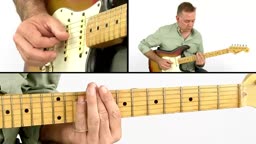
Basics: Vibrato
Vibrato is a great way of sustaining a note and giving it your own personal twist. It's really nice and sweet sounding to start a note without vibrato and then slowly adding it in, forcing you to find the correct pitch.
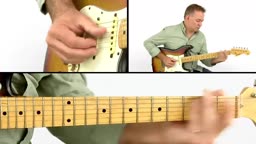
Playing Techniques
So as you see, there's absolutely no rules about how you approach the notes, it's just about personal taste. But, it can make for a big difference, and it's really nice if you have the difference options at hand. If it works, it works!

If you have really good control over the slide, you can even use it for traditional pull-offs and hammer-on techniques. A light touch is essential to make it sound right. You can also combine classic rock techniques with the slide taking advantage of open strings.

+ 28 more lessons

Start Course

Reviews

9 results

Karl1131

Verified buyer

04/23/26

Creative slide guidebook

I find every teacher on this site has a unique approach to teaching, as such This taught me so much, Thanks for offering the course

1gman

Verified buyer

08/26/24

Good title

Great course

IamBenjamin

Verified buyer

05/15/23

Brilliant!

Easy to follow and great instruction!

Osokin

Verified buyer

11/05/22

Creative Slide!

B J Baartmans has produced a great course on how to use the slide to add colour to your playing in different musical settings. If you've been thinking of getting into slide playing, this course is well worth checking out.

BDHerndon

Verified buyer

09/07/21

great introduction to slide

Enjoyed this useful demonstration & instruction of slide technique

Stop searching. Start improving with All Access.

Try 14 days free. Cancel any time.